Is epoxy garage floor worth it?
Epoxy is worth it on a dry, sound slab you plan to keep. Run the cost per year, the prep bill and the resale reality before you buy resin.
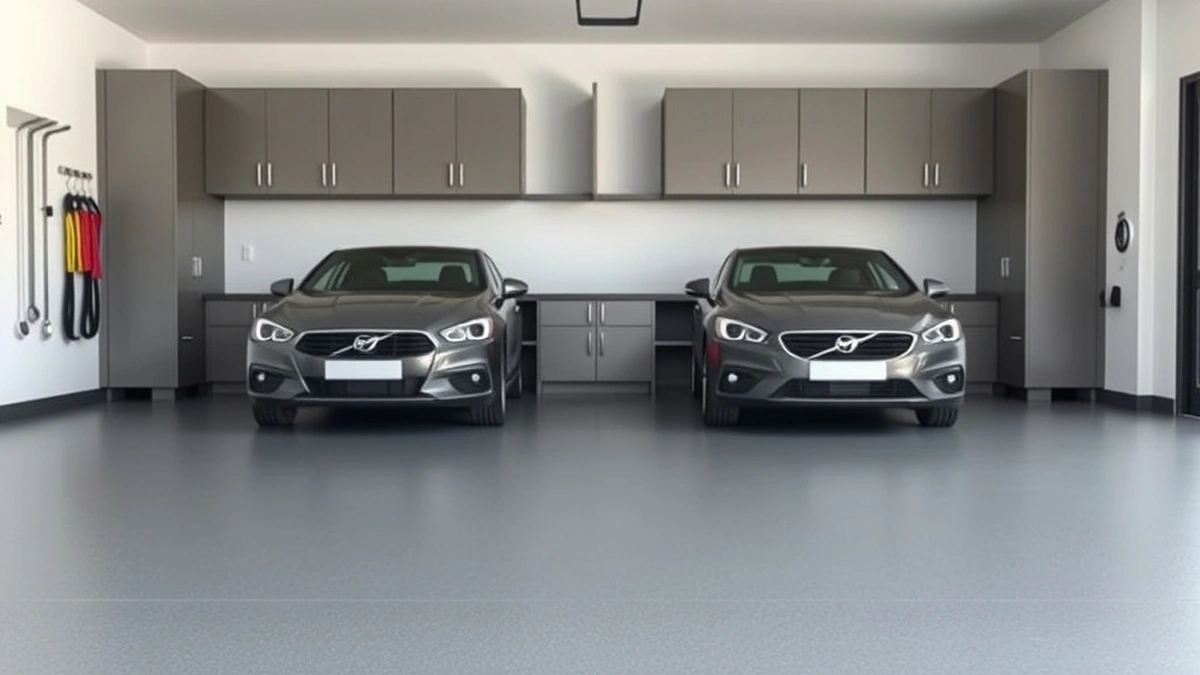
Epoxy is worth it for most attached garages: $5-12 per sq ft installed buys 10-20 years of a sealed, cleanable floor, or roughly $133-320 per year on a 400 sq ft slab. It is not worth it if the slab fails a moisture test or you are selling within a year.
- Installed epoxy
- $5-12 / sq ft
- Cost per year, 400 sq ft
- $133-320
- DIY materials
- $3-7 / sq ft
- Moisture mitigation
- $2-5 / sq ft
Some links on this page are affiliate links.If you buy through them we may earn a commission at no extra cost to you. We do not accept payment for rankings. Read the full disclosure.
For most attached garages, an epoxy floor is worth it: $5 to $12 per square foot installed buys a sealed, cleanable surface that should last 10 to 20 years, which works out to roughly $133 to $320 per year on a 400 sq ft slab. It stops being worth it in three cases — a slab that fails a moisture test, structural concrete damage, or a sale within the year.
What you are paying for
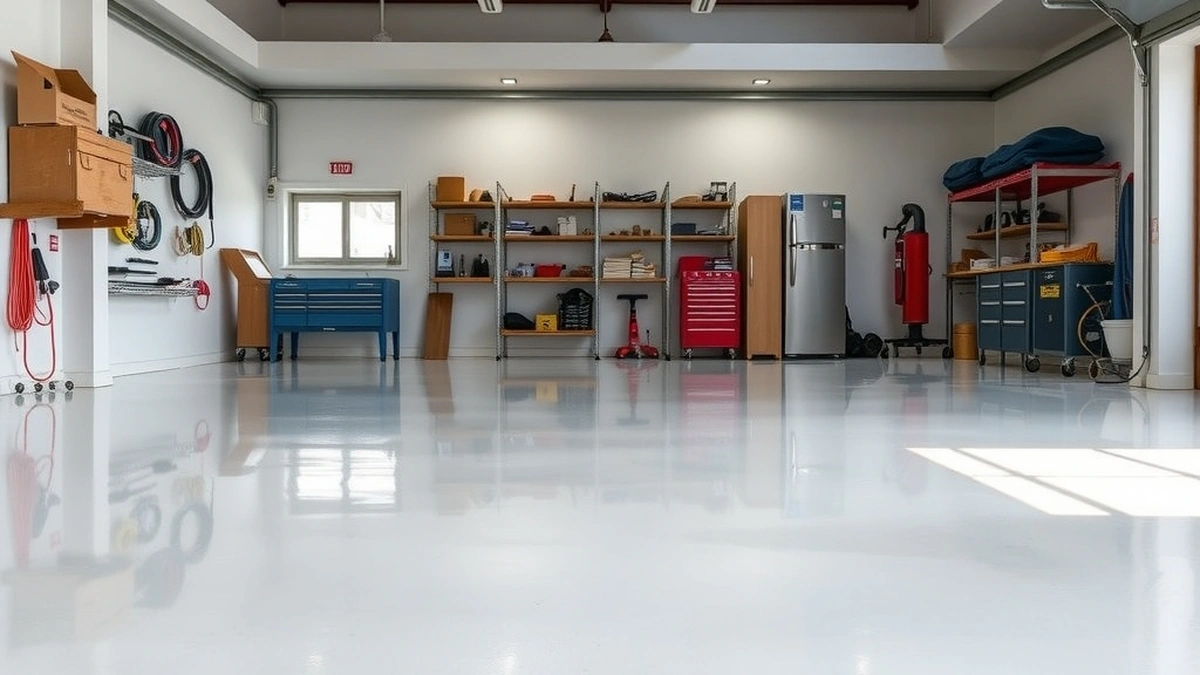
An epoxy garage floor coating is a two-part resin film bonded to a profiled concrete slab. The value is not decoration. It seals the concrete against oil, salt and water, stops the dusting that bare slabs produce, and turns a surface you sweep into one you can mop.
That matters more than it sounds in a cold climate. Bare concrete absorbs de-icing salt, spalls at the apron, and holds brake dust in its pores. A sealed floor keeps those contaminants on the surface where a mop can reach them.
The cost-per-year arithmetic
Total cost divided by service life is the only fair comparison, because a cheap floor that fails early costs more per year than an expensive one that lasts.
- 400 sq ft at $5 per sq ft = $2,000; over 20 years = $100 per year.
- 400 sq ft at $12 per sq ft = $4,800; over 10 years = $480 per year.
- Middle of both ranges: 400 × $9 = $3,600; over 15 years = $240 per year.
Now run the same math on the low-cost route. A DIY kit at $3-7 per square foot costs $1,200 to $2,800 on 400 sq ft. Add professional grinding at $1-3, or $400 to $1,200, and the total is $1,600 to $4,000. If that floor lasts 8 years, the cost is $200 to $500 per year — no better than the professional job, and you supplied the labor.
The floor that lasts longest per dollar is the one with proper prep and a topcoat, not the one with the lowest invoice. Epoxy garage floor cost per square foot breaks down each line item.
Where the money actually goes
| Component | Cost per sq ft | 400 sq ft | Worth it? |
|---|---|---|---|
| Diamond grinding | $1-3 | $400-1,200 | Yes — this is the adhesion |
| Moisture mitigation | $2-5 | $800-2,000 | Only if the slab fails a test |
| Epoxy base and color | $5-12 | $2,000-4,800 | Yes, with two coats |
| Polyaspartic topcoat | Included at the high end | — | Yes on sun-facing or salt-exposed floors |
| Metallic finish | $10-20 | $4,000-8,000 | Only if the look is the point |
Notice which row is optional. Grinding is not. A quote that skips grinding to hit a lower price is selling you a floor with a shorter clock, and the savings are borrowed from the future.
Do not simply add every row. A professional quote in the $5-12 band normally includes grinding and primer, so stacking $1-3 of grinding on top of it double-counts. The additive items are mitigation, a premium topcoat upgrade and decorative work. On 400 sq ft, a $3,600 mid-range quote plus $800 to $2,000 of mitigation is the real worst case: $4,400 to $5,600.
When epoxy is not worth it
The slab fails a moisture test. Mitigation adds $2 to $5 per square foot, and without it the coating blisters. If the budget cannot absorb that, wait rather than coat.
The concrete is failing. Spalling, settled sections and cracks that open seasonally are structural problems. A coating over a moving crack cracks too.
You are selling within a year. You will pay for the floor and the next owner gets the benefit. Cosmetic cleaning is a better use of the money at that point.
The garage is a tear-down or a shed. A detached, unheated outbuilding with a rough slab rarely justifies a $5 to $12 per square foot system. A sealer or a cheaper coating is the right call.
How it compares with the alternatives
| Option | Cost | Life | Trade-off |
|---|---|---|---|
| Bare concrete | $0 | Decades | Dusts, stains, spalls with salt |
| Concrete sealer | Low material cost | 1-3 years | Reapply often, little chemical resistance |
| Epoxy paint | Low material cost | 2-5 years | Thin film, peels at the tire path |
| Epoxy system | $5-12 per sq ft | 10-20 years | Needs prep and a moisture test |
| Polyaspartic system | $8-15 per sq ft | 12-20+ years | Fast cure, higher material cost |
The paint row is where most disappointed homeowners start. A thin paint film over an unprepared slab is not the same product as a 10-mil epoxy system, and it does not fail for the same reasons. Garage floor painting vs epoxy covers the difference in detail.
Resale, honestly
A clean, sealed garage floor helps a house show well. It does not add appraised square footage, and no credible appraiser itemizes a coating. Treat it as a livability upgrade with a possible marketing benefit, not as a renovation with a measurable return. Anyone quoting a specific percentage return on a garage floor is guessing.
What it does do is remove a common buyer objection. A stained, dusty slab reads as deferred maintenance; a uniform floor reads as a maintained property. That is worth something at negotiation time, even if it is not a line on an appraisal.
Five steps before you spend
- Test the slab. Moisture first, because it changes the budget by $2 to $5 per square foot.
- Get three itemized quotes. Same prep, same coats, same topcoat, so the totals are comparable.
- Decide how long you are staying. Under three years, clean and seal; over five, coat it properly.
- Pick the system by duty. Flake epoxy for a daily driver, polyaspartic topcoat for sun or salt, metallic only if the appearance is the reason.
- Budget the cure. Three to seven days without parking is part of the cost, not an inconvenience.
If the numbers still feel close, read epoxy garage floor cost for the full project view and how long does epoxy garage floor last for what drives the service life behind the per-year figure.
Frequently asked questions
How do I calculate whether epoxy pays off?
Divide the total installed cost by the years you expect to stay. A 400 sq ft floor at $3,600 over 15 years is $240 per year, which is less than most homeowners spend on concrete sealer and cleaners in the same period.
Does epoxy add resale value to a house?
It adds appeal rather than appraised square footage. Buyers notice a clean, sealed garage, but appraisers rarely itemize a floor coating, so treat it as a livability upgrade that may help a sale rather than an investment with a fixed return.
Is epoxy worth it on a new concrete slab?
Yes, once the slab has cured for about 28 days. Coating early traps moisture in the concrete and can leave the film soft or cloudy, so wait out the cure even though the floor looks ready.
What makes epoxy not worth the money?
A slab that fails a moisture test, active cracking or spalling, and a short ownership horizon. Each of those turns a floor coating into a repair project or a sunk cost.
Is a DIY kit worth it compared with professional installation?
Only if your time is genuinely free and the slab needs nothing more than grinding. Once you add $1 to $3 per square foot of paid grinding, the DIY total gets close to the low end of a professional job.
How long do I have to stay to break even?
At $240 per year on a 400 sq ft professional floor, the coating covers its cost against a failing bare slab within the first few years of use, and the rest of its life is the return.
Sources
Some links are affiliate links.If you buy through them we may earn a commission at no extra cost to you. We do not accept payment for rankings. Read the full disclosure.