Metallic epoxy floor cost
Metallic epoxy floors cost $10-$20 per sq ft installed, so 400 sq ft runs $4,000-$8,000. Why the finish costs double a solid color, and where the money goes.
Metallic epoxy floors cost $10 to $20 per square foot installed. A 400 sq ft garage is $4,000 to $8,000, roughly double a solid-color epoxy floor at $5 to $12. The premium pays for slab flattening, a metallic base pour and a clear topcoat.
- Installed rate
- $10 - $20 per sq ft
- 400 sq ft
- $4,000 - $8,000
- Solid color epoxy
- $5 - $12 per sq ft
- Polyaspartic topcoat
- $8 - $15 per sq ft
Some links on this page are affiliate links.If you buy through them we may earn a commission at no extra cost to you. We do not accept payment for rankings. Read the full disclosure.
Metallic epoxy floors cost $10 to $20 per square foot installed, so a 400 sq ft two-car garage runs $4,000 to $8,000. That is roughly double a solid-color epoxy floor at $5 to $12 per square foot. The difference is not the pigment. It is the flattening, the hand-worked pour and the clear topcoat that protects the pattern.
What a metallic epoxy floor is
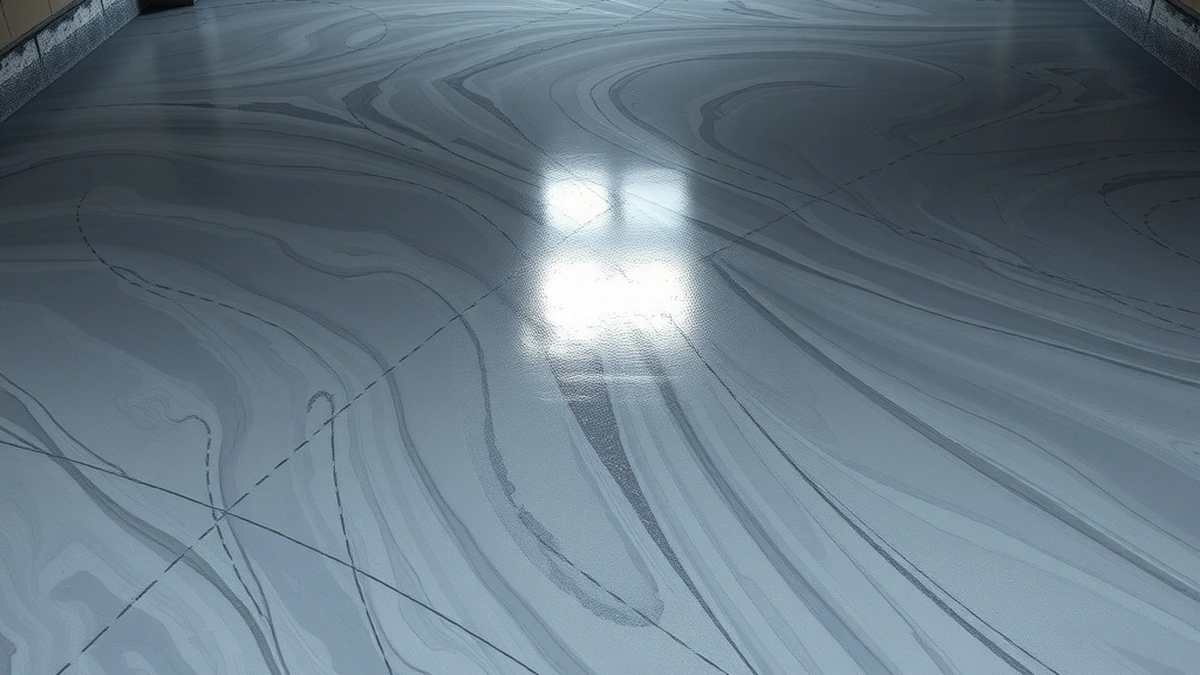
A metallic epoxy floor is a decorative resin system in which metallic pigment is poured onto a prepared slab and moved with a squeegee, roller or blower to create a three-dimensional, cloud-like pattern under a clear protective coat.
Two things follow from that definition. The pattern is made on site and cannot be sampled from a color chip, and the visible surface is the topcoat, not the epoxy. Both facts shape the price.
The rate compared with other finishes
Metallic sits at the top of the residential coating range, and the gap to a standard system is wider than most homeowners expect.
| Finish | Rate per sq ft | 400 sq ft | What you get |
|---|---|---|---|
| DIY epoxy kit | $3 - $7 | $1,200 - $2,800 | Thin build, single color, limited life |
| Professional solid color | $5 - $12 | $2,000 - $4,800 | Full build, uniform color |
| Flake broadcast | $5 - $12 | $2,000 - $4,800 | Hides slab flaws, textured |
| Polyaspartic system | $8 - $15 | $3,200 - $6,000 | Fast return to service, UV stable |
| Metallic epoxy | $10 - $20 | $4,000 - $8,000 | Poured pattern, clear topcoat |
The arithmetic is multiplication: 400 × $10 = $4,000 and 400 × $20 = $8,000. A 600 sq ft triple garage runs 600 × $10 = $6,000 to 600 × $20 = $12,000. A 250 sq ft single runs $2,500 to $5,000.
Small floors price toward the top of the range. A metallic pour needs at least two people working wet edges at once, and a crew that mobilizes for 250 sq ft charges nearly what it charges for 500.
Where the extra money goes
Four line items explain the premium, and only one of them is material.
Slab flattening. Metallic is a reflective finish. A 1/8-inch dip that a flake floor would hide reads as a dark pool in a metallic floor. Grinding plus a flattening compound is standard, and it is a separate trade day.
Grinding at $1 to $3 per square foot. On 400 sq ft that is $400 to $1,200 before any resin is opened. The profile has to be uniform because the base is poured thin and worked.
Hand-worked installation. A solid-color floor is rolled. A metallic floor is poured in sections and manipulated while wet, which means a larger crew and a longer day. That labor is the single biggest reason the rate doubles.
The clear topcoat. Metallic patterns are protected by a clear coat, often polyaspartic at $8 to $15 per square foot as a system rate. A cheap epoxy clear coat ambers and wears through in the traffic lane.
Add the floor prep and the topcoat and the $10 to $20 range stops looking arbitrary. It is roughly the solid-color rate plus a flattening day plus a premium clear coat.
Metallic versus flake: the comparison that matters
The two decorative options are often priced against each other, so compare them on what each one actually delivers.
Flake at $5 to $12 per square foot hides cracks, oil stains and minor unevenness because the broadcast breaks up the surface. It is textured, forgiving of a slab that was never flat, and repairable in patches. Metallic at $10 to $20 per square foot does the opposite: it amplifies the slab. Every imperfection is visible, the surface is glossy, and a patch repair will never match the original pour.
If the slab is flat, dry and free of old coating, metallic is a legitimate finish and the premium buys a floor that looks like nothing else in the neighborhood. If the slab is wavy, patched or damp, the honest answer is flake or a solid color, and the money saved is not a compromise.
When a metallic floor is the wrong purchase
Three conditions should end the conversation before a quote is written.
The first is a slab that fails a moisture test. Mitigation at $2 to $5 per square foot adds $800 to $2,000 on 400 sq ft, and a decorative pour over a damp slab blisters from below. Fix the moisture first or choose a different floor.
The second is a working crack. A metallic pattern cannot disguise movement, and a crack that reopens will split the pattern along a visible line.
The third is a floor that will see welding spatter, jack stands or heavy dropped tools. A decorative clear coat is a wear layer, not armor. For a working shop, a solid-color system with a heavier topcoat is the better buy at a lower price.
How to get a metallic quote you can compare
- Ask for the flattening step in writing. Grinding plus self-leveling compound, with a square-foot price, not “prep included.”
- Confirm the topcoat product. Polyaspartic or a UV-stable clear, named on the quote, with the number of coats.
- Request the moisture test result. In-situ relative humidity readings with locations, attached to the bid.
- Ask how the pattern is set. Crew size, pour sequence and whether the whole floor is done in one continuous session.
- Get a sample board or a completed floor to visit. A photograph is not a sample; pigment ratios and technique vary by installer.
- Price the recoat now. Ask what a clear-coat refresh costs in five years, so the total cost of ownership is on the table.
For the material side of the same decision, metallic epoxy cost covers kit pricing and coverage. Metallic pigment installation explains the technique that drives the labor line, and epoxy garage floor cost per square foot shows how every rate in this article is built.
If the slab needs work before any decorative system goes down, garage floor resurfacing cost covers the repair budget separately.
Frequently asked questions
Why does metallic epoxy cost twice as much as solid color?
The slab has to be flattened and ground, the metallic base is poured and worked by hand, and the clear topcoat has to be applied without disturbing the pattern. Labor, not pigment, is the larger share.
How much is a metallic epoxy kit for a 400 sq ft garage?
Kits are sold by coverage rather than by square foot, and a 400 sq ft floor generally needs more than one kit plus a separate clear topcoat. Price the total coverage, not the kit count.
Is metallic epoxy slippery?
The poured base is glossy and slick when wet. A slip-resistant additive in the topcoat is what makes it usable on a garage floor, and it slightly softens the mirror finish.
Can metallic epoxy go over an uneven slab?
Not directly. The finish is reflective, so every dip and high spot shows. Flattening compound and a full grind are part of the job, and they are the reason the rate starts at $10 per square foot.
How long does a metallic epoxy floor last?
The epoxy base is a decorative layer and the topcoat does the wearing. With a polyaspartic topcoat and normal garage use, expect a service life in the range of a standard epoxy system, with a recoat when the clear coat wears.
Does metallic epoxy fade in sunlight?
Epoxy resin yellows under UV, and a metallic floor has a clear coat over it. A UV-stable polyaspartic topcoat slows the change; an epoxy topcoat will amber within a few years near a sunlit door.
Sources
Some links are affiliate links.If you buy through them we may earn a commission at no extra cost to you. We do not accept payment for rankings. Read the full disclosure.