Garage floor resurfacing cost
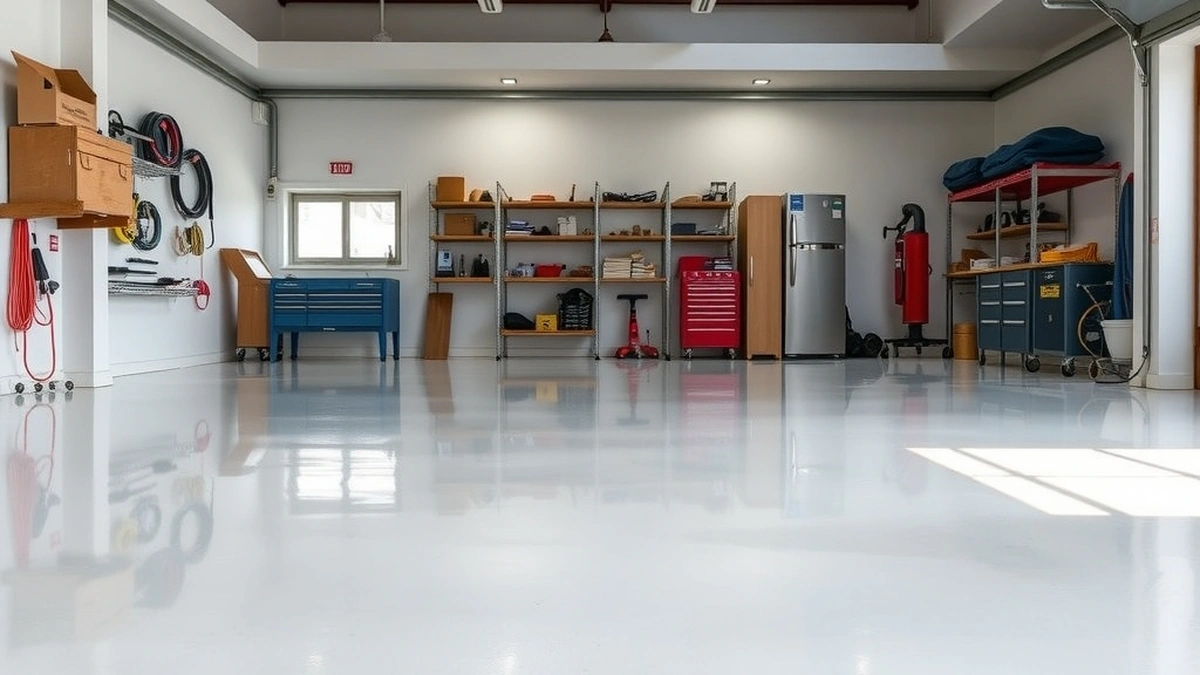
Garage floor resurfacing costs $5-$12 per sq ft installed, plus $1-$3 for grinding. A 400 sq ft garage lands at $2,400-$6,000, and the slab sets the number.
Garage floor resurfacing costs $5 to $12 per square foot for the coating system and $1 to $3 per square foot for grinding. A 400 sq ft garage is $2,400 to $6,000, and patching or moisture mitigation adds $800 to $2,000 when the slab needs it.
- System rate
- $5 - $12 per sq ft
- Grinding
- $1 - $3 per sq ft
- 400 sq ft total
- $2,400 - $6,000
- Mitigation, if needed
- $2 - $5 per sq ft
Some links on this page are affiliate links.If you buy through them we may earn a commission at no extra cost to you. We do not accept payment for rankings. Read the full disclosure.
Garage floor resurfacing costs $5 to $12 per square foot for the coating system plus $1 to $3 per square foot for grinding, so a 400 sq ft two-car garage comes to $2,400 to $6,000. That figure assumes a sound slab. Patching, old-coating removal and moisture mitigation each add a line, and the condition of the concrete decides whether you land near $2,400 or near $6,000.
What resurfacing means on a garage slab
Garage floor resurfacing is the process of restoring a worn concrete slab by mechanically profiling the surface, repairing defects, and applying a bonded coating system, rather than pouring new concrete.
The word gets used loosely. A homeowner saying “resurface” may mean a skim coat of polymer-modified cement, a flake epoxy system, or a full grind-and-coat job. Those are three different scopes at three different prices, and the quote has to name which one it is.
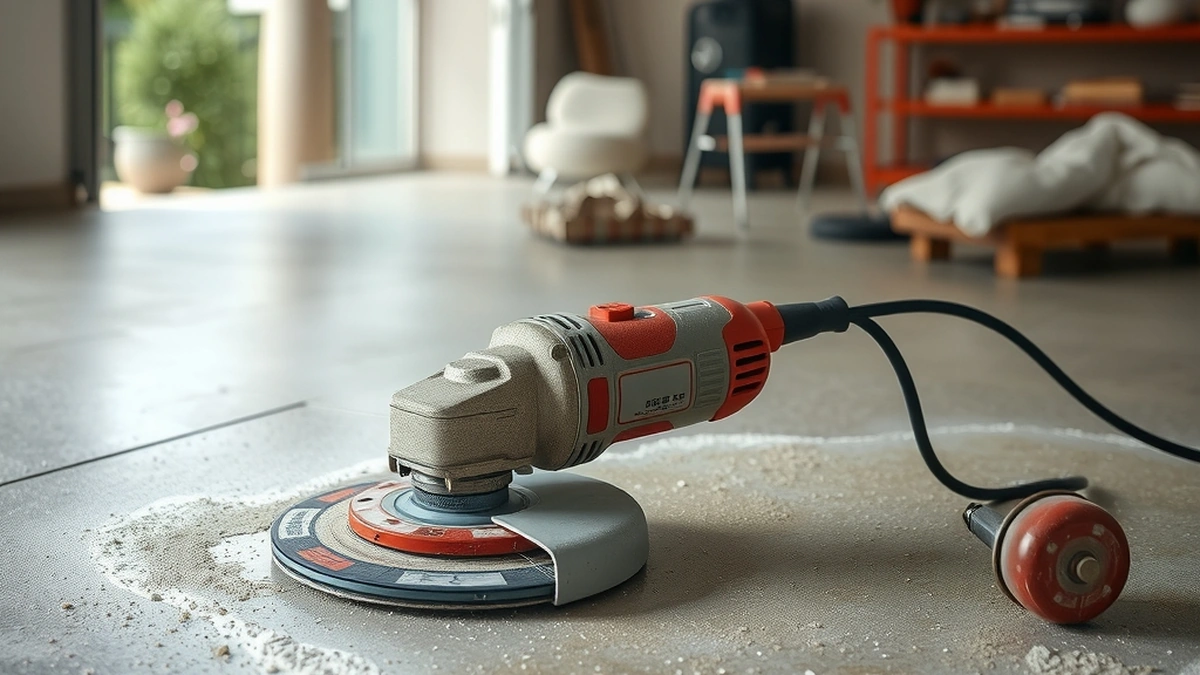
A true resurfacing job follows this sequence: grind or shot blast, fill cracks and spalls, prime, base coat, broadcast, topcoat. Skip the first step and everything after it is decoration on a weak bond.
Resurfacing, recoating and replacing
The three options are compared most often on price, but the real difference is what each one can fix.
| Option | Rate | 400 sq ft | Fixes |
|---|---|---|---|
| Recoat over sound existing coating | $2 - $4 per sq ft | $800 - $1,600 | Faded color, worn topcoat |
| Grind and resurface | $5 - $12 per sq ft + $1 - $3 grinding | $2,400 - $6,000 | Worn concrete, failed coating, stains |
| Remove slab and pour new | Quoted per job, typically several times the coating cost | Not comparable | Structural failure, severe settling |
A recoat only works if the existing coating is bonded. Test it by pressing tape onto a crosshatched patch and pulling; if coating comes up, a recoat is a waste of money. Grinding solves the problem the recoat ignores.
The new-slab option is not a resurfacing alternative in most cases. If the slab is heaved or cracked through, a coating will not hold the pieces together, and no amount of prep fixes a structural problem.
What the number is built from
Five line items appear on a real resurfacing estimate. The resin is only one of them.
Grinding at $1 to $3 per square foot. On 400 sq ft that is $400 to $1,200. This is the step that creates the mechanical profile the coating grips.
Crack and spall repair. Priced per repair, commonly $150 to $600 per crack depending on length and whether it needs routing. A slab with four working cracks can add $600 to $2,400.
Moisture mitigation at $2 to $5 per square foot. On 400 sq ft that is $800 to $2,000. It applies only when an in-situ relative humidity test or a calcium chloride test shows the slab is passing vapor.
The coating system at $5 to $12 per square foot. On 400 sq ft that is $2,000 to $4,800 and includes primer, base, flake and a standard topcoat.
Disposal and cleanup. Grinding dust, removed coating and old sealers leave the site as waste. Ask whether the number includes hauling it.
Add the low ends and you get $400 + $2,000 = $2,400. Add the high ends and you get $1,200 + $4,800 = $6,000. The spread is not contractor greed; it is the difference between a clean slab with a single-color floor and a patched slab with a full broadcast and a polyaspartic topcoat.
Cost by slab condition
The same 400 sq ft garage prices very differently depending on what the concrete is doing.
| Condition | What it adds | 400 sq ft total |
|---|---|---|
| Sound, dry, bare concrete | Nothing | $2,400 - $6,000 |
| Oil-soaked patches | Degreasing and extra grinding, $200 - $600 | $2,600 - $6,600 |
| Failed paint or epoxy | Old-coating removal, $400 - $1,200 | $2,800 - $7,200 |
| Multiple working cracks | Routing and filling, $600 - $2,400 | $3,000 - $8,400 |
| High moisture reading | Mitigation at $2 - $5 per sq ft, $800 - $2,000 | $3,200 - $8,000 |
Read the last row carefully. Moisture mitigation is the single largest swing on a residential slab, and it is invisible until someone tests. That is why the test belongs in the first site visit, not in the change order.
Why cheap resurfacing fails
The failure pattern is consistent. A crew skips the grinder, acid-etches instead, and applies a coating that looks fine for one season. Then hot tires pull it up in sheets, or a damp slab blisters it from below.
Two other shortcuts show up in low bids. The first is a single coat with no topcoat, which wears through in the traffic lane within a few years. The second is filling cracks with patch compound and coating straight over them, so the movement reopens the crack and takes the coating with it.
None of those failures are visible on the day of the estimate. They are visible in what the estimate leaves out.
How to scope a resurfacing job
- Measure the slab and the stem wall. Length × width for the floor, plus the 4-inch curb if you want it coated. Add 10% for waste on the coating.
- Test for moisture. A plastic-sheet test is a screening tool; ask for an in-situ relative humidity reading before signing.
- Map the defects. Photograph every crack, spall, oil stain and patch of old coating, and mark them on a sketch.
- Decide the finish. A single color is the cheapest, flake hides imperfections, and metallic shows every dip in the slab.
- Get three itemized quotes. Grinding, repair, primer, base, broadcast and topcoat each with a price.
- Schedule around the cure. Three to seven days without parking for standard epoxy, about one day with a polyaspartic topcoat.
If the slab has failed in one area only, epoxy garage floor repair covers spot repair before a full resurface. For the repair line items on their own, garage floor repair cost breaks them out. And if you are weighing a coating against a bare sealed slab, concrete floor coating explains what each system does under a car.
For the full project budget including tools and storage, epoxy cost puts resurfacing in the context of the other options.
Frequently asked questions
What is included in garage floor resurfacing?
Grinding or shot blasting the existing slab, filling cracks and spalls, then applying a primer, a base coat and a topcoat. It is not a new slab and it does not fix structural movement.
Is resurfacing cheaper than replacing the slab?
Yes, by a wide margin. Resurfacing reuses the slab you already have, so you pay for prep and coating rather than demolition, base material, forms and new concrete.
How much does a 400 sq ft garage cost to resurface?
Two thousand four hundred to six thousand dollars at $5 to $12 per square foot, with grinding at $400 to $1,200 on top of the coating. A failed moisture test adds $800 to $2,000.
Can you resurface over an old epoxy coating?
Only after the old coating is ground back to bare concrete or tested for adhesion and mechanically scarified. Coating over a failing layer guarantees the new floor fails with it.
Does resurfacing fix a cracked garage floor?
It hides hairline cracks and repairs spalls, but a crack that has moved will telegraph through the coating. Structural cracks need routing, filling and often a crack-isolation membrane before the coating goes down.
How long before I can park on a resurfaced floor?
Three to seven days for a standard epoxy system, depending on temperature and the topcoat used. A polyaspartic topcoat shortens that to about 24 hours for light traffic.
Sources
Some links are affiliate links.If you buy through them we may earn a commission at no extra cost to you. We do not accept payment for rankings. Read the full disclosure.