Polyaspartic floor cost
Polyaspartic floors cost $8-$15 per sq ft installed. A 400 sq ft garage is $3,200-$6,000, and the fast cure is what the premium pays for. Full breakdown.
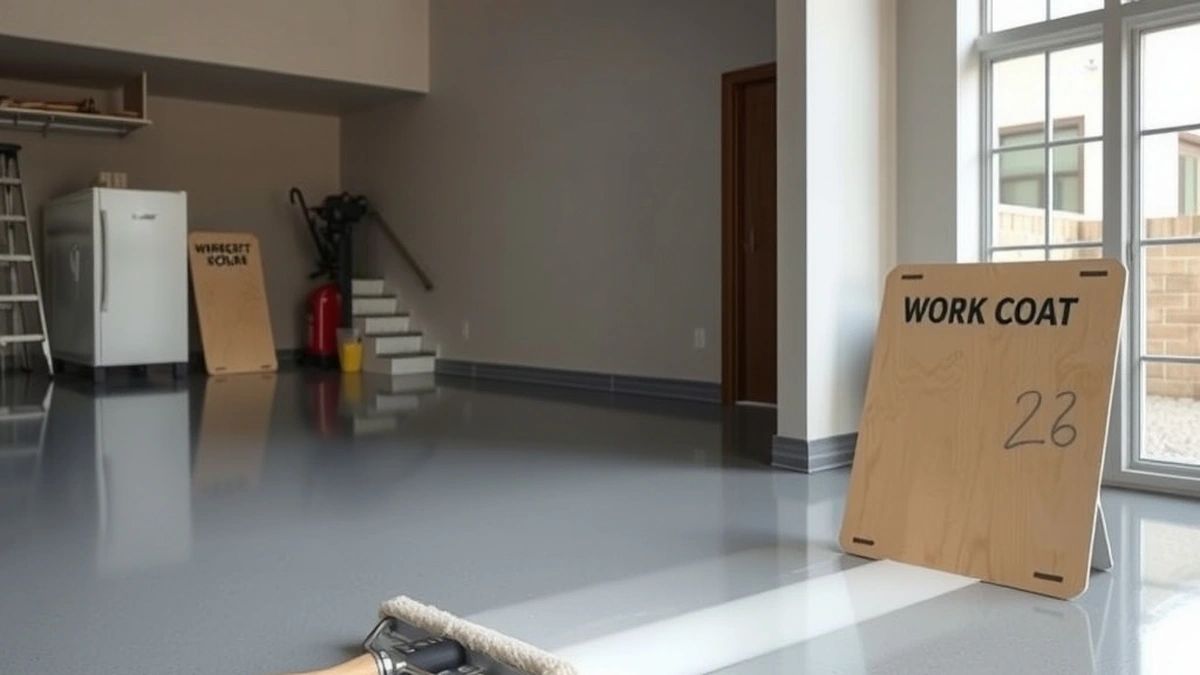
Polyaspartic floors cost $8 to $15 per square foot installed. A 400 sq ft garage runs $3,200 to $6,000, about $1,200 more than a comparable epoxy system at $5 to $12. The premium buys a cure fast enough for a one-day install and a clear coat that resists UV.
- Installed rate
- $8 - $15 per sq ft
- 400 sq ft
- $3,200 - $6,000
- Epoxy for comparison
- $5 - $12 per sq ft
- Return to traffic
- About 24 hours
Some links on this page are affiliate links.If you buy through them we may earn a commission at no extra cost to you. We do not accept payment for rankings. Read the full disclosure.
Polyaspartic floors cost $8 to $15 per square foot installed, so a 400 sq ft two-car garage runs $3,200 to $6,000. That is roughly $1,200 more than a comparable epoxy system at the low end, and the premium buys two things: a cure fast enough to finish in a day, and a clear coat that does not amber in sunlight.
What a polyaspartic floor is
A polyaspartic floor is a resin coating built from an aliphatic polyaspartic ester and an isocyanate hardener, applied as a fast-curing topcoat or a full system over a prepared concrete slab.
The chemistry is the reason for the price. Polyaspartic cures by reaction rather than evaporation, at a rate that lets a crew apply a base coat, broadcast flake, scrape and topcoat in a single day. Standard epoxy needs a day between coats, which is why an epoxy job usually spans three visits.
The installed rate, compared
Polyaspartic sits between standard epoxy and metallic in the residential market, and the gap to epoxy is smaller than most homeowners assume.
| System | Rate per sq ft | 400 sq ft | 600 sq ft |
|---|---|---|---|
| DIY epoxy kit | $3 - $7 | $1,200 - $2,800 | $1,800 - $4,200 |
| Professional epoxy | $5 - $12 | $2,000 - $4,800 | $3,000 - $7,200 |
| Polyaspartic system | $8 - $15 | $3,200 - $6,000 | $4,800 - $9,000 |
| Metallic epoxy | $10 - $20 | $4,000 - $8,000 | $6,000 - $12,000 |
The arithmetic is multiplication: 400 × $8 = $3,200 and 400 × $15 = $6,000. A 600 sq ft triple garage is 600 × $8 = $4,800 to 600 × $15 = $9,000. A 250 sq ft single is $2,000 to $3,750.
The middle of the range is where most real jobs land. A full broadcast with a polyaspartic topcoat on a sound slab typically prices near $10 to $12 per square foot, which is $4,000 to $4,800 on 400 sq ft.
What the premium actually buys
Four line items separate a $5 per square foot epoxy job from a $12 polyaspartic one.
Faster return. A polyaspartic system can take light traffic in about 24 hours and vehicles the next day. Epoxy needs three to seven days. On a commercial floor earning $4,000 a day, two saved days are $8,000, which is more than the entire premium on 2,000 sq ft.
UV stability. Standard epoxy ambers in sunlight. Polyaspartic clears are formulated to stay clear, which matters on an apron or a door facing south.
One-day installation. The crew mobilizes once instead of three times, and the homeowner loses the garage for a day rather than a week. That efficiency is a large part of what the rate pays for.
Thinner build per coat. Polyaspartic goes down faster but builds less per pass, so a full system still needs a base and a topcoat. A quote that specifies one coat of polyaspartic over bare concrete is not the system this article prices.
Notice what the premium does not buy: better adhesion. That still comes from grinding at $1 to $3 per square foot, and it is not optional in either system.
Cost by finish and scope
The $8 to $15 range covers more than one job. The finish and the slab condition set where you land inside it.
| Scope | Rate | 400 sq ft |
|---|---|---|
| Solid color, polyaspartic topcoat | $8 - $11 per sq ft | $3,200 - $4,400 |
| Full flake broadcast | $9 - $13 per sq ft | $3,600 - $5,200 |
| Flake plus coves and stem wall | $11 - $15 per sq ft | $4,400 - $6,000 |
| Add moisture mitigation | $2 - $5 per sq ft extra | $800 - $2,000 more |
A solid color is the cheapest polyaspartic job and the least forgiving, because it shows every stain and patch. A full flake broadcast hides slab imperfections and is the most common residential specification. Cove base and stem wall work are priced per linear foot and add labor.
Mitigation is the wildcard. A failed moisture test adds $800 to $2,000 on 400 sq ft and can push a $3,600 job past $5,600. Test before you compare quotes, not after.
Polyaspartic versus epoxy on total cost
The two systems are usually compared on day-one price, which flatters epoxy. Compare them over a service life instead.
Epoxy at $5 to $12 per square foot installed has a lower entry cost and a longer cure. Polyaspartic at $8 to $15 has a higher entry cost, a one-day install and better UV performance. If the epoxy floor ambers and needs a clear-coat refresh, that refresh narrows the gap. If the polyaspartic floor returns the garage to service a week earlier, the gap may disappear entirely.
The honest version: on a shaded, low-traffic floor with time to spare, epoxy is the better purchase. On a sunlit floor, a tight schedule or a commercial space, polyaspartic earns its rate.
How to price a polyaspartic job
- Measure the floor and the stem wall. Length × width, plus the 4-inch curb if you want it coated, then add 10% for waste.
- Get the moisture test first. In-situ relative humidity readings with locations, before any number is agreed.
- Specify the build. Base coat product, broadcast density, number of topcoats and the film thickness of each.
- Ask how the day is sequenced. A true one-day install has a written schedule: grind, base, broadcast, scrape, topcoat.
- Confirm the cure claim. “Walk in 24 hours” and “drive in 24 hours” are different promises; get the exact window in writing.
- Price the refresh. Ask what a clear-coat top-up costs in five years so the total is visible.
For the material-only view, polyaspartic cost covers kits and coverage rates. Polyaspartic vs epoxy compares the two chemistries directly, and polyaspartic installation walks the one-day sequence.
If this floor is for a shop rather than a garage, commercial epoxy flooring cost puts the downtime arithmetic in a business context.
Frequently asked questions
How much does a polyaspartic garage floor cost?
Eight to fifteen dollars per square foot installed, or $400 to $750 on a 50 sq ft area and $3,200 to $6,000 on a 400 sq ft garage. The rate includes grinding, a base coat and the polyaspartic topcoat.
Is polyaspartic worth the extra cost over epoxy?
It depends on time and sunlight. If the floor has to return to service in a day, or the garage door faces the sun, the premium is easy to justify. On a shaded floor with a week to spare, standard epoxy does the same job for less.
Why is polyaspartic more expensive than epoxy?
The resin costs more, the working time is short enough to require an experienced crew, and the fast cure compresses the job into one day with less margin for error. Labor efficiency is what you are buying.
Can polyaspartic be applied over an existing epoxy floor?
Yes, as a topcoat over a sound, abraded epoxy base. It is rarely used as the base coat itself because it cures too fast to build thickness economically.
How long does a polyaspartic floor last?
With a full broadcast and a proper base, a polyaspartic system is commonly expected to give many years of service in a residential garage. The clear coat is the wear layer and can be refreshed without replacing the whole floor.
Does polyaspartic yellow in the sun?
Far less than standard epoxy. Polyaspartic clears are formulated for UV stability, which is why they are specified on sunlit aprons and garage doors facing south.
Sources
Some links are affiliate links.If you buy through them we may earn a commission at no extra cost to you. We do not accept payment for rankings. Read the full disclosure.