Epoxy Garage Floor Repair: When It Is Worth It
Learn when to repair vs. replace your epoxy garage floor, with cost estimates and prep-first guidance.
Repair is worth it when damage is isolated to less than 25 percent of the floor and the concrete substrate is dry and structurally sound. Widespread delamination or moisture issues usually justify full replacement.
- Best for
- Isolated chips, cracks, or wear under 25% of surface
- Not worth it
- Widespread peeling, active moisture, or spalling concrete
- DIY kit cost
- $3–$7 per sq ft
- Professional epoxy
- $5–$12 per sq ft
- Polyaspartic system
- $8–$15 per sq ft
Some links on this page are affiliate links.If you buy through them we may earn a commission at no extra cost to you. We do not accept payment for rankings. Read the full disclosure.
Epoxy garage floor repair is worth it when the damage is limited to a small portion of the surface and the concrete underneath is dry and structurally sound. It is not worth it when peeling covers most of the floor, when moisture is moving through the slab, or when the concrete itself is breaking down. This guide explains how to tell the difference and what each option costs.
Assess the Damage First
Start by walking the entire garage and marking every problem area with chalk or tape. Look for chips, scratches, bubbling, peeling, and cracks. Measure the total square footage of damaged area and divide it by the total garage floor area. If damaged spots add up to less than 25 percent of the surface, spot repair is usually reasonable. If more than a quarter of the coating is failing, the underlying bond is likely compromised across the whole slab, and full replacement makes more financial sense.
Check the edges where the coating meets the walls and any floor drains. Peeling that starts at the perimeter often indicates moisture vapor transmission rather than simple wear. If you see white, powdery efflorescence on bare concrete, or if the coating lifts in large sheets, stop and treat the substrate issue before spending money on any coating product.
When Repair Makes Sense
Repair is appropriate for isolated impact chips from dropped tools, scratches from snowplow edges, or wear patterns under vehicle tires where the rest of the floor still looks uniform. It also works for small cracks in the epoxy that have not spread to the concrete below. In these cases, you can grind the damaged spot, clean it thoroughly, and apply a compatible patch material.
A DIY epoxy kit costs an estimated $3 to $7 per square foot, but you only need to buy enough for the damaged area, not the whole garage. For a 20 by 20 foot garage, that is 400 square feet. A full DIY kit might cost $1,200 to $2,800 for the entire floor. Repairing one 4 by 4 foot damaged section, or 16 square feet, would cost roughly $48 to $112 in materials plus a few hours of labor. That is a clear win when the surrounding coating is still firmly bonded.
Professional spot repairs cost more per square foot than DIY because of mobilization and minimum charges, but they still cost less than recoating a 400-square-foot garage at $5 to $12 per square foot, or $2,000 to $4,800. If a contractor quotes $800 to repair three separate bays while the rest of the floor is in good shape, that is often the cheaper path.
When Replacement Is the Better Choice
Widespread delamination means the coating no longer adheres to the concrete. Patching individual flakes will leave visible seams and different wear rates, so the floor will look patched within months. If peeling covers more than 25 percent of the surface, remove the entire coating and start over. Full replacement also gives you a chance to fix prep mistakes from the original installation, which is the most common reason epoxy fails early.
Active moisture is a hard stop. If a calcium chloride test or plastic sheet test shows high vapor emission, any new coating will blister unless you install a moisture mitigation system first. Moisture mitigation adds an estimated $2 to $5 per square foot. On a 400-square-foot garage, that is $800 to $2,000 before you buy any epoxy. Paying that cost is justified only if you are committing to a full system, not a spot repair.
Spalling or crumbling concrete also argues for replacement. Epoxy is a surface coating, not a structural repair. If the top inch of concrete is breaking away, patching the epoxy over it is cosmetic. You need concrete repair or resurfacing first, which adds cost and complexity. At that point, a full grind and new system is usually more honest than chasing cracks forever.
Cost Comparison by System
Use these figures as estimates. Actual prices vary by region, contractor, and product selection.
| System | Estimated Cost per Sq Ft | 400 Sq Ft Garage |
|---|---|---|
| DIY epoxy kit | $3–$7 | $1,200–$2,800 |
| Professional epoxy | $5–$12 | $2,000–$4,800 |
| Polyaspartic system | $8–$15 | $3,200–$6,000 |
| Metallic epoxy | $10–$20 | $4,000–$8,000 |
| Concrete grinding | $1–$3 | $400–$1,200 |
| Moisture mitigation | $2–$5 | $800–$2,000 |
Here is how the arithmetic works for a repair decision. Imagine a 400-square-foot garage with a 64-square-foot area of peeling near the entry. A professional full epoxy replacement at $8 per square foot costs $3,200. A professional spot repair on the 64-square-foot area at $12 per square foot costs $768, plus perhaps $200 for edge blending and cleaning, for roughly $968 total. If the rest of the floor is sound, the repair saves more than $2,000.
However, if the same garage has peeling across 150 square feet, spot repairs at $12 per square foot cost $1,800, but the mismatched wear and remaining weak bonds mean you will likely pay again in two or three years. A full professional replacement at $8 per square foot costs $3,200 once. Over a six-year horizon, one replacement often beats two or three repair cycles.
Prep Determines Longevity
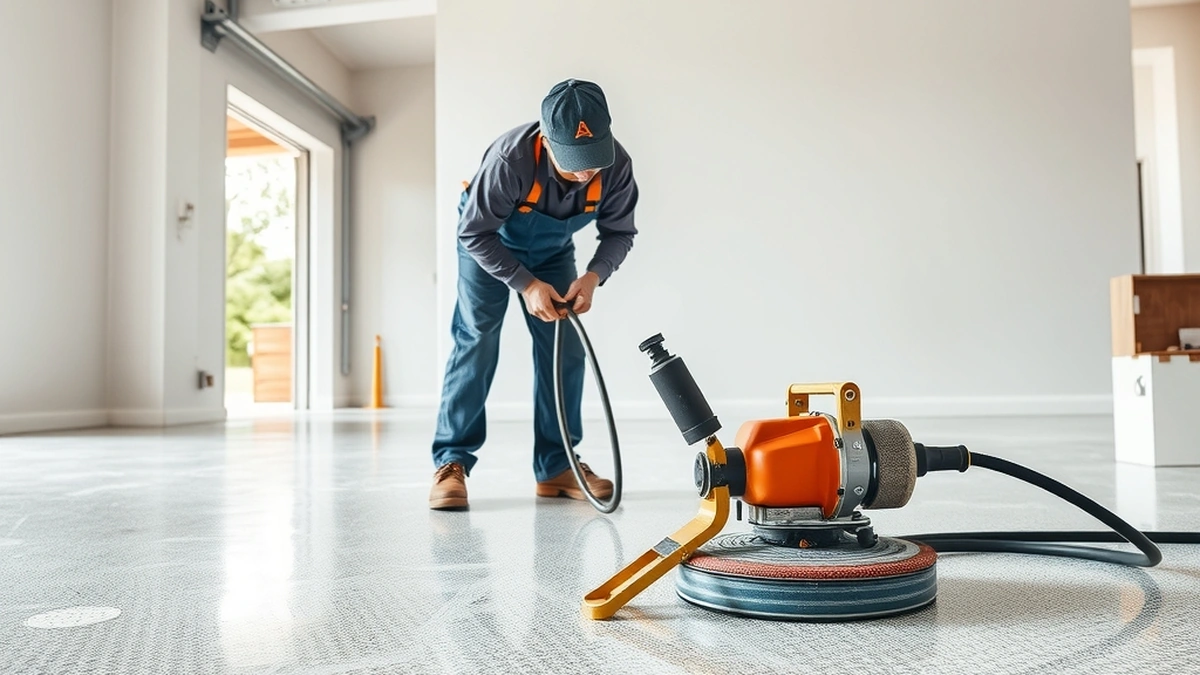
No repair lasts without proper surface preparation. Grind or sand the damaged area until you reach solid, clean concrete or firmly bonded epoxy. Feather the edges so the patch does not create a ridge that tires or snow shovels will catch. Vacuum thoroughly, then wipe with a solvent recommended by the product manufacturer. Apply the patch only when the concrete is dry and the garage is within the temperature range listed on the product label.
If you are hiring a contractor, ask how they will transition the repair to the existing coating. A visible line or raised edge is a sign of rushed prep. If you are doing it yourself, buy a kit that includes patching material or confirm that your existing coating brand is compatible with the repair product. Mixing chemistries can cause delamination at the boundary.
You can read more about full installation steps in our epoxy garage floor installation guide, and about routine care in our epoxy garage floor maintenance article. For broader pricing context, see our epoxy garage floor cost per square foot breakdown.
Moisture Testing Before You Spend
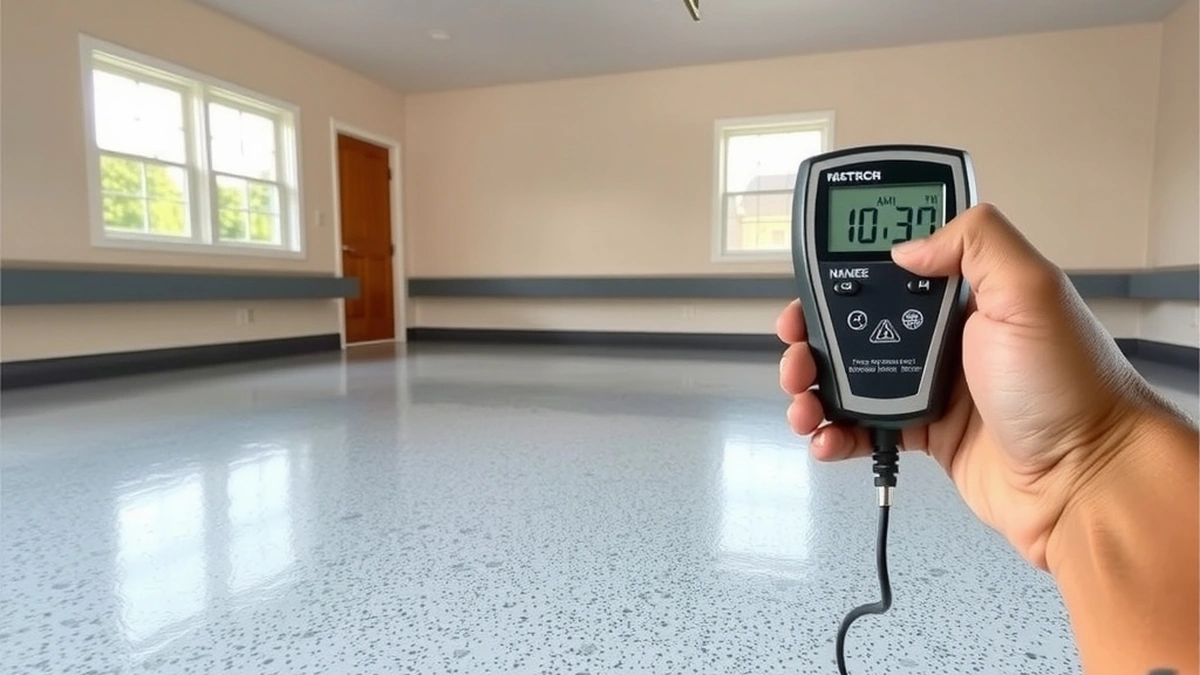
Before committing to any repair, test for moisture. Tape a 24-inch square of clear plastic to the concrete in several spots, seal the edges with waterproof tape, and wait 24 to 72 hours. If condensation appears under the plastic or the concrete darkens, moisture is moving through the slab. In that case, neither a patch nor a new coating will bond reliably without a moisture mitigation system.
This is especially important in garages built on slab-on-grade foundations without a vapor barrier, which is common in older US homes. A positive moisture test does not mean you must abandon the project. It means you should budget for mitigation or choose a system formulated for high moisture vapor transmission. Polyaspartic coatings sometimes tolerate moisture better than standard epoxy, but you should verify the specific product data sheet rather than assume.
Know When to Walk Away
Some floors are beyond economical repair. If the epoxy is peeling in large sheets, if the concrete is spalling, or if moisture tests fail repeatedly, the honest answer is to remove the coating and reset the surface. Grinding the entire floor costs an estimated $1 to $3 per square foot, or $400 to $1,200 for a 400-square-foot garage. That is an added expense, but it gives you a clean mechanical bond for whatever system you choose next.
Do not keep pouring patch material into a floor that is shedding its coating. The labor and materials add up quickly. Three repair visits at $800 each cost $2,400, which approaches the price of a professional epoxy replacement at $5 to $12 per square foot. If you are already at that cost threshold, replacement delivers a uniform appearance and a fresh wear surface.
The Bottom Line
Repair your epoxy garage floor when damage is isolated, the concrete is dry, and the rest of the coating is well bonded. Replace it when peeling is widespread, moisture is present, or the concrete is deteriorating. Always prep first, test for moisture second, and choose the product third. A small, well-executed patch can extend the life of a good floor by several years. A large, poorly timed patch only delays the inevitable.
Next, compare how much does epoxy garage floor cost, epoxy garage floor installation, epoxy garage floor maintenance before you commit.
Frequently asked questions
Can I patch epoxy myself?
Yes. Small chips and scratches can be patched with a compatible epoxy repair kit, but the edges must be feathered and the surface cleaned first.
How long does a repair last?
A well-prepped patch can last several years, though it rarely matches the wear resistance of a full new coating.
Should I repair before selling?
Only if the damage is minor. Buyers notice peeling coatings, and a full redo may add more perceived value than spot patches.
Does moisture ruin repairs?
Yes. If water vapor is pushing up from the slab, patches will delaminate just like the original coating.
Is grinding required?
For most repairs, yes. Grinding removes loose material and creates a profile the new epoxy can bond to.
What costs more, repair or replacement?
Replacement costs more per square foot, but repeated repairs on a failing floor often exceed the price of one new system.
Sources
Some links are affiliate links.If you buy through them we may earn a commission at no extra cost to you. We do not accept payment for rankings. Read the full disclosure.