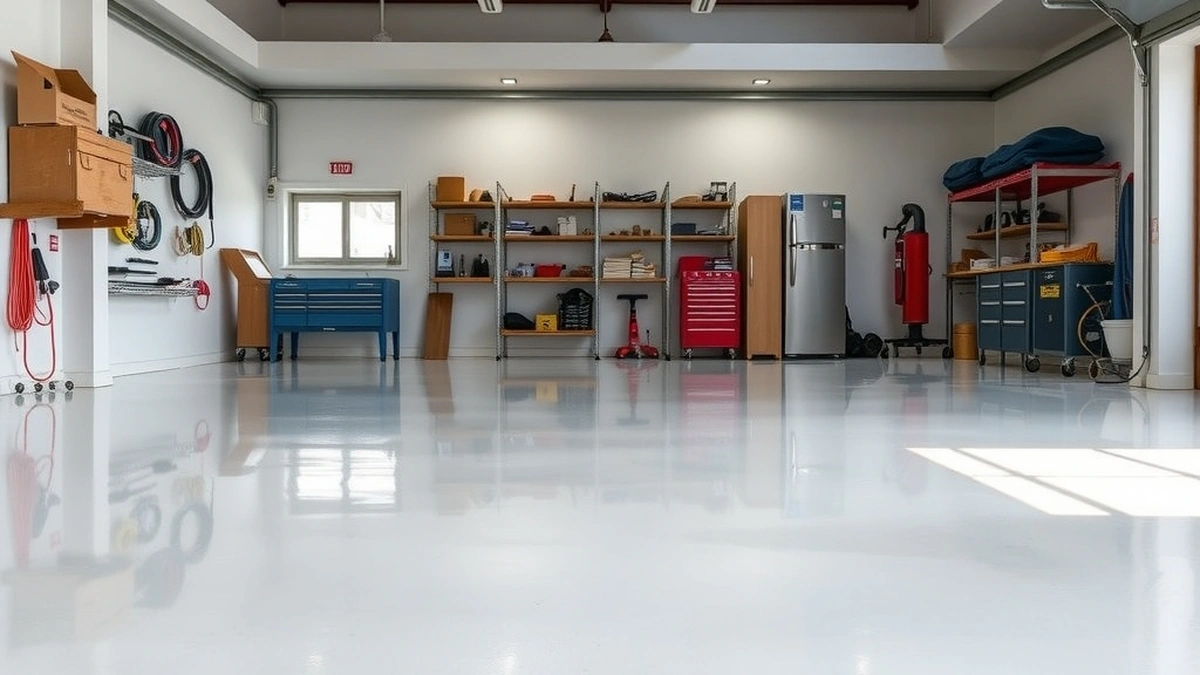
Garage floor coating cost
Garage floor coating cost by type: epoxy $5-12 per sq ft installed, polyaspartic $8-15, metallic $10-20, paint a few hundred in materials. Compare.
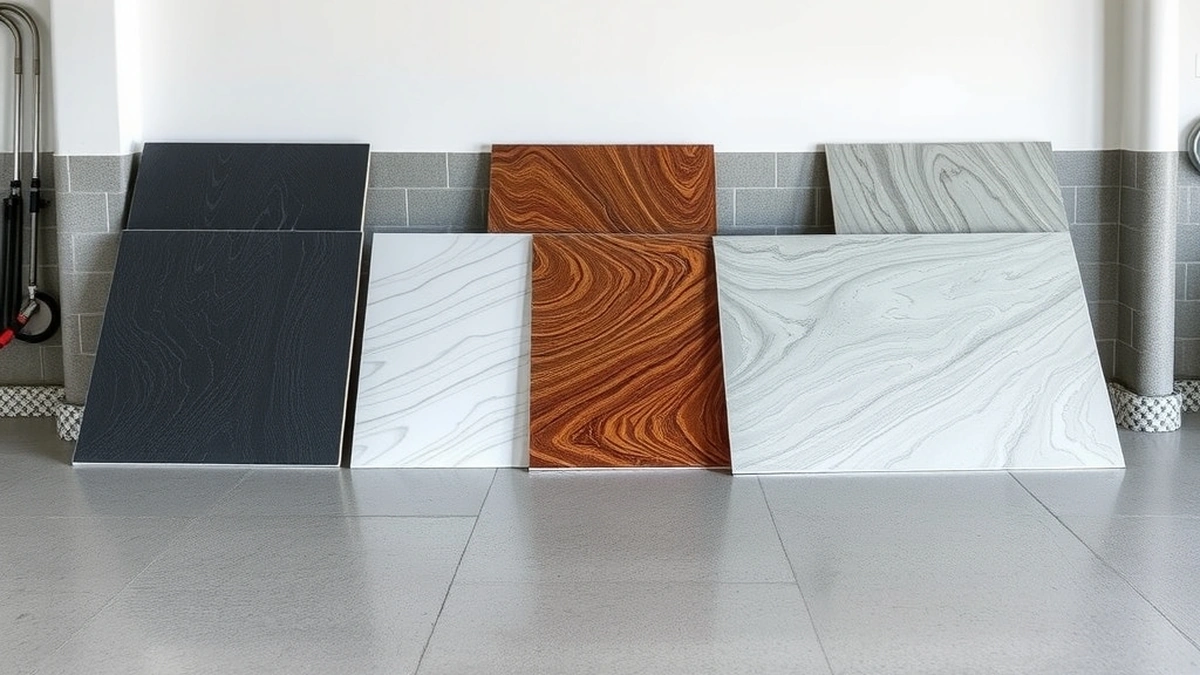
Garage floor coating cost runs $5-12 per sq ft installed for epoxy, $8-15 for polyaspartic and $10-20 for metallic. Paint and sealer cost far less in materials but need redoing every few years, so the ten-year totals converge.
- Epoxy installed
- $5-12 / sq ft
- Polyaspartic
- $8-15 / sq ft
- Metallic
- $10-20 / sq ft
- DIY kit
- $3-7 / sq ft
Some links on this page are affiliate links.If you buy through them we may earn a commission at no extra cost to you. We do not accept payment for rankings. Read the full disclosure.
Garage floor coating cost ranges from a few hundred dollars in paint and sealer materials to $10 to $20 per square foot for a metallic resin system. Installed epoxy sits at $5 to $12 per square foot and polyaspartic at $8 to $15. The cheapest coating is rarely the cheapest decade, because a thin film that needs recoating every three years keeps charging you for the same square footage.
What counts as a coating
A garage floor coating is any film applied over concrete to seal the surface and change how it wears: sealer, paint, epoxy, polyaspartic or polyurea. The products differ in thickness, chemistry and how they bond, and those differences are what the price is actually buying.
Two broad families matter. Film-forming paints and sealers sit on the surface at 1 to 3 mils and depend on a clean slab. Resin systems — epoxy and polyaspartic — are catalyzed, build 8 to 12 mils or more, and bond mechanically to a ground profile.
Cost by coating type
| Coating | Cost per sq ft | 400 sq ft | Estimated life |
|---|---|---|---|
| Concrete sealer | Low material cost | A few hundred, materials | 1-3 years |
| Epoxy paint | $200-600 in materials | $200-600, materials | 3-5 years |
| DIY epoxy kit | $3-7 | $1,200-2,800 | 2-5 years without prep |
| Installed epoxy | $5-12 | $2,000-4,800 | 10-20 years |
| Polyaspartic system | $8-15 | $3,200-6,000 | 12-20+ years |
| Metallic epoxy | $10-20 | $4,000-8,000 | 10-20 years |
The life figures are estimates for typical residential use, not test data. Read the table by multiplying, not by scanning: 400 × $5 = $2,000 and 400 × $12 = $4,800 for epoxy; 400 × $8 = $3,200 and 400 × $15 = $6,000 for polyaspartic. The $3 per square foot gap between them is $1,200 on a two-car floor.
Why the cheapest coating is not the cheapest decade
Paint at $200 to $600 in materials looks unbeatable until you add prep and a redo. Grinding still costs $1 to $3 per square foot, or $400 to $1,200 on 400 sq ft, so even a paint project lands at $600 to $1,800 the first time. Redo it at year four and year eight and the ten-year total is roughly $1,800 to $5,400, with three weekends of labor.
Installed epoxy is $2,000 to $4,800 once, for 10 to 20 years. Put the two side by side at the ten-year mark and the paint has caught up or passed the epoxy, while the epoxy floor still looks like a floor. That is the whole argument for a resin system, and it is arithmetic rather than salesmanship.
The exception is a garage you are leaving. Under three years of ownership, a sealer or a paint coat is a rational choice — you will not be there for the second redo.
What pushes a coating quote up
Prep. Grinding is the largest controllable line item, at $1 to $3 per square foot. Old coating removal and heavy oil saturation add passes.
Moisture. A failed test means mitigation at $2 to $5 per square foot, or $800 to $2,000 on 400 sq ft.
Finish. Flake adds a broadcast and a scrape visit. Metallic adds an applicator with a steady hand and a clear topcoat.
Access. A floor cut up by steps, a drain and a water heater takes longer than an open rectangle, and labor is billed in hours.
Topcoat. An aliphatic or polyaspartic clear adds roughly $0.50 to $1.50 per square foot in the quote. It is the cheapest insurance against UV ambering and hot tire marks.
The line items inside a coating quote
| Line | What it should say | Why it matters |
|---|---|---|
| Prep | Diamond grinding, number of passes | Adhesion lives here |
| Repair | Cracks filled, spalls patched | Reflected cracks appear otherwise |
| Primer | Product name, coverage rate | Bond and moisture tolerance |
| Base | Product, coats, dry mils | Wear life |
| Flake | Broadcast to rejection | Hiding and slip resistance |
| Topcoat | Chemistry and mils | UV and chemical resistance |
| Cure | Hours to foot traffic, days to vehicles | Prevents early tire marks |
A quote missing two of those lines is not necessarily a bad contractor, but it is an incomplete price. Ask for the missing lines before comparing totals.
Coating versus sealer versus replacement
A coating is not a repair. If the slab is spalling, settling or cracking actively, the money goes to concrete first. If the slab is sound and dry, a coating is the cheapest way to get a clean, sealed floor without demolition.
How do you tell the difference? A sound slab rings dull and solid under a hammer, has cracks that stay closed, and drains without ponding. A failing slab sounds hollow, has cracks that open in spring, or shows a 1/8-inch lip where one section has settled. Coatings hide the first kind of flaw and telegraph the second, which is why the inspection comes before the price.
Sealer is the minimum. It slows water absorption for a year or two and does nothing for abrasion or chemicals. Epoxy and polyaspartic are the working end of the market; the price difference between them is $3 per square foot for faster cure and UV stability. Epoxy garage floor vs polyaspartic coating explains when that premium pays.
Five steps to price a coating job
- Test the slab. Moisture first, because it changes the budget by $2 to $5 per square foot.
- Decide the coating family. Sealer, paint or resin, based on years of ownership and duty cycle.
- Get three itemized quotes. Same prep, same coats, same topcoat, so totals compare.
- Add the extras honestly. Storage for garage contents, a contingency of 10%, and the days without parking.
- Check the warranty exclusions. Hot tire pickup, moisture and delamination are the failures that matter.
For the deeper numbers, see epoxy garage floor cost and epoxy floor installation cost. If the choice is between systems rather than budgets, types of epoxy garage floor sorts the options, and garage floor epoxy kit covers the DIY route.
Frequently asked questions
What is the cheapest garage floor coating?
Concrete sealer or epoxy paint, at a few hundred dollars in materials for a two-car floor. Both are thin films that need recoating every few years, and neither resists hot tires or road salt the way a resin system does.
How much does a coating cost for a 400 square foot garage?
Epoxy installed runs $2,000 to $4,800, polyaspartic $3,200 to $6,000, and metallic $4,000 to $8,000. A DIY epoxy kit is $1,200 to $2,800 in materials before grinding.
Is a coating cheaper than new concrete?
Yes, by a wide margin. A coating seals and finishes an existing slab; replacing concrete is a structural project with demolition, base prep and a cure period of its own.
Does the quote include surface prep?
It should, and you should confirm it in writing. Grinding at $1 to $3 per square foot is a separate line item on some quotes and folded into the rate on others.
What coating lasts the longest per dollar?
A 100% solids epoxy base with an aliphatic or polyaspartic topcoat, properly ground and moisture-tested. It sits mid-range on price and avoids the repeated recoats that make cheap coatings expensive over a decade.
Do I need a moisture barrier under the coating?
Only if the slab fails a moisture test. When it does, mitigation adds $2 to $5 per square foot and is cheaper than replacing a blistered floor two seasons later.
Sources
Some links are affiliate links.If you buy through them we may earn a commission at no extra cost to you. We do not accept payment for rankings. Read the full disclosure.