Types of epoxy garage floor
Solids content, finish and topcoat define the types of epoxy garage floor. Compare 100% solids, water-based, flake, metallic and polyaspartic systems.
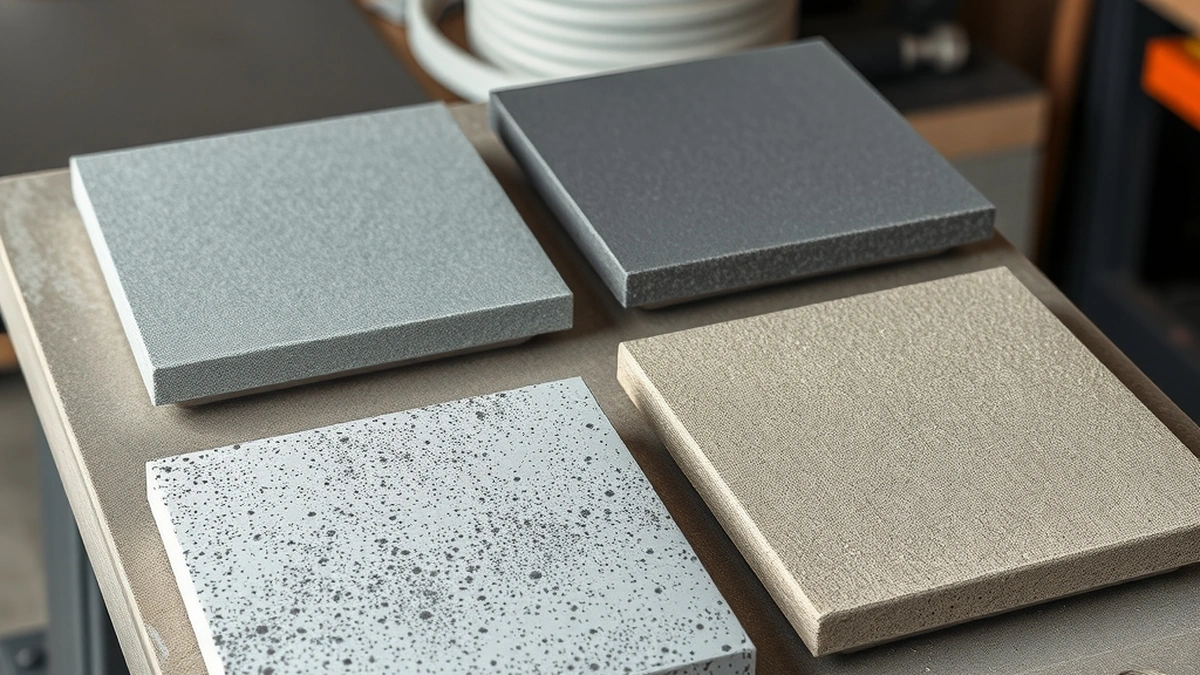
The main types of epoxy garage floor are 100% solids epoxy, water-based epoxy, flake-broadcast, metallic and polyaspartic-topcoated systems. For a garage, 100% solids epoxy with a flake broadcast and an aliphatic topcoat is the standard choice at $5-12 per sq ft installed.
- DIY kit
- $3-7 / sq ft
- Professional epoxy
- $5-12 / sq ft
- Metallic epoxy
- $10-20 / sq ft
- Polyaspartic system
- $8-15 / sq ft
Some links on this page are affiliate links.If you buy through them we may earn a commission at no extra cost to you. We do not accept payment for rankings. Read the full disclosure.
There are five types of epoxy garage floor you will actually be quoted: 100% solids epoxy, water-based epoxy, flake-broadcast systems, metallic epoxy and polyaspartic-topcoated hybrids. For a working garage, the standard answer is a 100% solids epoxy base with a flake broadcast and an aliphatic topcoat, installed at $5 to $12 per square foot. The others are not worse — they are matched to different slabs, budgets and expectations.
What “type” means here
An epoxy garage floor coating is a two-part thermosetting resin system whose performance is set by three variables: solids content, film build and the topcoat chemistry. Most product names describe one of those three, which is why a shelf of cans labeled “industrial,” “metallic” and “water-based” is not a list of equivalents.
Sort any product by asking what it is made of, how thick it goes on, and what sits on top. Those three answers place it in the table below.
Solids content: the split that matters most
| Type | Solids by volume | Film per coat | Cost per sq ft | Best for |
|---|---|---|---|---|
| 100% solids epoxy | 95-100% | 8-12 mils dry | $5-12 installed | Garages, shops, daily traffic |
| Water-based epoxy | 40-60% | 2-4 mils dry | $3-7 DIY | Light foot traffic, low odor |
| Solvent-borne epoxy | 30-60% | 3-5 mils dry | Varies, VOC-restricted | Legacy industrial work |
| Metallic epoxy | 100% solids base | 12-20 mils total | $10-20 | Decorative show floors |
| Polyaspartic system | 100% solids | 6-10 mils per coat | $8-15 | Fast turnaround, UV exposure |
The solids number tells you what remains after the carrier evaporates. A water-based product at 50% solids applied at 8 mils wet leaves 4 mils dry, and a second coat gets you to 8 — usable, but with less chemical resistance than a 100% solids system that builds the same thickness in one pass.
Solvent-borne epoxies still exist in industrial settings, but VOC rules in many states have pushed them out of residential garages. If a product smells strongly and lists a thinning solvent, check the local rules before you buy.
Flake, metallic and solid color
Finish type is a separate axis from chemistry, and it is where most of the price spread lives. Two quotes can use the same resin and land $4 per square foot apart because one includes a full flake broadcast, a scrape and a clear topcoat while the other is a single rolled color coat with nothing over it.
Solid color is one pigment throughout. It shows every crack, stain and trowel mark, which makes it a poor choice for an imperfect slab but the cheapest to apply.
Flake broadcast is vinyl chips thrown into wet epoxy until the floor refuses more, then scraped and topcoated. It hides patches, adds slip resistance and is the default for residential garages.
Metallic uses pigment dispersed in the resin so the floor looks like poured metal or a fluid marble. It costs $10 to $20 per square foot — on 400 sq ft, $4,000 to $8,000 — because it needs a base coat, a metallic pour, a clear topcoat and an applicator who can keep the pattern even. It also telegraphs every flaw in the slab, so it belongs on a floor that has been ground flat, not just profiled.
Water-based epoxy and where it belongs
Water-based epoxy is the product most homeowners meet first, because it is sold in big-box stores with low odor and easy cleanup. It is a real coating, and on a basement floor or a lightly used workshop it does the job.
In a garage it is a compromise. Thin film, lower chemical resistance and a shorter wear life at the tire path. If the car comes in wet with road salt, a 4-mil water-based film will not hold up the way an 8 to 12-mil 100% solids system does. The price difference is smaller than the performance difference once you count a second application.
Polyaspartic as a topcoat type
Polyaspartic is an aliphatic polyurea, not an epoxy, but it is sold as a system type because it changes how the whole floor behaves. It cures in hours rather than days, resists UV without ambering, and takes abrasion better than a standard epoxy topcoat.
The hybrid is what most installers quote: grind, prime, epoxy base with flake, then polyaspartic clear. You keep epoxy’s low material cost and film build, and you get a topcoat that survives a south-facing door. A full polyaspartic system at $8 to $15 per square foot is the option when the garage cannot be closed for a week. Epoxy garage floor vs polyaspartic coating covers that trade in detail.
Matching type to how the garage is used
- Daily driver, four-season climate: 100% solids epoxy, flake broadcast, aliphatic or polyaspartic topcoat.
- Show car or home gym: metallic or a high-build solid color with a clear topcoat, on a floor ground flat.
- Workshop with welding and solvents: high-build epoxy with a chemical-resistant topcoat, plus a welding blanket.
- Rental or flip: mid-grade flake epoxy, because it hides the slab and cleans up for the next tenant.
- Basement or utility room: water-based epoxy is acceptable; the duty cycle is feet, not tires.
- Commercial bay with a deadline: full polyaspartic, because the floor is back in service in about a day.
Five steps to pick a type
- Test the slab. Moisture and profile come before product type. Mitigation, if needed, adds $2 to $5 per square foot.
- Decide the duty cycle. Tires and salt push you to 100% solids; feet and storage do not.
- Choose the finish. Solid color for cost, flake for hiding, metallic for appearance.
- Choose the topcoat. Standard epoxy for shade, aliphatic or polyaspartic for sun and salt.
- Price the whole system. Grinding at $1 to $3 per square foot plus coating at $5 to $12 is the real installed number.
If you are buying materials yourself, garage floor epoxy kit explains what is actually in the box. For budget planning, see epoxy garage floor cost per square foot, and for the decorative end of the range, metallic epoxy cost.
Frequently asked questions
What is the most common type used in garages?
A 100% solids epoxy base coat with a vinyl flake broadcast and a clear topcoat. It hides slab imperfections, resists hot tires and costs less than a full polyaspartic system.
Is water-based epoxy good enough for a garage?
For light foot traffic and a budget, sometimes. It carries roughly 40 to 60% solids, builds a thinner film and resists chemicals less than a 100% solids product, so it wears faster at the tire path.
What is the difference between flake and metallic?
Flake is a broadcast of colored chips that hides imperfections and adds texture. Metallic uses pigments suspended in the resin to create a fluid, reflective pattern, costs $10 to $20 per square foot and shows every slab flaw.
Is polyaspartic a type of epoxy?
Not chemically. It is an aliphatic polyurea sold into the same market, usually as a topcoat over epoxy. It cures faster and resists UV without yellowing, which is why it is often paired with an epoxy base.
Does a thicker coat always last longer?
Up to a point. A film of 8 to 12 mils dry with a topcoat outperforms a single thick pour, because thick single coats trap solvent, cure unevenly and are more prone to bubbles.
Can I mix types in one floor?
Yes, and most professional systems do. An epoxy base with a polyaspartic topcoat is the standard hybrid, and a flake broadcast can sit between the two without changing the chemistry.
Sources
Some links are affiliate links.If you buy through them we may earn a commission at no extra cost to you. We do not accept payment for rankings. Read the full disclosure.