Hot tire pickup: repair options
Why hot tires lift epoxy and what actually fixes it: spot repair, recoating with a urethane topcoat, or grinding back to concrete, with cure times.
Hot tire pickup is repaired by cutting back the softened film, cleaning and profiling the surface, then recoating with an aliphatic polyurethane or polyaspartic topcoat. A full recoat over a sound base is the reliable fix; painting over the marks fails.
- Likely cause
- Soft or undercured topcoat
- Reliable fix
- Profile and recoat with urethane
- Spot repair area
- 100 - 150 square feet
- Cure before parking
- 48 - 72 hours
Some links on this page are affiliate links.If you buy through them we may earn a commission at no extra cost to you. We do not accept payment for rankings. Read the full disclosure.
Hot tire pickup is repaired by cutting back the damaged film, cleaning and profiling what remains, and rebuilding the surface with a topcoat that can take heat. There are three levels of repair, and the right one depends on how much of the floor has lifted: a spot repair, a full recoat over a sound base, or a grind back to concrete and a new system.
What is happening when a tire lifts the floor
Hot tire pickup is a heat and adhesion failure. A tire that has been driven at highway speed holds heat for a while after the car stops. That heat softens the coating’s surface, and the rubber in the tread bonds to the softened film more strongly than the film bonds to the layer beneath it.
When the car pulls out, a tread-shaped patch of coating goes with the tire. The mark left behind is not a stain; it is a missing piece of film, usually with a rough edge and exposed base coat or concrete underneath.
The underlying causes are consistent: a topcoat that never fully cured, a standard epoxy clear instead of a urethane, a film applied too thick, or a base coat with a weak bond because the slab was not ground or was damp.
The three repair levels
| Level | Scope | When it applies | Approximate cost |
|---|---|---|---|
| Spot repair | 10 - 50 sq ft | One or two isolated marks | Material only, $50 - $250 |
| Full recoat | Whole floor | Widespread marks, sound base | $5 - $12 per sq ft |
| Grind and rebuild | Whole floor | Lifting base coat, moisture issues | $5 - $12 plus $1 - $3 grinding |
The distinction that matters is whether the base coat is still bonded. Tap the floor with a coin. A sharp, solid sound means the base is intact and a recoat will work. A hollow, drummy sound means the base has let go, and a topcoat over it will fail.
Spot repair, step by step
- Scrape the loose film from the damaged area with a sharp floor scraper, working outward from the center.
- Sand the edges of the remaining film to a feathered transition, not a cliff.
- Clean the area with a compatible solvent and let it flash off completely.
- Apply a compatible primer or epoxy patch to the exposed base and let it cure.
- Recoat with the specified topcoat, two thin passes rather than one thick one.
- Keep traffic off for 24 hours and vehicles off for 48 to 72 hours.
Spot repairs are visible under raking light because the new film has a slightly different sheen. In a tire lane, that is usually acceptable. Across a showroom floor, it is not, which pushes the job toward a full recoat.
Full recoat over a sound base
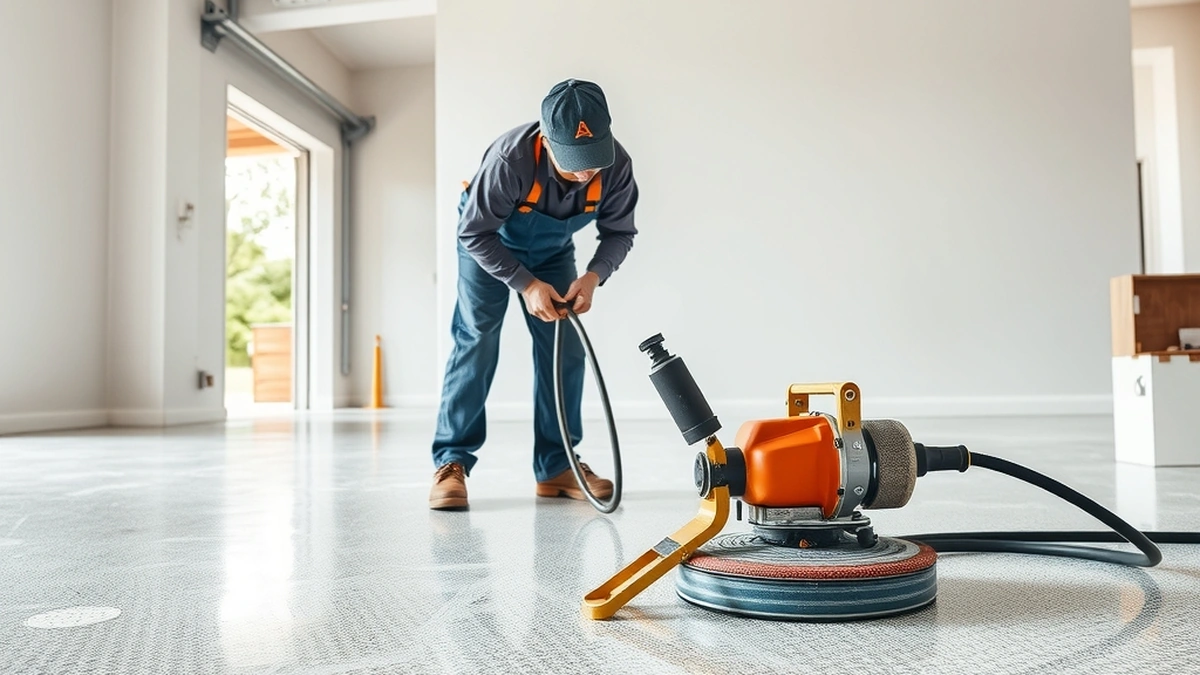
A full recoat is the practical fix when the marks are scattered across the parking area but the base is bonded. The sequence is to degrease the whole floor, scuff the existing topcoat to break the gloss, vacuum, and apply one or two coats of aliphatic polyurethane or polyaspartic.
The scuffing step is the one that gets skipped, and it is the one that determines whether the new coat holds. A topcoat bonds mechanically to a profiled surface. Over a glossy, slick film, it can peel in sheets within a year.
A recoat is also the moment to correct the original specification. If the floor had a standard epoxy clear, specify a urethane topcoat this time. If the film was applied too thick, apply two thin coats instead.
Grind and rebuild
When the base coat lifts with the topcoat, or when hollow spots appear around the marks, a recoat is wasted money. The system has to come off.
Grinding at $1 to $3 per square foot removes the old coating and opens the concrete. On a 400 square foot garage, that is $400 to $1,200 before any new material. Then a new base and topcoat go down at the full system rate of $5 to $12 per square foot, or $2,000 to $4,800.
That is a full replacement, and it should only be chosen after a moisture test. If the slab is emitting vapor, the new system needs mitigation at $2 to $5 per square foot or it will fail the same way.
Why repairs fail the second time
The repeat failures follow a pattern. The repair was applied over a contaminated surface, so the new coat bonded to oil rather than to the floor. The repair was applied too thick, so the film stayed soft in the middle. The floor was parked on too soon, so the topcoat had not cross-linked. Or the moisture problem underneath was never addressed.
Each of those is avoidable, and each adds cost when it happens. A $150 spot repair done twice costs more than a $400 repair done once with proper prep.
How to tell which repair you need
- Count the marks and note whether they are in one area or across the whole parking zone.
- Tap the floor around each mark for a hollow sound.
- Press the edge of the lifted film; if it crumbles, the film is brittle and the whole coat is suspect.
- Check for white bloom or damp patches near the walls.
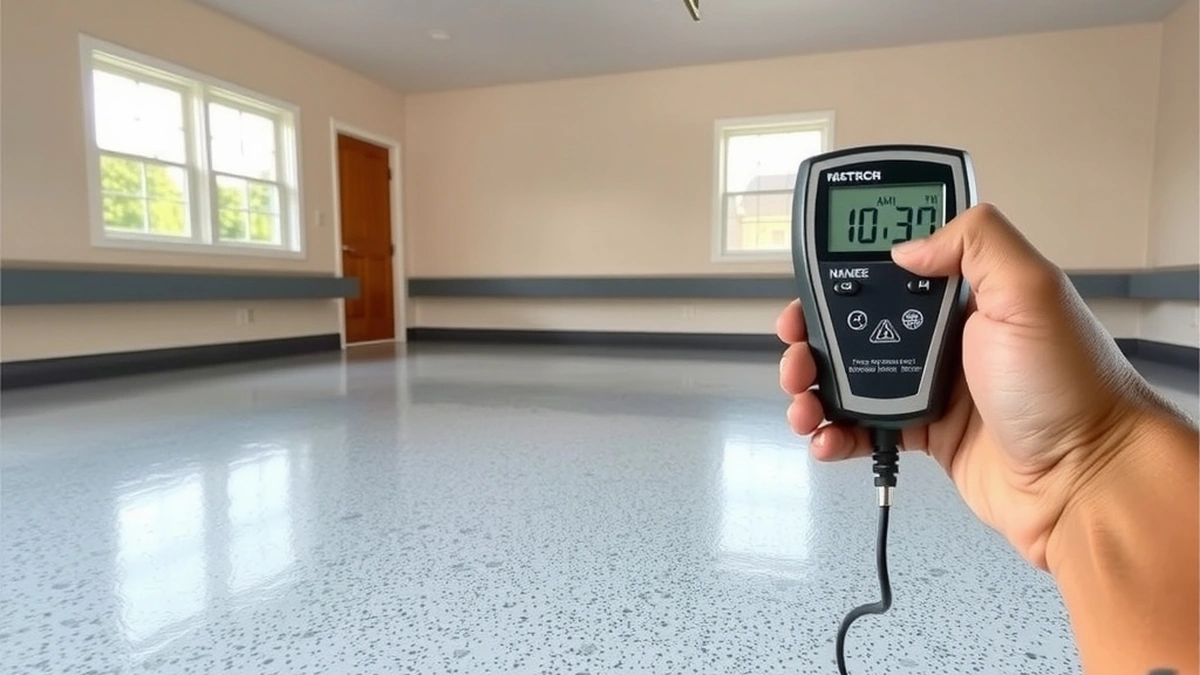
- Test the slab for moisture before choosing a recoat.
If the base is sound and the marks are few, spot repair. If the base is sound and the marks are everywhere, recoat. If the base is hollow, grind and rebuild.
For the arithmetic on each path, see the hot tire pickup cost breakdown. For the specification that prevents the problem in the first place, read polyurethane vs epoxy. And for the broader failure list, the epoxy problems guide covers what else can go wrong with a garage coating.
Frequently asked questions
What exactly is hot tire pickup?
It is the transfer of coating from the floor to a hot tire. Heat softens the film, the tire's rubber grabs it, and a tread-shaped patch lifts when the car pulls away.
Can I just paint over the tire marks?
No. The lifted area has a broken film and often a contaminated surface. A new coat over it bonds to the damage and lifts again within a season.
Will a polyaspartic topcoat stop it?
A properly applied aliphatic polyaspartic or polyurethane topcoat resists hot tire pickup far better than a standard epoxy clear, especially after a full cure.
How long should I wait before parking on a repaired floor?
48 to 72 hours at 70°F for vehicle traffic. Cooler conditions extend that, and parking early is one of the ways a fresh repair fails.
Does moisture cause hot tire pickup?
It can contribute. Moisture vapor weakens the bond at the base, and heat from the tire then lifts the film. A moisture test should come before any repair.
Is the repair covered by warranty?
Sometimes. Many coating warranties exclude hot tire pickup unless a urethane topcoat was specified, so read the terms before assuming the installer will pay.
Sources
Some links are affiliate links.If you buy through them we may earn a commission at no extra cost to you. We do not accept payment for rankings. Read the full disclosure.