Water Based Epoxy Garage Floor Pros and Cons
Water Based Epoxy Garage Floor Pros and Cons: practical numbers, costs, and trade-offs, written independently.
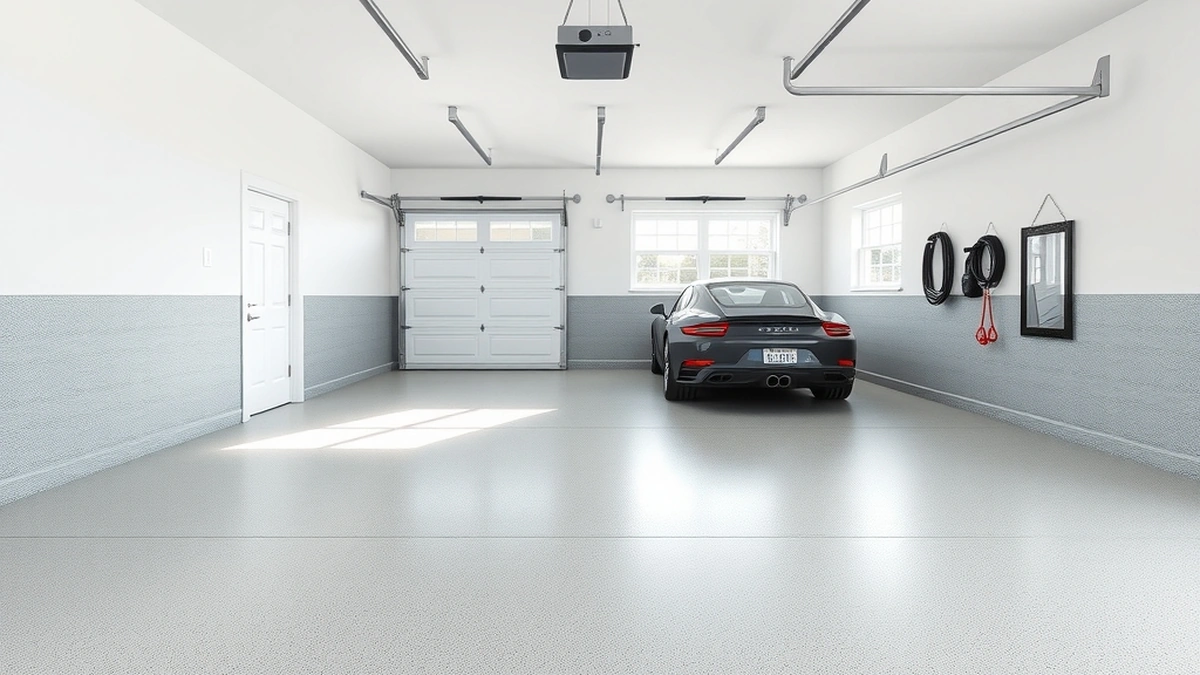
Water based epoxy is a low-odor, DIY-friendly garage floor coating best suited to dry slabs with light traffic; it is less durable than solvent-based epoxy or polyaspartic and fails without proper prep and moisture control.
- Best for
- Dry slabs, light-to-moderate traffic, DIY projects
- DIY material cost
- $3–$7 per sq ft
- Professional installed cost
- $5–$12 per sq ft
- Typical dry film thickness
- 2–4 mils per coat
- Main limitation
- Poor tolerance for moisture vapor and hot-tire pickup
Some links on this page are affiliate links.If you buy through them we may earn a commission at no extra cost to you. We do not accept payment for rankings. Read the full disclosure.
Water based epoxy garage floor coatings are a common entry point for homeowners who want a finished concrete surface without the strong solvent odor of traditional epoxy. The short answer is that water based epoxy works best on dry slabs with light traffic, and it is not a substitute for proper concrete prep or moisture control. This guide covers what it is, where it fits, what it costs, and when another system makes more sense.
What Water Based Epoxy Is
Water based epoxy is a two-part coating made from epoxy resin and a hardener, emulsified with water instead of organic solvents. Because water is the carrier, it has lower volatile organic compound (VOC) content and a much milder smell during application. Cleanup is typically done with water and soap, which makes it attractive for DIYers working in an attached garage.
The trade-off is performance. Water based epoxies usually build thinner films per coat than 100% solids or solvent-based products. A typical coat might dry to 2 to 4 mils, so multiple coats are often needed to reach an adequate thickness. The cured film is also softer and more permeable than solvent-based epoxy, which matters when hot tires, oil drips, or slab moisture enter the picture.
Where It Belongs in a Garage
Water based epoxy is best matched to garages that stay dry and see moderate use. Think of a single-car garage used for parking and light storage, not a workshop where transmission fluid spills weekly or a showroom floor that needs a mirror finish.
It is not ideal for basements or garages with high moisture vapor transmission. If the concrete slab releases moisture from below, water based epoxy can blister or delaminate because it does not breathe well and lacks the bond strength to push back against hydrostatic pressure. Testing the slab before buying material is cheaper than peeling up a failed coating six months later.
Prep comes before product. Concrete should be clean, sound, and mechanically profiled. Diamond grinding typically costs $1–$3 per square foot and creates the surface profile that helps the coating bond. Acid etching is sometimes sold as an easier alternative, but it often leaves a weak, powdery layer that can cause early failure. If moisture testing shows elevated vapor emission, moisture mitigation at $2–$5 per square foot may be required before any coating goes down.
Costs: DIY vs Professional
DIY water based epoxy kits generally cost $3–$7 per square foot for materials. For a standard 24-foot by 24-foot two-car garage, that is 576 square feet, so material costs land between $1,728 and $4,032 before tools, surface prep, or moisture testing.
Professional installation runs $5–$12 per square foot. For the same 576-square-foot garage, the installed price ranges from $2,880 to $6,912. That spread reflects slab condition, coating thickness, number of coats, decorative flakes, and whether moisture mitigation is needed.
For comparison, other systems sit at different price points. Polyaspartic systems cost $8–$15 per square foot installed, while metallic epoxy runs $10–$20 per square foot. Water based epoxy is usually the lowest-cost epoxy option, but the savings disappear if the floor fails early and needs to be stripped and redone.
Pros of Water Based Epoxy
The main advantage is user-friendliness. Low odor means you can apply it in an attached garage without forcing the whole family out of the house for days. Water cleanup reduces the need for solvent-resistant gloves and respirators, though eye protection and ventilation are still recommended.
It is also forgiving during application. Longer open time gives a DIYer more room to roll out the product before it starts to set, and minor roller marks are easier to work back into than fast-cure polyaspartic.
Cost is another factor. At $3–$7 per square foot for DIY materials, it is one of the least expensive ways to cover bare concrete with a real coating rather than floor paint. If you want to compare it directly to paint, the breakdown in garage floor painting vs epoxy covers how the two differ in durability and surface preparation.
Water based epoxy can accept decorative broadcast flakes, which hide minor imperfections and add some slip resistance. It is available in neutral garage colors, including light gray tones similar to what you might see in a grey epoxy garage floor installation.
Cons of Water Based Epoxy
Durability is the biggest drawback. The cured film is softer than solvent-based epoxy and significantly softer than polyaspartic. Hot tires from a car driven on the highway can soften the surface and leave pickup marks, especially if the coating was applied too thin or cured in cool weather.
Chemical resistance is limited. Gasoline, oil, brake cleaner, and de-icing salts can attack or stain the surface over time. For a garage that doubles as a workshop, that is a real limitation.
Moisture sensitivity is perhaps the most serious issue. Water based epoxy does not tolerate high moisture vapor transmission well. Without testing and mitigation, you risk blistering, bubbling, or delamination. Moisture mitigation adds $2–$5 per square foot, which narrows the cost advantage over tougher systems.
Finally, service life is unpredictable. On a dry, well-prepped slab with light traffic, it may last several years. On a damp slab or under heavy vehicle use, it can fail much sooner. There is no universal warranty period because results depend almost entirely on site conditions and prep quality.
How It Compares to Other Coatings
Solvent-based epoxy builds thicker, harder films and handles chemicals better, but it smells stronger and requires more safety precautions during application. Polyaspartic coatings cure fast, resist UV yellowing, and handle hot tires well, though they cost $8–$15 per square foot installed and demand professional-level application speed.
Metallic epoxy at $10–$20 per square foot is a decorative option, not a durability upgrade over standard epoxy. If your goal is simply a clean, protectable surface on a dry slab, water based epoxy can make sense. If you need maximum impact and chemical resistance, a polyaspartic system or solvent-based epoxy is worth the extra cost.
You can read more about installed pricing in how much does epoxy garage floor cost, and about surface preparation in epoxy garage floor installation.
Maintenance and Repair
Water based epoxy floors need regular sweeping and prompt cleanup of spills. Avoid harsh solvents or abrasive scrubbers that can wear the thin film. Recoating is possible, but the existing surface must be scuffed and cleaned so the new layer bonds.
Damage such as chipping or delamination should be repaired before it spreads. Small chips can be patched with compatible epoxy, but widespread failure usually means grinding the floor back to bare concrete and starting over. More detail is available in epoxy garage floor repair and epoxy garage floor maintenance.
A topcoat can add wear resistance and UV stability, though it adds cost and another layer to maintain. Options are discussed in epoxy garage floor topcoat.
Bottom Line
Water based epoxy is a legitimate garage floor coating, but only under the right conditions. It fits dry slabs, light traffic, and budgets that prioritize low odor and DIY application over long-term hardness. It does not fit damp slabs, heavy workshops, or owners who want a one-and-done floor for the life of the house. Test the concrete, prep the surface, and match the product to the garage’s actual use before buying material.
Next, compare garage floor painting vs epoxy, grey epoxy garage floor, epoxy garage floor topcoat before you commit.
Frequently asked questions
What is water based epoxy?
Water based epoxy is a two-part coating where epoxy resin and hardener are emulsified in water rather than solvents, resulting in lower odor and easier cleanup than solvent-based formulas.
Is water based epoxy good for garage floors?
It can work well on dry concrete with light vehicle traffic and minimal chemical exposure, but it is generally less durable and less chemical-resistant than 100% solids or polyaspartic coatings.
How much does water based epoxy cost?
DIY kits typically run $3–$7 per square foot for materials, while professional installation ranges from $5–$12 per square foot depending on prep and coating thickness.
Can water based epoxy handle moisture?
No. It has limited tolerance for moisture vapor transmission, so slabs with high moisture readings usually need moisture mitigation costing $2–$5 per square foot before coating.
How long does water based epoxy last?
Service life varies widely by prep, traffic, and moisture; expect several years on a dry, well-prepped slab, but delamination can happen much sooner if moisture is present.
Do I need to grind the concrete first?
Mechanical preparation such as diamond grinding, typically $1–$3 per square foot, is strongly recommended because acid etching alone often leaves a weak surface profile.
Sources
Some links are affiliate links.If you buy through them we may earn a commission at no extra cost to you. We do not accept payment for rankings. Read the full disclosure.