Grey Epoxy Garage Floor Colors and Coverage
A practical guide to grey epoxy garage floor options, coverage rates, and costs for DIY and professional installs.
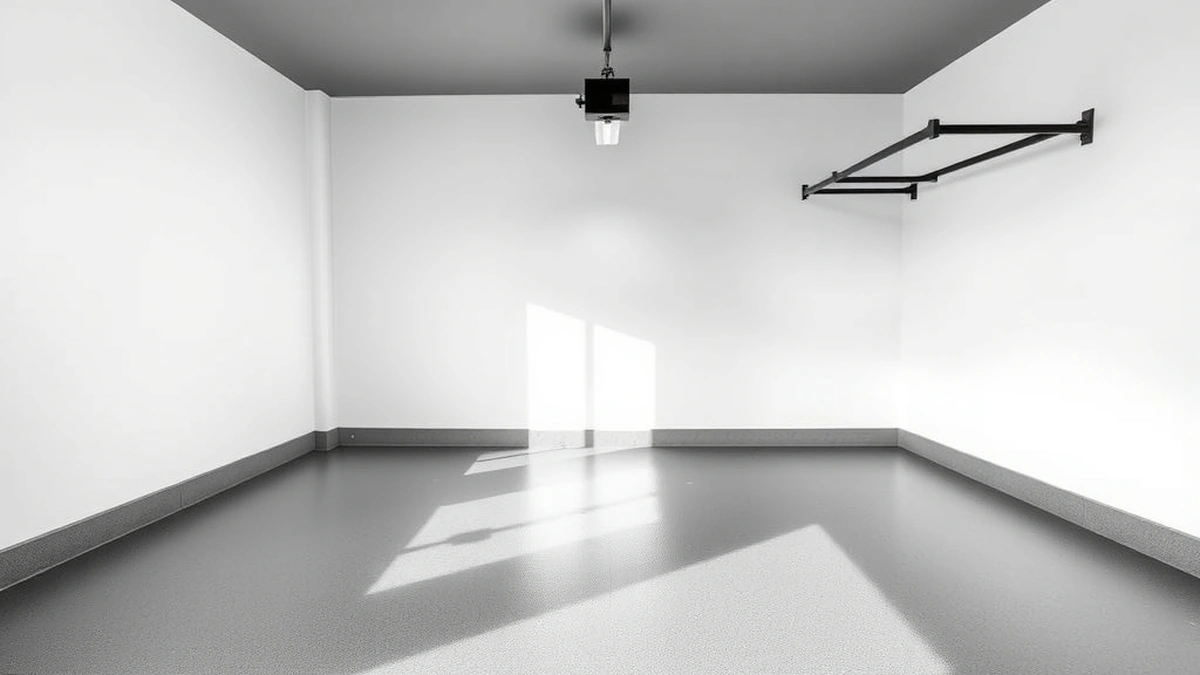
A grey epoxy garage floor typically covers 200–400 square feet per kit at 10 mils, with DIY materials costing $3–$7 per square foot and professional installs $5–$12 per square foot.
- Typical coverage per DIY kit
- 200–400 sq ft at 10 mils
- DIY material cost
- $3–$7 per sq ft
- Professional install cost
- $5–$12 per sq ft
- Best prep first step
- Concrete grinding or shot blasting
Some links on this page are affiliate links.If you buy through them we may earn a commission at no extra cost to you. We do not accept payment for rankings. Read the full disclosure.
A grey epoxy garage floor is a practical, neutral coating option for residential and light-commercial garages. Grey hides tire marks and dust better than white while reflecting more light than black or dark charcoal. Coverage and cost depend on the product type, surface preparation, and whether you install it yourself or hire a contractor.
Grey Epoxy Color Options
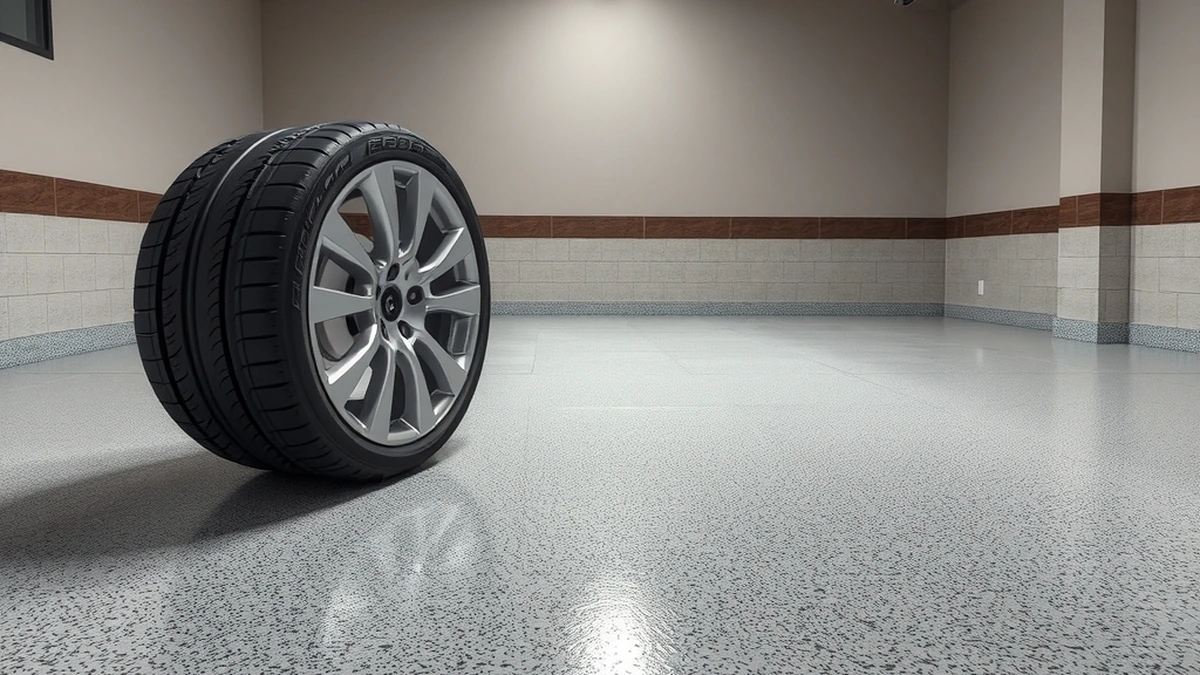
Grey epoxy is not a single shade. Most manufacturers offer light grey, medium grey, charcoal grey, and tinted bases that can be adjusted with pigment packs. Light grey works well in garages with limited natural light because it reflects overhead fixtures and daylight from the door. Medium grey balances brightness with stain concealment. Charcoal grey shows the least dirt but can make a small garage feel darker.
Solid color epoxy provides a uniform appearance, while flake systems add decorative chips in complementary tones such as grey, black, white, or beige. Metallic grey epoxy exists but costs more and requires a skilled applicator to control the movement of metallic pigments. For a garage floor, solid grey or grey with full broadcast flake is usually the most durable and easiest to maintain.
Coverage Rates and Film Thickness
Epoxy coverage is measured in square feet per gallon at a specific mil thickness. One mil equals one-thousandth of an inch. A standard DIY epoxy kit often rates coverage at roughly 200 to 400 square feet at 10 mils, assuming a non-porous, properly prepared surface. Actual coverage drops if the concrete is rough, porous, or absorbent.
Here is an example for a typical two-car garage:
- Garage dimensions: 20 feet by 20 feet
- Total area: 400 square feet
- Desired thickness: 10 mils
- Estimated kit coverage: 200 to 400 square feet per kit
At the low end of coverage, one 400-square-foot garage requires two kits. At the high end, one kit may be enough, but buying an extra 10 to 15 percent is standard practice to account for waste, roller loss, and surface absorption.
For a three-car garage measuring 30 feet by 20 feet:
- Total area: 600 square feet
- Kits needed at 200 square feet per kit: 3 kits
- Kits needed at 400 square feet per kit: 2 kits, with a third recommended for waste
Always read the product data sheet rather than relying on the bucket label alone. Coverage changes significantly if you apply a primer, a base coat, and a topcoat instead of a single coat.
Cost Breakdown by Installation Method
DIY epoxy kits are the lowest-cost entry point. Materials typically run $3 to $7 per square foot. For a 400-square-foot garage, that equals $1,200 to $2,800 in materials alone. You also need rollers, squeegees, mixing buckets, respirators, and possibly concrete repair products.
Professional epoxy installation usually costs $5 to $12 per square foot. For the same 400-square-foot garage, the installed price is $2,000 to $4,800. That range includes surface preparation, materials, and labor. A professional crew may also include moisture testing and crack repair in the quote.
Other coating systems carry different price points:
- Polyaspartic system: $8 to $15 per square foot
- Metallic epoxy: $10 to $20 per square foot
- Concrete grinding: $1 to $3 per square foot
- Moisture mitigation: $2 to $5 per square foot
If your slab has high moisture vapor transmission, a moisture mitigation primer or membrane may be required before the grey epoxy goes down. Adding $2 to $5 per square foot for mitigation changes a $2,000 professional job to $2,800 to $4,000 for materials and labor combined, depending on scope.
Surface Prep Comes Before Color
No grey epoxy color will perform well on unprepared concrete. The slab must be clean, dry, and mechanically profiled. Concrete grinding or shot blasting removes laitance, old sealers, and contaminants while opening the pores of the concrete. Without this step, epoxy can delaminate within months.
Grinding costs roughly $1 to $3 per square foot when subcontracted separately. DIY rental of a floor grinder adds equipment cost and dust management responsibilities. After grinding, vacuum the surface thoroughly and wipe with a solvent or tack rag as directed by the coating manufacturer.
Moisture testing is also important. Calcium chloride or relative humidity tests determine whether the slab emits too much moisture vapor for direct epoxy application. If the test fails, a moisture mitigation system is required before color coats are installed.
Applying Grey Epoxy
Most garage epoxy systems use a two-component product: Part A resin and Part B hardener. Once mixed, the pot life is limited, often 30 to 60 minutes depending on temperature. Work in sections so you do not lose a wet edge.
Typical steps include:
- Repair cracks and spalls with epoxy patch or concrete repair mortar.
- Grind or shot blast the concrete to the required surface profile.
- Vacuum and clean the surface.
- Apply primer if required by the system.
- Roll or squeegee the grey epoxy base coat.
- Broadcast flake into the wet base coat, if using a flake system.
- Apply clear topcoat after the base coat has cured.
Temperature matters. Most epoxies cure best between 60 and 85 degrees Fahrenheit. If the garage is too cold, the epoxy may stay tacky or fail to cure. If it is too hot, the pot life shortens and roller marks become harder to avoid.
Maintenance and Longevity
A grey epoxy floor is low maintenance but not maintenance-free. Sweep or dust mop weekly to remove abrasive grit. Clean spills promptly, especially oil, gasoline, and battery acid. For mopping, use a neutral pH cleaner and warm water. Avoid harsh solvents or citrus-based cleaners unless the manufacturer approves them.
Reapply a maintenance topcoat every few years in high-traffic zones, such as in front of garage doors or workbenches. This restores gloss and protects the base coat from UV yellowing and wear. If you notice chips or scratches, spot repairs are possible but may be visible depending on the grey shade and system age.
Related Considerations
If you are deciding between paint and epoxy, epoxy offers much better adhesion and chemical resistance than standard garage floor paint. For more on that comparison, see the guide on garage floor painting versus epoxy. If your slab has moisture issues, a water-based epoxy garage floor may tolerate damp concrete better than a 100 percent solids system, though it still requires proper prep. After the epoxy cures, a compatible epoxy garage floor topcoat can add UV stability and wear resistance.
For full project budgeting, the cost guide on epoxy garage floor costs breaks down material and labor by garage size. If you want to understand the full sequence from slab assessment to final coat, the epoxy garage floor installation article covers each step. Existing coatings with delamination or chips can be addressed using the epoxy garage floor repair guide, and ongoing care is detailed in the epoxy garage floor maintenance overview. For product category context, the best epoxy garage floor page compares system types without endorsing specific brands.
Grey remains one of the most versatile garage floor colors because it balances appearance, maintenance, and resale appeal. The key to success is measuring the slab accurately, preparing the concrete mechanically, and buying enough product to cover the actual square footage plus waste.
Next, compare garage floor painting vs epoxy, water based epoxy garage floor, epoxy garage floor topcoat before you commit.
Frequently asked questions
What is a grey epoxy garage floor?
A grey epoxy garage floor is a two-part resin and hardener coating applied to concrete, tinted to a grey shade for a uniform, durable surface.
How much area does one epoxy kit cover?
Coverage depends on film thickness, but most DIY kits cover roughly 200 to 400 square feet at 10 mils before waste and surface absorption.
How much does a grey epoxy garage floor cost?
DIY materials run about $3 to $7 per square foot, while professional installation typically costs $5 to $12 per square foot.
Do I need to grind the concrete first?
Mechanical prep such as grinding or shot blasting is usually required to open the concrete pores and create a mechanical bond for the epoxy.
Can grey epoxy hide concrete imperfections?
Solid grey epoxy can mask minor discoloration and small flaws, but it will not hide major cracks, spalling, or uneven slab height without repair.
How long does grey epoxy take to cure?
Most epoxies are touch-dry in 12 to 24 hours and ready for light foot traffic in 24 to 48 hours, with full chemical cure taking several days.
Sources
Some links are affiliate links.If you buy through them we may earn a commission at no extra cost to you. We do not accept payment for rankings. Read the full disclosure.