Epoxy vs epoxy: which product you are buying
Epoxy vs epoxy is a comparison of product classes, not brands. 100% solids, solvent-based, water-based and polyaspartic all sell under the same word.
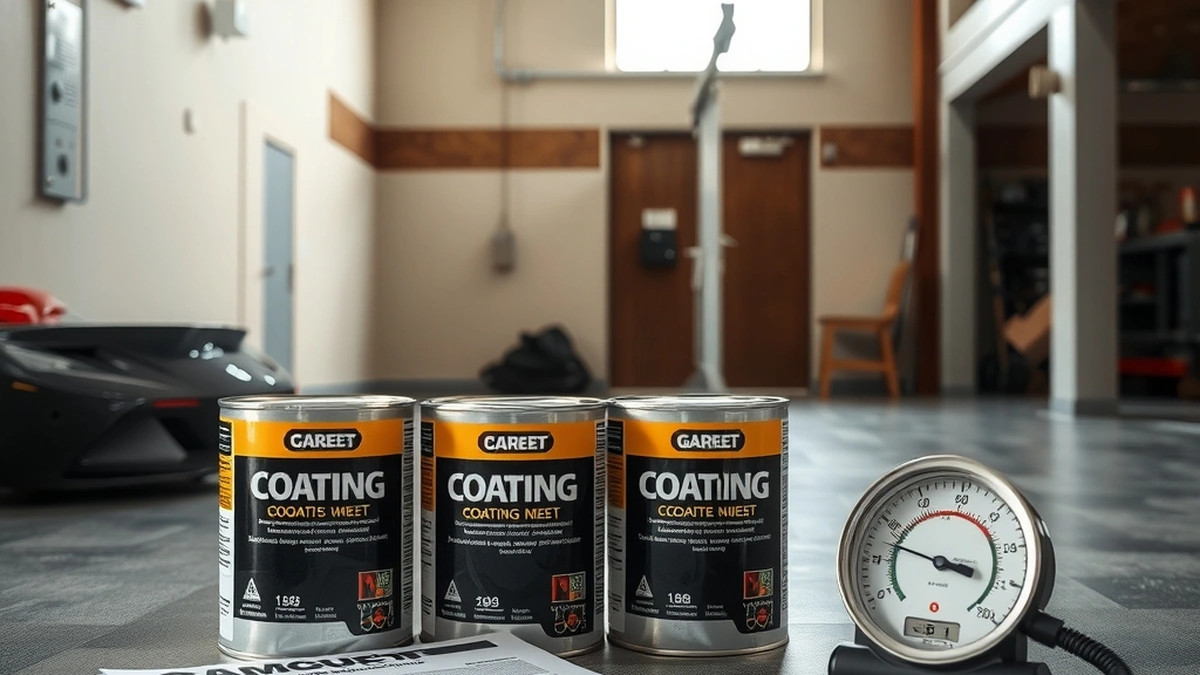
Epoxy vs epoxy compares four different products sold under one name: 100% solids epoxy at $5-12 per sq ft installed, solvent-based primer, water-based kit epoxy at $3-7 per sq ft, and polyaspartic topcoat, which is not an epoxy at all. Solids by volume decides which one you have.
- DIY kit epoxy
- $3-7 / sq ft
- Professional epoxy
- $5-12 / sq ft
- Metallic epoxy
- $10-20 / sq ft
- Diamond grinding
- $1-3 / sq ft
Some links on this page are affiliate links.If you buy through them we may earn a commission at no extra cost to you. We do not accept payment for rankings. Read the full disclosure.
“Epoxy vs epoxy” sounds like a trick question, and in a way it is. The word describes at least four chemically different products sold for garage floors, ranging from a $3 per square foot retail kit to a $12 per square foot 100% solids system, and they do not cure to the same film or last the same number of years. The comparison that decides your floor is between product classes, not between two brands on the same shelf.
What the word epoxy actually covers
An epoxy coating is a two-part thermosetting system in which an epoxide resin reacts with a curing agent, usually an amine hardener, to form a cross-linked film that bonds mechanically to a profiled concrete surface.
That definition is narrower than the shelf. Retailers use “epoxy” for any two-can floor product, including polyaspartic polyureas and polyurethane topcoats, which are not epoxies in the chemical sense. They sit next to epoxy, go over epoxy and get called epoxy, so the label on the bucket tells you less than the data sheet does.
Four products wearing the same name
| Product | What it is | Film build | Where it belongs |
|---|---|---|---|
| 100% solids epoxy | Resin and hardener, no solvent carrier | High, typically 8-12 mils per coat | Base coat on a garage slab |
| Solvent-based epoxy | Epoxy thinned with solvent | Thin and penetrating | Primer over porous or chalky concrete |
| Water-based epoxy | Epoxy dispersed in water | Low to moderate | Low-odor, light-traffic floors |
| Polyaspartic polyurea | Aliphatic polyurea, aspartate ester based | Moderate to high, fast curing | Clear topcoat over an epoxy base |
The two most often confused are 100% solids epoxy and water-based epoxy, since both are marketed as garage floor coatings and both ship with a hardener. They are not interchangeable. Water-based products carry less resin per gallon, build a thinner film, and give up chemical resistance and hot tire tolerance compared with a full solids build coat.
The fourth row is not epoxy at all. Polyaspartic is a polyurea, and it is the product most often described in conversation as “the epoxy that doesn’t yellow.” That sentence is wrong and useful at once: polyaspartic is a topcoat, and it resists yellowing because of a different chemistry, not a better epoxy.
The numbers that separate the classes
The published rate bands make the classes visible before you read a single data sheet:
- Retail DIY epoxy kit: $3 to $7 per sq ft in materials
- Professional epoxy system: $5 to $12 per sq ft installed
- Metallic epoxy: $10 to $20 per sq ft installed
- Diamond grinding: $1 to $3 per sq ft, before any coating
- Moisture mitigation: $2 to $5 per sq ft, only if the slab fails a test
On a 400 sq ft two-car garage the arithmetic runs 400 × $3 = $1,200 at the bottom of the kit band and 400 × $7 = $2,800 at the top. The professional band is 400 × $5 = $2,000 to 400 × $12 = $4,800.
The $2,000 gap between the top of the kit band and the bottom of the professional band is not markup on the same resin. It buys grinding at $400 to $1,200, a primer, a build coat, a flake broadcast and a topcoat, plus labor and a warranty. Compare a kit price to a professional price and you are comparing a coating to a system.
Epoxy vs epoxy, head to head
Take the two extremes. A water-based kit at 45% solids, rolled at the manufacturer’s stated coverage, might leave 4 to 6 mils of dry film on the slab. A 100% solids build coat at 12 mils leaves roughly twice that in one pass, with a denser film and far better resistance to road salt and tire plasticizers.
The same difference shows up in the recoat window. Water-based products often accept a second coat in 4 to 6 hours and can be walked on the same day. A 100% solids epoxy typically wants 12 to 24 hours between coats and 3 to 7 days before a vehicle parks on it. Fast is convenient; fast is also thinner.
Then there is what neither class can fix. Both need a slab that is dry, clean and mechanically profiled. Neither one bonds to a floor with a curing compound, an old sealer, or a moisture reading above the manufacturer’s limit. Grinding at $1 to $3 per square foot is the same line item whichever bucket you buy.
How to read the bucket before you pay
Four numbers on the data sheet do most of the work:
Solids by volume. If it reads 45%, more than half of what you pour evaporates. If it reads 100%, the volume you buy is the volume you install.
Coverage at a stated thickness. A kit that claims 300 square feet is claiming it at a film thickness you have to look up. Coverage without thickness is a marketing number.
Pot life and induction time. A 20 to 40 minute pot life at 70°F is normal for epoxy. A 10 to 20 minute pot life usually means you are holding polyaspartic.
Recoat window. This sets your schedule more than anything else. Miss the window on a fast product and you are sanding a cured film before the next coat will bond.
Five steps to compare two epoxy products
- Write down solids by volume for each. Use the technical data sheet, not the retail label.
- Convert both to cost per square foot at the same film thickness. Multiply the number of coats by the wet mils needed, then divide the kit price by the square footage that thickness actually covers.
- Add the prep both products require. Grinding at $1 to $3 per square foot and any moisture mitigation at $2 to $5 belong in both columns.
- Check the recoat window against your week. If the garage has to be back in service in 48 hours, a slow 100% solids system may not fit regardless of price.
- Price the topcoat separately. An epoxy base without an aliphatic topcoat will amber under UV, and that cost belongs in the comparison from the start.
Where the comparison stops mattering
Once the slab is ground and dry, the gap between a good 100% solids epoxy and a good water-based epoxy narrows to film build and chemical resistance, and the gap between either one and a badly prepped floor stays enormous. A $12 per square foot system over a damp slab fails faster than a $5 system over a dry one.
For the full ladder of systems and rates, see epoxy garage floor cost per square foot. If you are still deciding which class you want, types of epoxy garage floor sorts them by use, and water-based epoxy garage floor covers the low-odor option in detail. Anyone tempted by a boxed kit should read garage floor epoxy kit before buying, and polyaspartic vs epoxy explains the topcoat that gets sold under the epoxy name.
Frequently asked questions
Why do two epoxy products with the same name behave differently?
Because the word covers different chemistries. A 100% solids epoxy, a solvent-thinned epoxy, a water-based epoxy and a polyaspartic polyurea all get sold as epoxy, and each one builds a different film thickness with different UV and chemical resistance.
What does solids by volume mean on an epoxy label?
It is the share of the can that stays on the floor after the carrier evaporates. A 100% solids product leaves essentially all of its volume behind; a 45% solids product loses more than half to the air, so you need roughly twice the material for the same film.
Is a cheap epoxy kit the same as a professional epoxy floor?
No. Retail kits usually run $3 to $7 per square foot in materials and often carry lower solids, a thinner film and a shorter service life. A professional system at $5 to $12 per square foot includes grinding, primer, a build coat and a topcoat, which the kit price does not.
Can I compare two epoxies by price per kit?
Only after converting to cost per square foot at the same film thickness. A gallon that covers 200 square feet at 5 mils is not a bargain next to one that covers 160 square feet at 12 mils, even if the second can costs more.
Is polyaspartic a type of epoxy?
No. Polyaspartic is an aliphatic polyurea built on aspartate esters, a different chemistry from epoxide resin. It is routinely sold alongside epoxy and used as the topcoat over an epoxy base, which is why the names get mixed together.
Which epoxy class is best for a garage floor?
For a residential garage, a 100% solids epoxy base coat with a flake broadcast and an aliphatic topcoat is the standard specification. Water-based products are a low-odor option for light traffic, and solvent-based epoxy works best as a penetrating primer.
Sources
Some links are affiliate links.If you buy through them we may earn a commission at no extra cost to you. We do not accept payment for rankings. Read the full disclosure.