Best epoxy garage floor: what actually matters
Slab moisture, solids content and prep decide which epoxy garage floor lasts. Compare system costs and the spec numbers that predict failure.
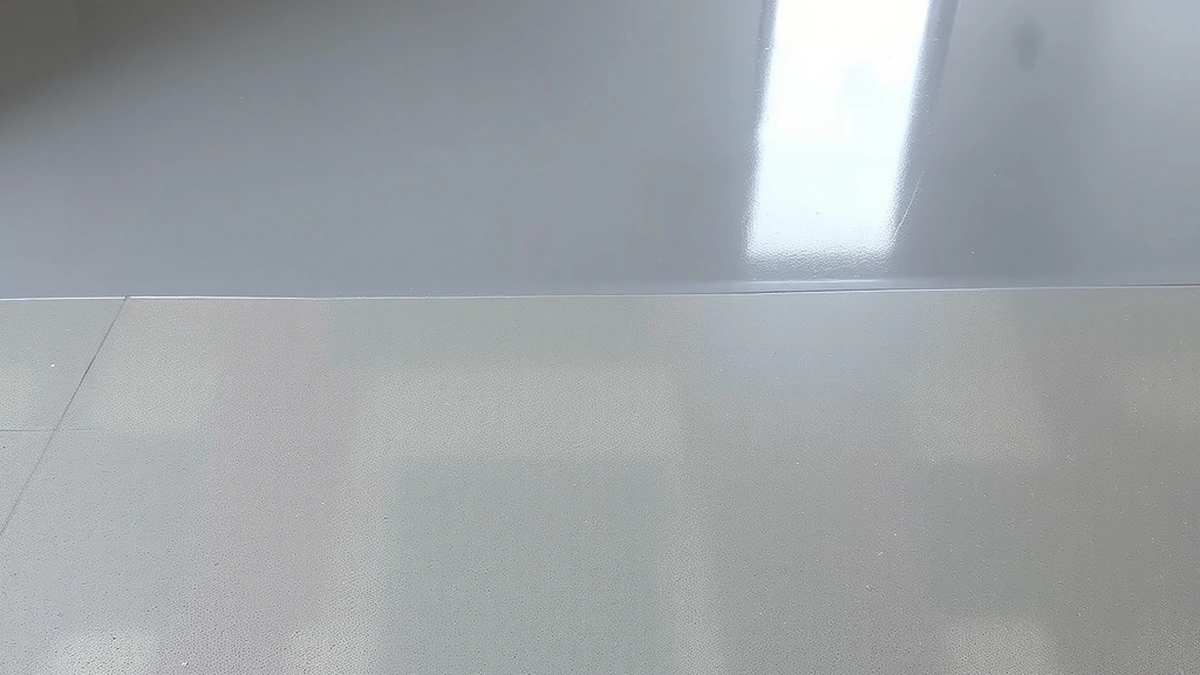
The best epoxy garage floor is the system that matches your slab. Test moisture first, grind to a CSP 3-4 profile, then choose 95-100% solids epoxy. DIY kits run $3-7 per sq ft; professional systems run $5-12 per sq ft.
- DIY epoxy kit
- $3-7 / sq ft
- Professional epoxy
- $5-12 / sq ft
- Polyaspartic system
- $8-15 / sq ft
- Concrete grinding
- $1-3 / sq ft
Some links on this page are affiliate links.If you buy through them we may earn a commission at no extra cost to you. We do not accept payment for rankings. Read the full disclosure.
The best epoxy garage floor is the one whose film build and adhesion match your slab, not the one with the loudest label. The same product can last four years in one garage and fifteen in another, because moisture, surface profile and coat thickness decide the outcome long before the brand name does. Judge a coating on solids content, prep standard and moisture readings first, and price second.
Why the slab decides the result
An epoxy garage floor coating is a two-part thermosetting resin — resin plus hardener — that cures into a bonded, chemical-resistant wear surface on prepared concrete. It is thin — typically 8 to 12 mils dry — so everything beneath it matters as much as the resin.
Two tests belong in any honest quote. The in-situ relative humidity test (ASTM F2170) reads moisture inside the slab; most coating manufacturers cap acceptance around 75% RH. The calcium chloride test (ASTM F1869) measures vapor emission, commonly capped at 3 lb per 1,000 sq ft per 24 hours. A slab that fails either test needs a moisture mitigation primer, which runs $2 to $5 per square foot. On a 400 sq ft garage that is $800 to $2,000 before a single gallon of color goes down.
Profile is the second gate. Diamond grinding opens the concrete and leaves a CSP 3 to 4 surface, about the texture of 60-grit paper, which the resin keys into. Grinding costs $1 to $3 per square foot, or $400 to $1,200 on 400 sq ft. Acid etching is cheaper and far less predictable, particularly on dense, hard-troweled or previously sealed slabs where the acid has nothing to bite.
The spec numbers that predict failure
Product pages advertise color and coverage. The data sheet carries the numbers that actually decide service life.
| Spec | What to look for | Why it matters |
|---|---|---|
| Solids by volume | 95-100% | Determines film build per coat and solvent smell |
| Dry film thickness | 8-12 mils total | Thin films fail at the tire path first |
| Pot life | 20-40 minutes at 70°F | Short pot life punishes slow crews |
| Recoat window | 8-24 hours | Miss it and you must abrade before the next coat |
| Compressive strength | 8,000+ psi | Resists point loads from jacks and stands |
| VOC | Under 100 g/L where required | Some states restrict solvent-borne systems |
A single coat of a 50% solids water-based product at 4 mils wet leaves about 2 mils dry. That is a stain, not a wear surface. Two coats of a 100% solids epoxy at 8 mils wet each leave roughly 16 mils dry, which is a floor.
Solids content, film build and hot tire pickup
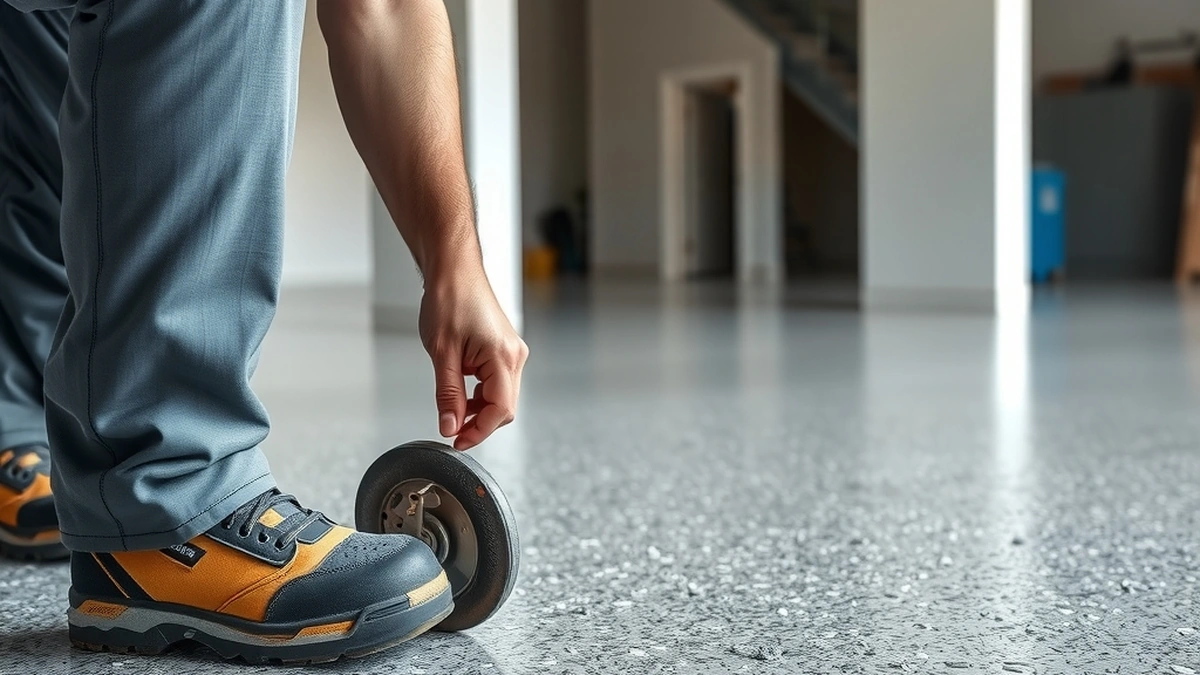
Hot tire pickup — tire-shaped patches where coating lifts off — is the most common residential complaint, and it is almost never a resin failure. It results from plasticizers migrating out of warm tires into a coating that was too thin, under-cured, or bonded to a contaminated slab. Thicker film, full cure and a clean, profiled surface prevent it.
That is why a base coat plus a clear topcoat beats a single thick pour. The base coat bonds and carries color; the topcoat takes the abrasion, the UV and the chemistry. Skipping the topcoat saves roughly $0.50 to $1.50 per square foot on materials and costs you the floor’s appearance within two summers of sun through an open garage door.
What each system actually costs
Cost per square foot is only meaningful when you know what it includes. Figures below are installed-cost estimates, except the DIY row, which is material only.
| System | Cost per sq ft | 400 sq ft total | What it includes |
|---|---|---|---|
| DIY epoxy kit | $3-7 | $1,200-2,800 | Materials only, your labor, prep extra |
| Professional epoxy | $5-12 | $2,000-4,800 | Grind, primer, base, topcoat, crew |
| Polyaspartic system | $8-15 | $3,200-6,000 | Fast-cure base and topcoat, grind included |
| Metallic epoxy | $10-20 | $4,000-8,000 | Decorative pour, multiple coats, clear top |
The $3-7 band on a DIY kit is not comparable to the $5-12 band on a professional job, because the professional number folds in $1-3 per square foot of grinding and a warranty. If you pay a contractor to grind and then apply your own kit, add those figures: $3 + $1 = $4 per square foot at the bottom of both ranges, and $7 + $3 = $10 at the top. For a 400 sq ft garage that is $1,600 to $4,000, which overlaps a professional quote more than most shoppers expect.
Matching the system to the job the garage does
A garage holding one sedan does not need the same floor as a shop running a welder and a jack. Use the duty cycle, not the showroom sample.
- Parking only, mild climate: 100% solids epoxy base with a flake broadcast and a clear epoxy topcoat is enough.
- Daily driver in a snow state: add an aliphatic topcoat; de-icing salt is the harshest thing most residential floors see.
- Welding, grinding, solvent use: polyaspartic or a high-build epoxy with a chemical-resistant topcoat.
- Sun-exposed apron: polyaspartic topcoat, because standard epoxy chalks and amber under UV.
Red flags in “best of” lists
Most published rankings are affiliate pages ranking products by commission, not by film build. Three tells: the list never mentions moisture testing, the “winner” claims one-coat coverage, and every entry is available on the same retailer. A legitimate recommendation tells you what prep the product assumes and what it will not fix.
Two more: a lifetime warranty on a $150 kit usually excludes the failure modes you will actually hit, and “commercial grade” is a marketing phrase with no standard behind it. Ask for solids by volume and dry film thickness per coat instead.
Five steps before you buy anything
- Test the slab. Order an F2170 probe kit or an F1869 calcium chloride kit from a coatings supplier. Record the reading in the garage, not near the door.
- Measure the floor and check cure. New concrete needs about 28 days before coating. Measure length times width for square footage, and add 10% for waste on flake and edging.
- Get the profile ground. Rent a 10-inch diamond grinder with a shop vacuum shroud, or put grinding in the contractor’s scope. Vacuum thoroughly and wipe with a damp cloth before coating.
- Choose the system by duty, then by budget. Match solids content and topcoat to the list above, and confirm the product’s moisture limit exceeds your test result.
- Put the scope in writing. Number of coats, dry film thickness per coat, product names, cure times, and what the warranty excludes — especially hot tire pickup and moisture.
If your slab fails the moisture test, read moisture mitigation cost before you buy resin, and compare epoxy versus polyaspartic if the garage gets direct sun. For the full project budget, see epoxy garage floor cost per square foot, and for prep failures that show up later, epoxy garage floor repair.
Frequently asked questions
What solids content should a garage floor epoxy have?
Look for 95 to 100% solids by volume for a garage. High-solids products build a thicker film per coat and resist hot tire pickup and road salt better than water-based kits at 50 to 60% solids.
Do I have to grind the concrete before epoxy?
Yes, if you want the coating to stay down. Diamond grinding produces a CSP 3 to 4 profile that the resin can key into, and it costs $1 to $3 per square foot. Acid etching is a weaker substitute on dense or sealed slabs.
How do I know if my slab has a moisture problem?
Test it. An in-situ relative humidity probe (ASTM F2170) or a calcium chloride test (ASTM F1869) gives a number you can compare against the manufacturer's limit, usually about 75% RH or 3 lb per 1,000 sq ft per 24 hours.
Is a $3 per square foot kit the same as a $10 per square foot system?
No. The cheap kit usually carries less solids, thinner film and no primer, and it assumes you did the prep yourself. The higher figure typically includes grinding, primer, a base coat and a topcoat applied by a crew.
Does epoxy need a topcoat in a garage?
It needs one if the floor sees sunlight, hot tires or de-icing salt. An aliphatic polyurethane or polyaspartic topcoat adds UV stability and abrasion resistance that a bare epoxy base coat does not have.
How long before I can park on a new epoxy floor?
Foot traffic is usually fine in 12 to 24 hours and vehicles in 3 to 7 days, but the product data sheet governs. Cooler slabs and thicker films push both numbers out.
Sources
Some links are affiliate links.If you buy through them we may earn a commission at no extra cost to you. We do not accept payment for rankings. Read the full disclosure.