Finding a epoxy garage floor contractor near you
How to vet an epoxy garage floor contractor: licensing, insurance, moisture testing, references and an itemized quote you can compare line by line.

Find an epoxy garage floor contractor by verifying license and insurance, asking how they test slab moisture, and checking three local references with photos. Expect $5-12 per sq ft installed, itemized by prep, coats and topcoat.
- Installed epoxy
- $5-12 / sq ft
- Diamond grinding
- $1-3 / sq ft
- Moisture mitigation
- $2-5 / sq ft
- Typical cure before cars
- 3-7 days
Some links on this page are affiliate links.If you buy through them we may earn a commission at no extra cost to you. We do not accept payment for rankings. Read the full disclosure.
Finding a good epoxy garage floor contractor comes down to three checks: a license and insurance you can verify, a moisture test they insist on, and three local references you actually call. Everything else — the truck wrap, the showroom, the five-star reviews on a lead-generation site — is marketing. A fair installed price runs $5 to $12 per square foot, and the scope behind that number matters more than the number.
What you are hiring them to do
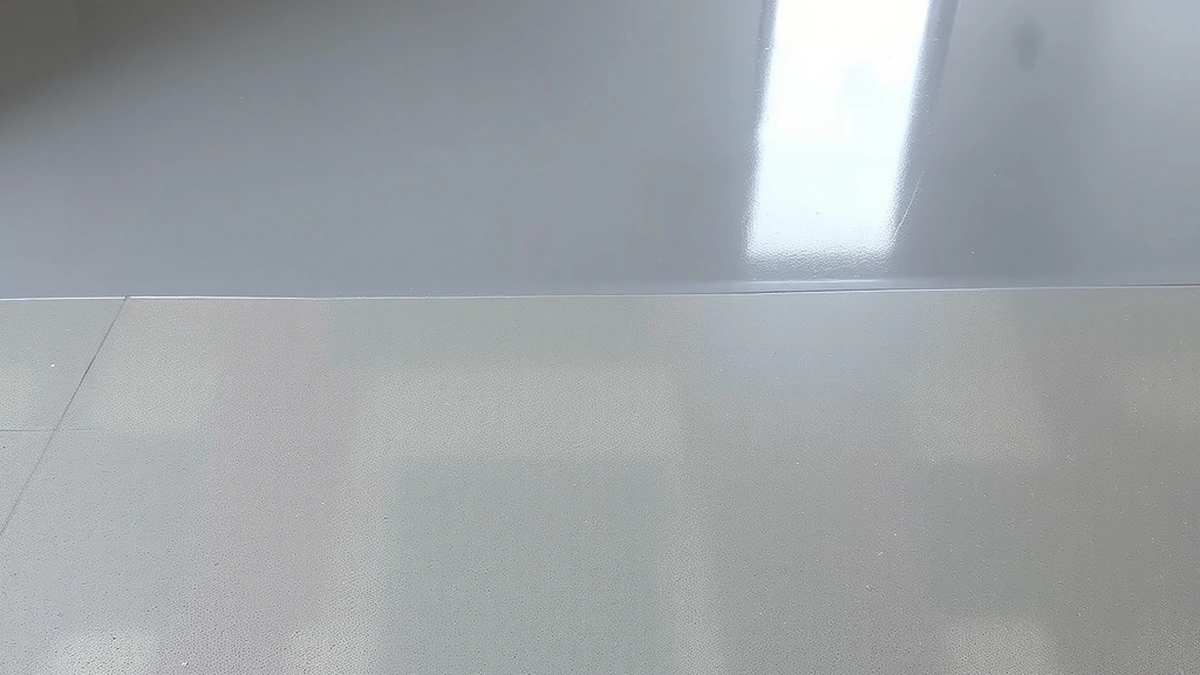
An epoxy garage floor contractor installs a bonded resin system over prepared concrete: grinding, crack repair, primer, a color base coat, optional flake, and a clear topcoat. The installation is a preparation business with a coating attached.
That is why the interview should sound like a conversation about your slab, not about colors. A contractor who starts with flake samples and finishes with a price has skipped the part that determines whether the floor lasts.
Start with your own slab
Before you call anyone, spend $30 and a morning on a moisture test. Calcium chloride kits are sold at coatings suppliers, and some contractors will run an in-situ relative humidity probe for free during an estimate. Write the number down.
Then document the floor. Photograph cracks, oil stains, spalling and any old coating. Measure length times width for each rectangle, including closets and the apron. When you hand a contractor a square footage and a moisture reading, the quotes you get back are comparable instead of optimistic.
This also filters the field fast. Ask each bidder what moisture limit they work to and watch whether the answer is a number or a shrug. Most residential systems cap acceptance near 75% RH or 3 lb per 1,000 sq ft per 24 hours.
Five questions that separate installers
- How do you prepare the concrete? The right answer involves diamond grinding and a dust shroud. Acid etching is a weaker substitute, and “we just clean it” is a disqualifier.
- What is the dry film thickness per coat? A professional should answer in mils without checking a phone. Vague answers about “two good coats” are how thin floors happen.
- Do you test for moisture, and what happens if it fails? They should quote mitigation at $2 to $5 per square foot rather than coat over the problem.
- Who is on the crew, and are they employees or subs? Subcontracted crews are common and not automatically bad, but you want to know who is actually holding the squeegee.
- What does the warranty exclude? Hot tire pickup, moisture damage and abrasion are the three failures that matter. A warranty that excludes all three covers nothing you will experience.
Reading a quote like an installer
| Line item | What a real quote shows | Red flag |
|---|---|---|
| Prep | Grinding passes, crack repair, vacuum | “Clean and etch” only |
| Primer | Product name and coverage rate | No primer line at all |
| Base coat | Product, coats, mils | One coat, no thickness stated |
| Flake | Broadcast to rejection, scrape | “Flake optional” with no price |
| Topcoat | Aliphatic or polyaspartic, mils | No topcoat |
| Cure | Hours to foot traffic, days to vehicles | “Ready next day” |
An itemized quote at $6 per square foot can be better value than a lump sum at $5, because you can see where the difference went. Two quotes at the same rate with different scopes are not the same price.
Run the arithmetic on 400 sq ft. At $5 per square foot the job is $2,000; at $12 it is $4,800. If the slab needs mitigation, add $800 to $2,000. That is the full range a legitimate contractor will quote, and anything far below it has removed something.
Reference checks that actually reveal problems
Ask for three addresses, then call the homeowners rather than texting. Two questions do most of the work: how old is the floor, and has anything lifted, bubbled or worn through?
Then look at the floor yourself if the homeowner allows it. Walk the tire path, look at the apron where the car pulls in, and check the edges at the garage door. Edges lift first when the prep was rushed, and the tire path wears first when the film was thin.
For a floor more than two years old, ask whether the owner parks hot tires on it in summer and whether they use road salt. Those two answers predict more about durability than any review score.
Red flags worth walking away from
- No local address. A lead-generation site that sells your phone number to three crews is not a contractor.
- Pressure to book today. Legitimate installers are booked out; urgency is a sales tactic.
- No moisture test and no mention of grinding.
- Cash-only with no written contract.
- A price under $5 per square foot installed with a “full system” claim. Something is missing, usually the prep.
- No certificate of insurance. Ask for it before work starts, not after.
Six steps to hire with confidence
- Test and photograph your slab. Note moisture, cracks, area and any old coating.
- Shortlist three local companies. Look for a physical address, a portfolio of local jobs and a license number you can check.
- Verify license and insurance. Call the state contractor board and the insurer; do not rely on a photocopy.
- Interview with the five questions above. Score the answers, not the personality.
- Get itemized written quotes. Same scope across all three so the totals compare.
- Call references and inspect one floor in person. Then sign a contract that names products, coats, mils and cure times.
If a contractor tells you the slab is too wet to coat, believe them — that is the mark of someone protecting their warranty. Epoxy garage floor cost explains what mitigation adds, and DIY epoxy garage floor shows what you would be taking on yourself. For the system itself, compare epoxy garage floor vs polyaspartic coating before you approve a product.
Frequently asked questions
What should I ask an epoxy contractor first?
Ask how they test for moisture and what result they will accept. A contractor who cannot answer that question is selling a finish, not a floor, and the failure will appear within a season.
Should the contractor be licensed?
Licensing for floor coatings varies by state and sometimes by city. Check the state contractor board or the local building department, and confirm the license covers the work being quoted.
What insurance should a garage floor installer carry?
General liability plus workers' compensation if they bring employees. Ask for a certificate of insurance made out to you, and verify the policy is current by calling the insurer.
How many references should I call?
Three, and at least one should be a floor that is two or more years old. A recent job shows workmanship; an older job shows whether the system holds up under tires and weather.
Is the cheapest quote usually the worst one?
Not automatically, but a price under $5 per square foot installed usually excludes grinding, primer or the topcoat. Compare what each quote includes before comparing the totals.
How long should installation take?
One to two days for prep and coating on a typical two-car garage, then three to seven days before vehicles. Polyaspartic systems can compress that to roughly 24 hours.
Sources
Some links are affiliate links.If you buy through them we may earn a commission at no extra cost to you. We do not accept payment for rankings. Read the full disclosure.