Epoxy maintenance: the yearly routine
Epoxy maintenance is sweeping, pH-neutral washing and a clear-coat refresh before wear reaches the base. A season-by-season routine that adds years.
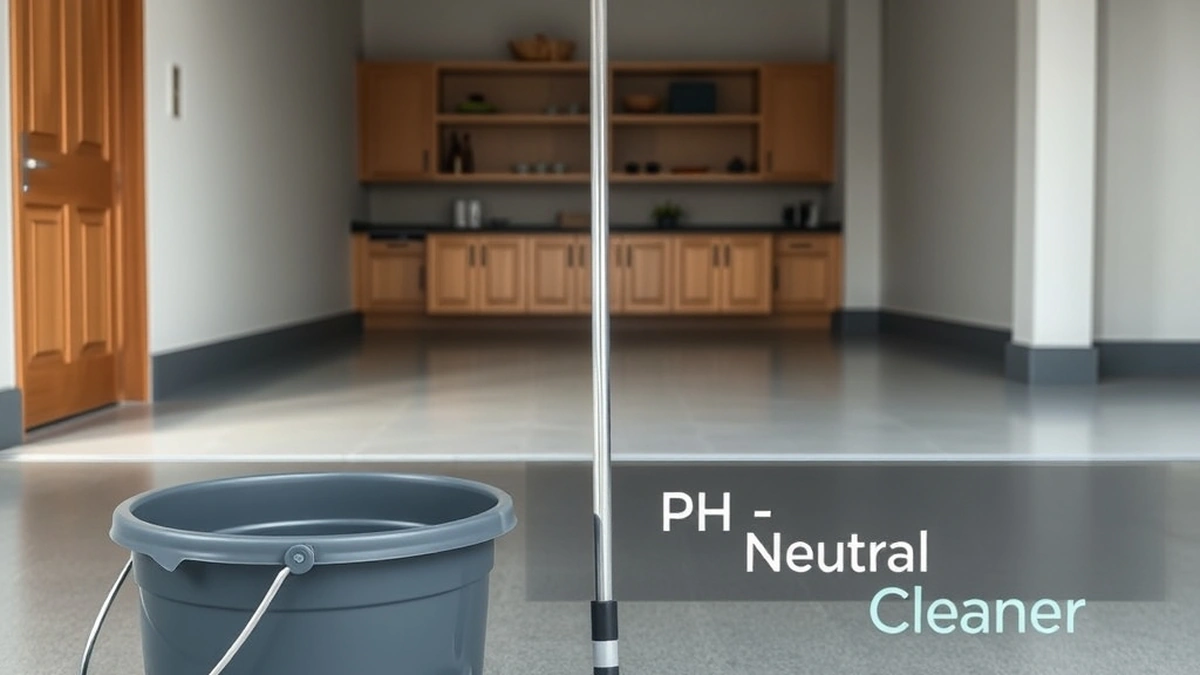
Epoxy maintenance is simple: sweep or blow the floor weekly, wash with a pH-neutral cleaner and a soft pad monthly, rinse road salt in spring, and refresh the clear coat when the traffic lane dulls. Avoid acidic cleaners, solvents and steam, which dull or soften the film.
- Routine wash
- Monthly, pH-neutral
- Salt rinse
- Spring, after winter
- Topcoat refresh
- At first dulling
- System replacement
- $5 - $12 per sq ft
Some links on this page are affiliate links.If you buy through them we may earn a commission at no extra cost to you. We do not accept payment for rankings. Read the full disclosure.
Epoxy maintenance is mostly sweeping and a monthly wash with a pH-neutral cleaner, plus one spring rinse to get road salt out of the texture. The one maintenance task that actually extends the floor’s life is refreshing the clear coat when the traffic lane dulls, before wear reaches the color base. Everything else is housekeeping.
What epoxy maintenance actually protects
Epoxy floor maintenance is the set of cleaning and inspection practices that preserve a cured resin film’s gloss, color and wear layer without damaging the chemistry underneath.
The wear layer is the topcoat, typically 2 to 4 mils of clear resin. Once it is gone, the color base takes the traffic and the floor starts to look tired. Maintenance is therefore less about scrubbing and more about knowing when that layer is thinning.
The cleaning routine by frequency
| Frequency | Task | Why |
|---|---|---|
| Weekly | Sweep or blow out grit | Grit under tires acts like sandpaper |
| Monthly | pH-neutral wash and rinse | Removes film and traffic soil |
| Seasonally | Inspect for chips and dulling | Catches wear before the base |
| Spring | Fresh-water rinse of salt | Brine holds moisture against the film |
| As needed | Spot clean oil and tires | Fresh spills wipe; old ones stain |
| Every few years | Clear-coat refresh | Restores the sacrificial layer |
The weekly sweep matters more than it sounds. Silica grit tracked in on tires is harder than the coating, and a floor that is swept wears noticeably slower than one that is not. A leaf blower does the job in under a minute.
Products that are safe, and products that are not
The safe list is short: pH-neutral floor cleaner, warm water, a soft microfiber pad, a damp mop, and a shop vacuum. That is enough for a garage.
The avoid list is longer, and every item on it causes a specific kind of damage.
Acidic cleaners — citrus, vinegar, muriatic — etch the film and leave a dull patch that no amount of buffing brings back.
Solvents — paint thinner, acetone, brake cleaner — soften cured epoxy and can lift the color layer if they sit.
Abrasive powders — scouring cleansers scratch the gloss permanently.
Steam cleaners — heat plus moisture can soften a topcoat and drive water into a chip.
Undiluted degreaser — a strong alkaline cleaner left to dwell will dull the surface. Dilute it, apply, and rinse.
When in doubt, use the mildest product and let dwell time do the work. A pH-neutral cleaner left for two minutes outperforms a harsh one left for twenty seconds.
What a wash actually costs
Maintenance is the cheapest part of owning an epoxy floor, and the arithmetic is worth stating plainly against replacement.
A pH-neutral concentrate diluted per the label covers a garage floor for a few dollars a wash. A clear-coat refresh is a fraction of a full system. A full replacement at $5 to $12 per square foot is $2,000 to $4,800 on a 400 sq ft garage, and if the slab needs moisture mitigation it adds $2 to $5 per square foot, or $800 to $2,000 more.
A DIY touch-up kit at $3 to $7 per square foot is not a cost-effective way to handle a small chip; a patch kit is. Reserve the square-foot rates for planning a full job.
Put against those numbers, a monthly wash and a spring rinse are close to free. The floor that gets ignored is the one that needs the $4,800 replacement first.
The recoat decision
Recoating is the only maintenance task with a real judgment call, and the signal is visual.
Stage 1: dulling. The traffic lane loses gloss but the color is even. Refresh the clear coat now. This is the cheap window.
Stage 2: color wear. The base color is visible in the tire path and the surface feels slightly rougher. A topcoat alone may not bond evenly; a light abrade and recoat is needed.
Stage 3: base exposed. The concrete shows through in patches. This is no longer maintenance, it is repair, and it costs the full $5 to $12 per square foot.
Most homeowners wait for stage 2 or 3 because nothing looks broken at stage 1. A photograph of the floor taken every year makes the change obvious.
Winter, salt and the freeze cycle
A garage in a cold climate takes more abuse than one in a mild one, and most of it arrives on the car.
Brine drips onto the floor, dries into a film, and pulls moisture back against the coating every time the humidity rises. In spring, rinse the whole floor with clean water and let it dry with the door open. Do not sweep dry salt around; it scratches.
Freeze-thaw at the door apron is the other issue. Water that ponds at the threshold and freezes can lift coating at the edge. A slight slope away from the door and a squeegee after a wash solve most of it.
A five-step seasonal routine
- Clear the floor. Move boxes and mats so the whole surface gets inspected, not just the traffic lane.
- Sweep, then blow. Grit first, dust second, edges and corners last.
- Wash in sections. pH-neutral cleaner, soft pad, rinse before it dries, and keep the door open for airflow.
- Inspect the wear path. Photograph the tire lanes and compare with last year’s photo.
- Touch up chips before winter. A small patch in October is cheaper than a delaminated edge in March.
For the deeper cleaning methods and product notes, epoxy garage floor maintenance is the long version. Epoxy garage floor topcoat explains what a refresh coat should be, and epoxy floor durability covers how film build sets the wear rate.
If the floor is a polyaspartic system, polyaspartic maintenance covers the small differences in cleaners and recoat timing.
Frequently asked questions
How do you clean an epoxy garage floor?
Sweep or blow off grit, then wash with a pH-neutral cleaner and a soft microfiber pad or a damp mop. Rinse and dry. Avoid acidic cleaners, which dull the film, and avoid steam, which can soften it.
What should I not use on epoxy floors?
Citric and muriatic acid, undiluted degreasers, paint thinner and other solvents, abrasive powders, and steam cleaners. Each either etches the surface, softens the resin or scratches the gloss.
How often does an epoxy floor need to be recoated?
When the traffic lane starts to dull, not on a fixed calendar. A clear-coat refresh at that point costs far less than waiting until the base coat wears through and the whole system has to be replaced.
Can I pressure wash an epoxy garage floor?
A low-pressure wash with a fan tip is acceptable on a sound floor if the edges are dry afterward. High pressure directed at a seam or a chip can lift the coating, so keep the nozzle moving and back from the surface.
Does road salt damage epoxy?
Salt brine sits in the texture and holds moisture against the film. Rinse the floor thoroughly in spring with clean water, and do not let de-icer sit in the tire path all winter.
How do I remove tire marks from an epoxy floor?
A melamine sponge or a soft pad with a pH-neutral cleaner usually lifts them. For stubborn rubber, a dedicated coating-safe cleaner is safer than a solvent, which can leave a dull patch.
Sources
Some links are affiliate links.If you buy through them we may earn a commission at no extra cost to you. We do not accept payment for rankings. Read the full disclosure.