Metallic pigment reviews
What metallic epoxy reviews reveal about longevity, lighting and installer skill, and how to judge a floor from photos taken years after the pour.
Metallic pigment reviews are most reliable when they describe the floor two or more years after the pour. Early reviews judge the pattern; later reviews judge the topcoat, the seams, and whether the gloss survived daily driving, which is the information a buyer actually needs.
- Installed range
- $10 - $20 per square foot
- Standard epoxy
- $5 - $12 per square foot
- Key review detail
- Age of the floor when reviewed
- Failure to watch for
- Seams and topcoat wear
Some links on this page are affiliate links.If you buy through them we may earn a commission at no extra cost to you. We do not accept payment for rankings. Read the full disclosure.
Metallic pigment reviews divide into two groups, and only one of them is useful. Reviews written the week after the pour describe the pattern and the crew. Reviews written two years later describe the topcoat, the seams, and whether the gloss survived daily driving. If you are spending $10 to $20 per square foot, the second group is the one to read.
Why the timing of a review matters
A metallic floor looks its best on day one. The pigment is freshly oriented, the clear coat is at full gloss, and there is no traffic wear. That is exactly the state in which most photos are taken, and it is the state that tells you least about the product.
The defects that matter appear later. A seam that was invisible under one light becomes obvious under another. A topcoat that seemed hard develops dull lanes where the tires run. A blister from slab moisture shows up after the first heating season.
A review that does not say how old the floor is cannot be weighted. A review that says “two years, still glossy, one small dull patch in the tire lane” is worth more than fifty five-star posts from install week.
What owners actually report, by category
| What the review describes | What it tells you | Weight it heavily if |
|---|---|---|
| Pattern depth and movement | The pour was worked correctly | The photo is in daylight, not flash |
| Visible seams | The pour was done in stages | More than one reviewer mentions it |
| Gloss retention | The topcoat quality | The floor is over two years old |
| Tire marks and dull lanes | Wear is normal but visible | The garage holds daily drivers |
| Blisters or lifting | Moisture or bond failure | The slab had no vapor barrier |
| Slip resistance | The topcoat has no grit additive | The floor gets wet |
The categories are consistent because the failure modes are consistent. The pigment is rarely the problem. The variables are the slab, the pour, and the clear coat.
Reading a photo honestly
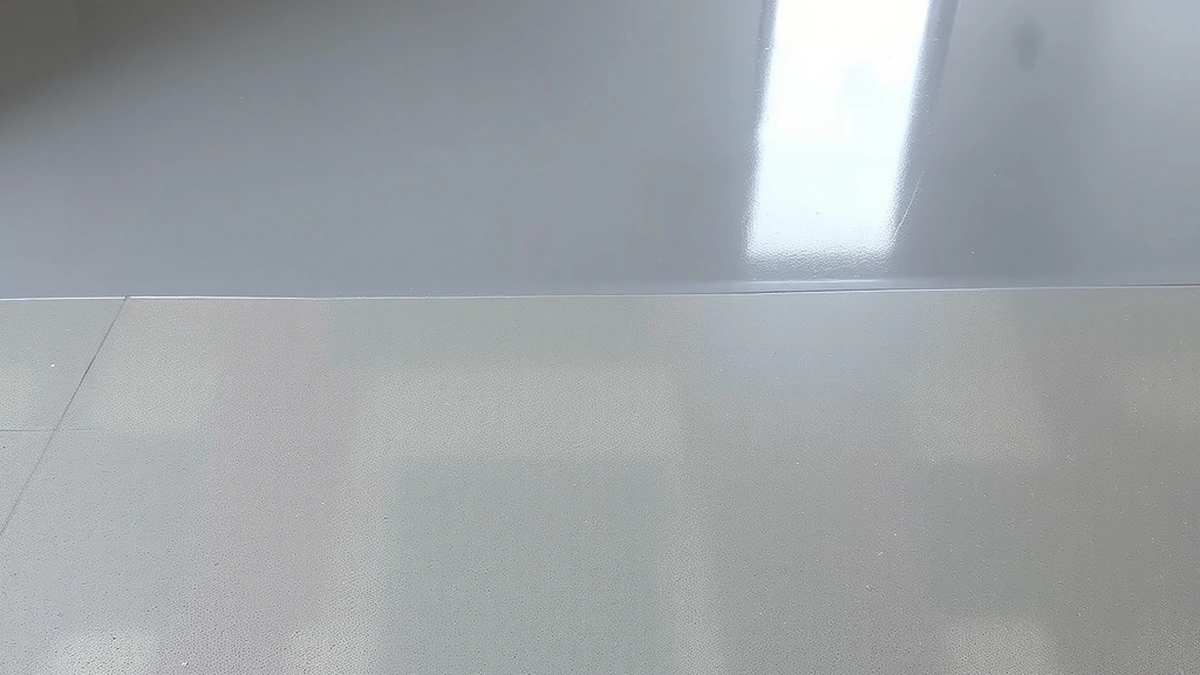
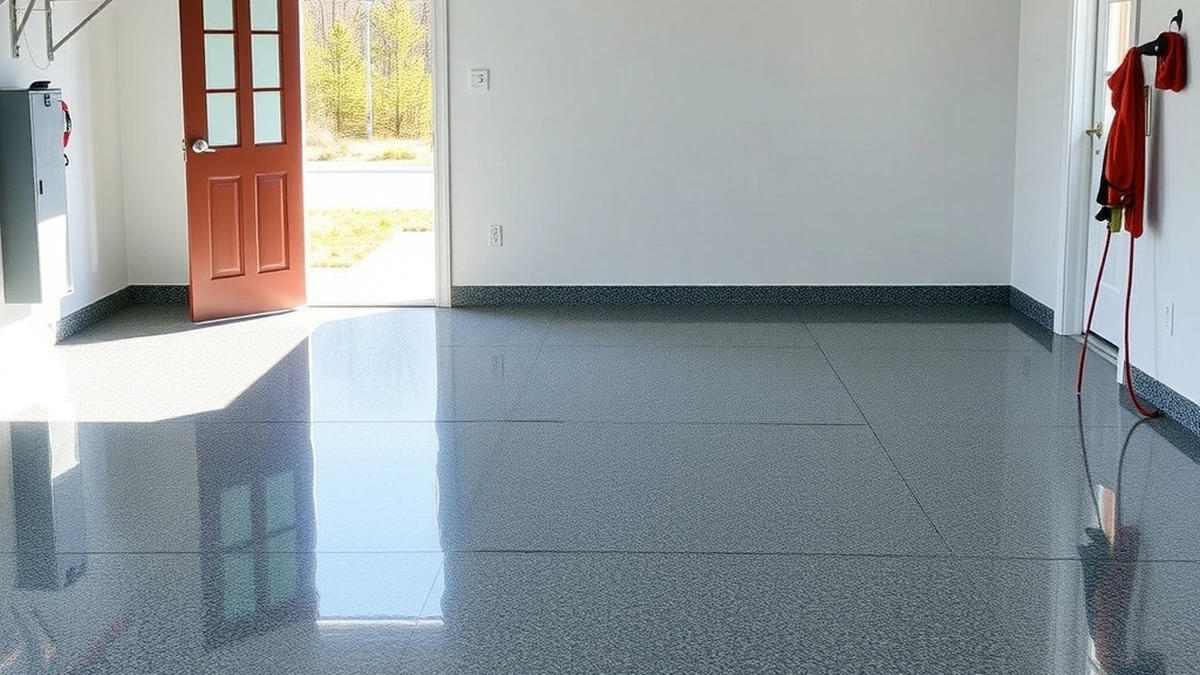
A metallic floor is a reflective surface, so a photo is a record of the light at that moment. Flash flattens the pattern and hides seams. A single overhead bulb creates a bright hotspot that obscures half the floor. Direct sun through an open door shows every defect and every bit of gloss.
When you look at an installer’s portfolio, ask three things: was the door open, was the photo taken in daylight, and how old is the floor in the picture. A portfolio of aged floors shot in daylight is a much stronger signal than a gallery of fresh pours shot at night.
Also look at the edges. The perimeter is where a crew runs out of material and where a seam is most likely. A clean edge line with no lap marks is a good sign.
The premium against a standard floor
Metallic epoxy runs $10 to $20 per square foot installed. Standard epoxy runs $5 to $12. On a 400 square foot garage, that is 400 × $10 = $4,000 at the low end of metallic against 400 × $5 = $2,000 at the low end of standard, or $8,000 against $4,800 at the high ends.
Grinding at $1 to $3 per square foot adds $400 to $1,200 on the same floor, and moisture mitigation at $2 to $5 adds $800 to $2,000 where needed. Those costs apply to both systems, so they do not change the comparison; they just raise the total.
What the premium buys is appearance. It does not buy additional wear resistance, and it does not buy a longer life. A metallic floor and a flake floor with the same topcoat will wear at about the same rate, but the metallic floor will show the wear more.
Where the reviews and the price disagree
The most common mismatch is a buyer who chose metallic for a daily-driver garage and then complained about tire marks. The floor is performing as designed; a high-gloss film shows marks that a textured film hides. That is a selection error, not a product failure, and it is worth catching before the pour rather than after.
The second mismatch is a buyer who paid the low end of the metallic range and expected the high end of the finish. The low end usually means a thinner film, a smaller crew, or a less experienced hand with the squeegee. The pattern is the part that shows the difference.
The third is moisture. A review complaining about blisters on a metallic floor is usually describing a slab that would have blistered any coating. The mitigation at $2 to $5 per square foot is the fix, and it belongs in the original quote rather than in a repair later.
What to ask before you buy
- Ask for the moisture test result and the method used.
- Ask how many people will be on the pour and how the batches will be staged.
- Ask which topcoat chemistry is included and at what film thickness.
- Ask for photos of a floor at least a year old, taken in daylight.
- Ask what the warranty covers and what voids it, especially hot tire pickup.
- Ask whether the quote includes grinding, crack repair, and edge work.
Those six questions will tell you more than any star rating, because they force the answers that reviews usually leave out.
For the defect list those answers are meant to prevent, see the metallic pigment problems guide. For the maintenance routine that keeps the gloss, read metallic pigment maintenance. And for the line-item budget behind the $10 to $20 range, check the metallic pigment cost breakdown.
Frequently asked questions
Are metallic epoxy floors worth the extra cost?
For a showroom, a home gym or a garage used as living space, the appearance is the point and the premium is justified. For a working garage, a flake floor costs less and hides wear better.
Why do metallic floor photos look different in person?
The pattern changes with the angle of light. Photos taken under one overhead source flatten the movement, and a floor that looks deep in a photo can look patchy under different lighting.
Do metallic floors show scratches?
Yes, more than textured floors. A high-gloss film reflects light and makes fine scratches and tire marks visible, which is why a clear topcoat and careful cleaning matter.
How long do metallic epoxy floors last?
The base can last decades if it bonds and the slab is dry. The clear topcoat wears in traffic lanes and usually needs renewal after 8 to 12 years in a residential garage.
What do negative reviews usually complain about?
Visible seams, fish eyes, cloudiness, and blisters. All four are installation or moisture issues rather than pigment issues, which is why the installer matters more than the brand.
Can I judge an installer from their photos?
Partly. Ask for photos of the same floor a year later, in daylight, with the garage door open. Installers who keep a portfolio of aged floors are showing you the real result.
Sources
Some links are affiliate links.If you buy through them we may earn a commission at no extra cost to you. We do not accept payment for rankings. Read the full disclosure.