Polyurethane installation over an epoxy base
Polyurethane installation is a topcoat job: abrade or catch the recoat window, keep coats thin, and match moisture-cured or two-component to the room.
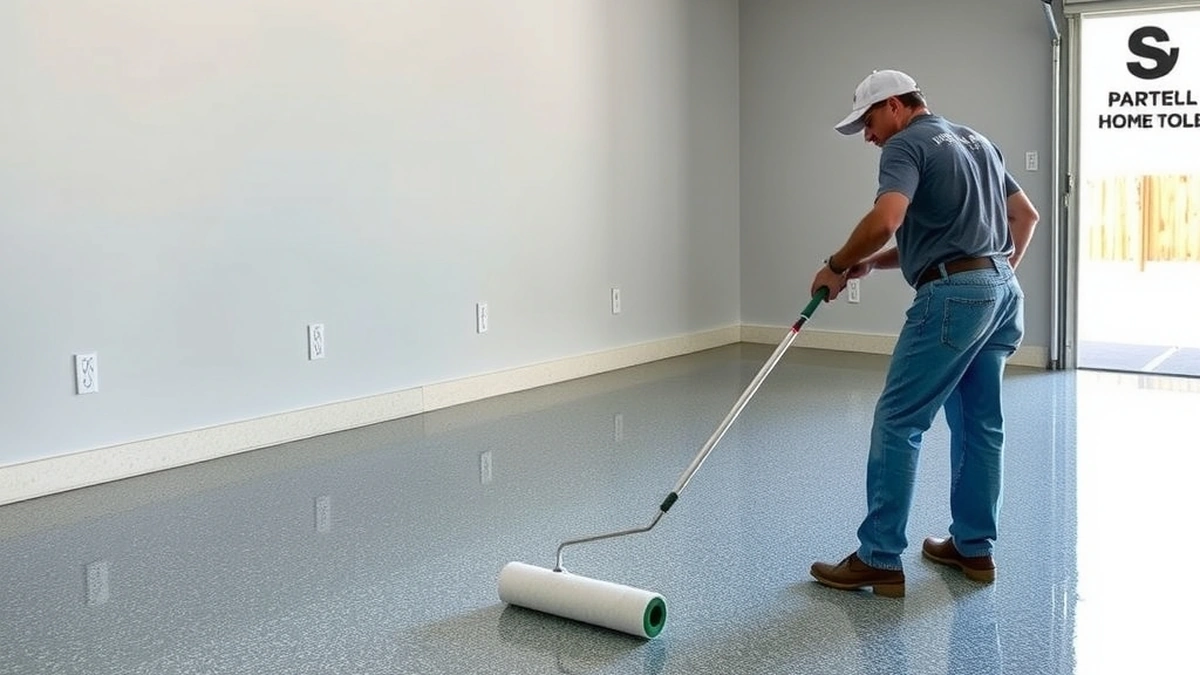
Polyurethane installation is one thin topcoat rolled over an epoxy base: abrade or catch the base inside its recoat window, apply at the data sheet's wet mils, and keep the space within its humidity range. A moisture-cured product needs humid air; a two-component one does not.
- Topcoat thickness
- 3-5 wet mils
- Base epoxy rate
- $5-12 / sq ft
- Grinding, first step
- $1-3 / sq ft
- Two-component pot life
- 2-4 hours
Some links on this page are affiliate links.If you buy through them we may earn a commission at no extra cost to you. We do not accept payment for rankings. Read the full disclosure.
Polyurethane installation is the shortest step in a floor project and the one that decides how the floor looks in three years. It is a thin topcoat, usually 3 to 5 wet mils, rolled over an epoxy base that is either still inside its recoat window or has been abraded to give the urethane something to grip. The product choice matters less than the two conditions it needs: a clean, profiled surface underneath and a room within its temperature and humidity range.
What a polyurethane topcoat is
A polyurethane coating is a resin system built on urethane linkages, applied as a protective film over a base coat and sold in two families: aromatic, which ambers under ultraviolet light, and aliphatic, which stays color stable.
For a garage floor, the aliphatic version is the one specified whenever daylight reaches the slab. Aromatic urethane is cheaper and common in industrial settings where color shift does not matter, or under a roof with no window.
The topcoat is not a structural layer. It does not add thickness in any meaningful way, does not fill cracks, and does not hide a bad base coat. What it does is take abrasion, resist chemicals and hold gloss, so the epoxy underneath keeps its color.
Prep and the recoat window
| Base condition | What to do | Why |
|---|---|---|
| Epoxy still tacky | Wipe with the specified solvent and coat | Chemical bond is still available |
| Epoxy within recoat window | Dust off and coat | The window exists for this |
| Epoxy cured hard | Abrade with 120-220 grit, vacuum | Mechanical key is the only bond left |
| Epoxy with blush | Abrade until the haze is gone | Blush blocks adhesion |
| Bare concrete | Do not apply urethane as a base | It needs a base coat under it |
The distinction between the second and third rows is where most failures begin. A crew that arrives a day late and rolls the urethane onto a fully cured epoxy film without sanding gets a floor that looks perfect and releases in sheets a season later. If in doubt, abrade.
Before any of that, the slab underneath needs diamond grinding at $1 to $3 per square foot and a moisture test. A failed test means mitigation at $2 to $5 per square foot, and no topcoat decision changes that.
Moisture-cured versus two-component
| Property | Moisture-cured urethane | Two-component urethane |
|---|---|---|
| Cure mechanism | Reacts with air humidity | Reacts with a hardener |
| Pot life | Long, often hours | Typically 2-4 hours |
| Humidity need | Minimum RH on the data sheet | Normal range, avoid extremes |
| Solvent content | Usually high | Lower in most products |
| Odor | Strong | Moderate |
| Typical use | Commercial, fast recoat, sealer | Residential garage topcoat |
Moisture-cured products are single-component, need humid air to cure and smell strongly of solvent while they flash off. They are popular in commercial work because a crew can recoat in a couple of hours and the material does not gel in the bucket.
Two-component products mix like epoxy, give a more predictable film and are the usual choice for a residential garage where the smell has to clear before the family parks inside.
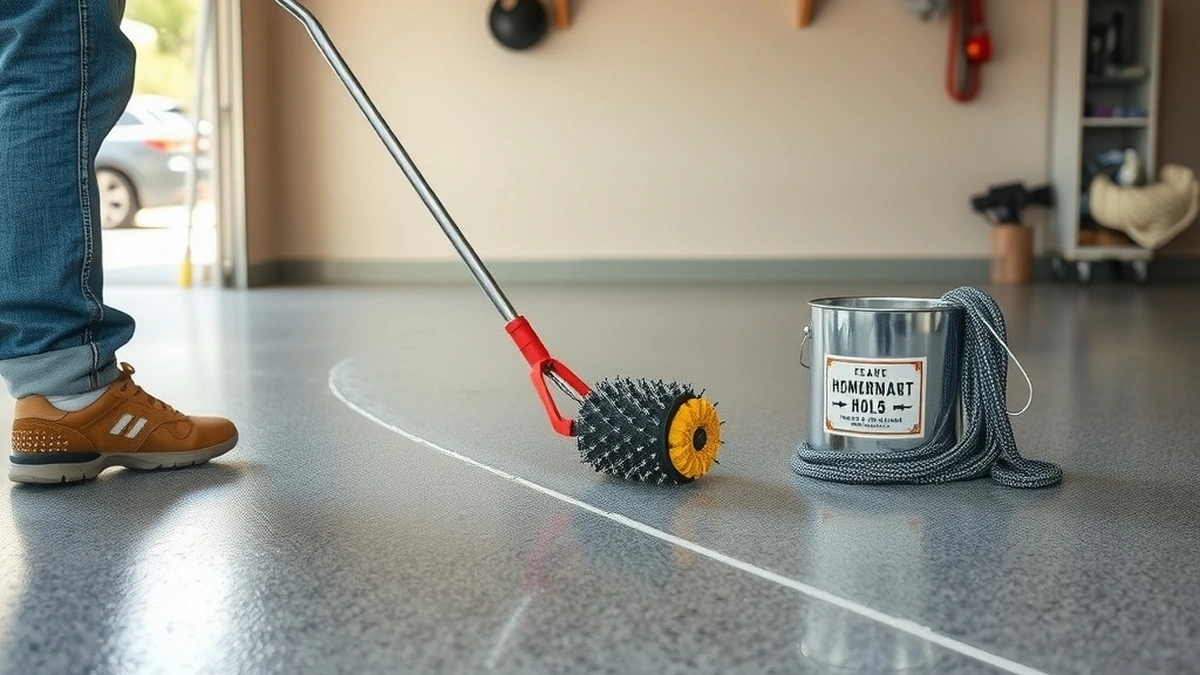
Applying it: thin coats, moving roller
Thin is the rule. A 3 to 5 wet mil coat is roughly the thickness of a heavy coat of paint, not a flood coat. Heavier films trap solvent, cure from the top down, and end up soft or wrinkled underneath.
Roll in one direction per pass, then cross-roll lightly to level, and keep a wet edge. Two thin coats with a recoat window between them outperform one thick coat every time, and the second coat is where the gloss and the uniform sheen come from.
For a flake floor, the flake has to be scraped and vacuumed before the first urethane coat. Loose flake under a clear film shows as a shadow, and a thick ridge of flake at the wall line shows as a dark band.
Temperature, humidity and dew point
Seventy degrees is comfortable for both the crew and the coating, and most data sheets specify a range around it. Below about 60°F the reaction slows and the film may stay tacky for a day; above about 85°F it flashes too fast to level.
Humidity is not a nuisance here, it is a variable in the chemistry. A moisture-cured product needs enough of it; a two-component product is usually happier in moderate conditions. Either way, a slab at or below the dew point will sweat, and coating over condensation produces a white haze and a weak bond.
Measure both, write them down, and do not start mixing if the numbers are outside the sheet.
The six-step sequence
- Confirm the base. Check the epoxy is sound, clean and either abraded or inside its recoat window, and vacuum the floor twice.
- Mask and ventilate. Tape the stem wall line, protect adjacent surfaces, and set up cross-ventilation before the first can is opened.
- Mix per the sheet. For a two-component product, measure by volume, mix the full can, and respect any induction time.
- Cut in the perimeter. Brush the edges and around obstructions first, then roll the field before the cut-in sets.
- Roll two thin coats. First coat at the specified wet mils, then the second inside the recoat window, cross-rolling to level.
- Protect the cure. Keep traffic off for the stated time, keep the space ventilated, and do not park on it until the sheet allows.
What goes wrong
Most polyurethane failures are film thickness and moisture problems. A coat applied too heavy traps solvent. A floor coated below the dew point hazes. A topcoat applied over an un-abraded epoxy peels. A moisture-cured product installed in a dry, heated garage may never fully cure.
None of those are product defects, and all of them are visible within a week. Polyurethane problems walks through the symptoms and the fixes, and polyurethane maintenance covers what the finished film needs afterward. If the base coat is the part you are still deciding on, epoxy garage floor installation covers the slower sequence underneath, and polyurethane cost prices the topcoat against a full system.
Frequently asked questions
Can polyurethane go directly over epoxy?
Yes, and that is the normal detail. The epoxy must be clean and either still inside its recoat window or sanded and wiped so the urethane has a profile to grip. Coating over a glossy, fully cured epoxy film without abrasion is the usual cause of peeling.
Why does moisture-cured urethane need humidity?
Because it cures by reacting with water vapor in the air rather than with a hardener in a second can. Low humidity slows or stalls the cure, which is why manufacturers specify a minimum relative humidity on the data sheet.
How thick should a polyurethane topcoat be?
Thin. Most products specify 3 to 5 wet mils per coat, which is a film you can still see the flake through. Applied heavy, the film traps solvent and air, cures unevenly, and can wrinkle or stay soft in the middle.
How long before I can walk on it?
Typically 8 to 12 hours to foot traffic and about 24 hours to vehicle traffic for a two-component product, with moisture-cured products often slower. Temperature and film thickness both move those numbers, so read the sheet.
Do I need to sand the epoxy before the topcoat?
If the epoxy is past its recoat window, yes. A 120 to 220 grit screen or a light diamond pass gives the urethane a mechanical key. If the epoxy is still tacky or within its stated window, a solvent wipe and a clean floor are enough.
What causes white spots or a cloudy finish?
Moisture. On a moisture-cured product it comes from condensation or a damp slab; on a two-component product it usually comes from applying in high humidity or over a surface below the dew point. Both look like a haze that will not wipe off.
Sources
Some links are affiliate links.If you buy through them we may earn a commission at no extra cost to you. We do not accept payment for rankings. Read the full disclosure.