Polyurethane maintenance for garage floors
Polyurethane maintenance is a sweep-and-mop routine with two hard rules: no strong solvents, and no road salt left to sit. Recoat before the film wears thin.
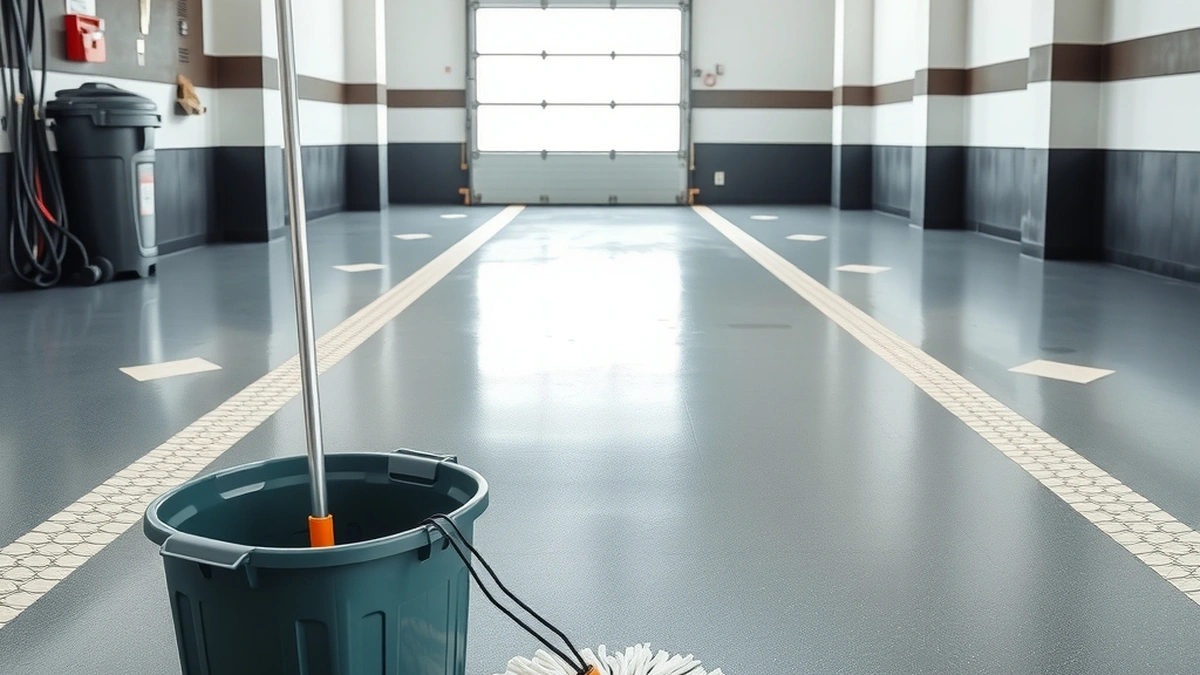
Polyurethane maintenance is a weekly sweep, a monthly mop with a pH-neutral cleaner, and a salt rinse in winter. Urethane resists most garage chemicals but not strong solvents or abrasive grit, so the routine is about what you keep off the film.
- Weekly time
- 10-20 min
- Cleaner
- pH-neutral
- Epoxy base rate
- $5-12 / sq ft
- Full system, est.
- $6-15 / sq ft
Some links on this page are affiliate links.If you buy through them we may earn a commission at no extra cost to you. We do not accept payment for rankings. Read the full disclosure.
Polyurethane maintenance comes down to two habits: keep abrasive grit off the film, and keep strong solvents away from it. A urethane topcoat handles oil, coolant, gasoline and road salt as spills, and it wipes clean with a pH-neutral cleaner and water. What it will not tolerate is sand ground under a tire for a decade, or a solvent cleaner used to remove a stain that a mop would have lifted.
What the film needs to stay sound
Polyurethane is a resin coating built on urethane linkages, applied as a thin topcoat of roughly 3 to 5 wet mils over an epoxy base coat.
Thin is the important word. The film is measured in thousandths of an inch, so every scratch removes a meaningful share of it and every heavy abrasive takes a little more. The base coat underneath, installed at $5 to $12 per square foot, is what protects the slab; the urethane protects the base coat.
Maintenance is therefore a layer-preservation job rather than a cleaning job. You are trying to keep the wear layer between the grit and the epoxy for as many years as possible.
The routine, by interval
| Interval | Task | Time |
|---|---|---|
| Weekly | Sweep or blow out grit and sand | 10-20 min |
| Monthly | Mop with pH-neutral cleaner, rinse | 20-30 min |
| After salt exposure | Rinse the wheel tracks | 10 min |
| Seasonal | Full wash including edges and corners | 1-2 hours |
| Annually | Inspect traffic lanes for dulling and chips | 30 min |
The weekly item does most of the work and costs the least. A broom, a blower and a mat at the door prevent more damage than any cleaner on the shelf.
What not to put on it
| Product | Effect on urethane |
|---|---|
| pH-neutral floor cleaner | Safe, the default choice |
| Mild dish soap, rinsed | Safe for spot cleaning |
| Vinegar solution | Acidic, dulls gloss over time |
| Bleach | Strongly alkaline, can haze the film |
| Citrus degreaser | Attacks the film with repeated use |
| Lacquer thinner, xylene, MEK | Softens and dissolves the coating |
The rule of thumb: if the product’s label warns about plastic or painted surfaces, do not leave it on a urethane floor. Wipe up spills of brake fluid, battery acid and transmission fluid promptly, and rinse the area rather than scrubbing it with solvent.
Grit, and why the traffic lanes dull first
Two dull bands running from the garage door to the parking spot are the first sign of wear on almost every urethane floor. The cause is not sunlight or age. It is fine sand and road grit ground into the film by tire rotation, thousands of times.
A walk-off mat at the door captures most of it. A weekly sweep handles what gets past, and a dust mop along the wheel tracks takes two minutes. If the bands have already appeared, the film is thinner there, and that is where a refresh coat will be needed first.
Sharp objects are the second category. Dropped tools, dragged jacks and metal shelving feet chip a hard film. Felt pads under furniture and a plywood pad under a jack cost very little.
Road salt and winter
Salt is the seasonal problem. It arrives as brine on the tires, dries to a white film, and settles into the texture where a broom cannot reach.
Rinse it off. Warm water across the wheel tracks once a week through salt season is enough, and a full wash after the last snow is worth the hour. Salt left sitting holds moisture against the film and dulls the gloss well before the coating is worn through.
Calcium chloride is harsher than sodium chloride and leaves a greasy residue that needs the cleaner at full strength rather than a splash in a bucket.
Recoating before the film fails
A urethane topcoat is a wear layer, and wear layers get replaced. The sign that a refresh is due is a floor that has gone flat in the traffic lanes, or a surface that no longer beads water in the middle of the garage.
A refresh coat costs a fraction of a full system at an estimated $6 to $15 per square foot, because it is one layer over a floor that is already ground, repaired and coated. The estimate depends on the crew and the square footage, but the comparison is simple: a refresh costs far less than the grind and rebuild needed once the base coat is exposed.
Timing is the skill. Recoat while the urethane is intact and the new film bonds to a clean, abraded surface. Wait until the base coat shows through and you are buying a full system again.
Five steps to a routine that holds
- Put a mat at the door. It is the cheapest wear protection available and it stops grit at the threshold.
- Sweep weekly. Ten minutes with a broom or blower removes the abrasive that does the real damage.
- Mop monthly with a pH-neutral cleaner. Warm water, a capful of cleaner, a damp mop, then a clean-water rinse.
- Rinse salt in winter. Clear the wheel tracks weekly and wash the whole floor once the season ends.
- Inspect every spring. Photograph the traffic lanes and the door apron so you can see a change year over year rather than guessing at it.
When maintenance becomes repair
Cleaning handles dirt, dulling and light scuffing. It does not handle a film that has lifted, bubbled or gone soft, and those symptoms call for a different response.
A chip smaller than a coin can be patched with the same product. A patch of bubbles, a blistered area by the door, or a section where the film has released means the bond or the cure failed, and a patch will spread from the edges. Polyurethane problems walks through the diagnosis, and epoxy garage floor repair covers the base coat underneath.
For the routine that applies to the layer below, see epoxy garage floor maintenance. If the floor is due for a refresh, polyurethane cost separates a topcoat upgrade from a full system, and polyurethane installation covers how the new coat should go on.
Frequently asked questions
How do I clean a polyurethane garage floor?
Sweep or blow out grit weekly, then mop with a pH-neutral floor cleaner and warm water. Rinse with clean water and let it dry before parking. Avoid solvent cleaners, which soften the film and dull the gloss.
What chemicals damage polyurethane?
Strong solvents such as lacquer thinner, xylene and MEK will attack the film. Brake fluid left to pool can stain it. Gasoline and oil are fine as spills that get wiped up, but a puddle left for a week is a different story.
Can I pressure wash a urethane floor?
At low pressure with a fan tip, on a sound coating, yes. Keep the nozzle moving and away from seams, cracks and the stem wall, because water driven under an edge is how coatings start to lift.
Does polyurethane need to be recoated?
Eventually. The topcoat is a wear layer, and grit abrasion thins it in the traffic lanes. A refresh coat costs far less than a full system at $6 to $15 per square foot, and doing it before the epoxy base is exposed avoids a rebuild.
How do I stop tire marks on a urethane floor?
Most marks are transfer from hot tires and come off with a melamine sponge and a pH-neutral cleaner. Marks that will not lift at all point to hot tire pickup, which is a bond failure under the film rather than dirt on top of it.
Can I use vinegar or bleach on the floor?
Vinegar is acidic and bleach is strongly alkaline; both are better avoided on a clear urethane film. A pH-neutral cleaner does the same job without the risk of dulling the gloss or leaving a residue that attracts dirt.
Sources
Some links are affiliate links.If you buy through them we may earn a commission at no extra cost to you. We do not accept payment for rankings. Read the full disclosure.