Polyurethane reviews: what the feedback means
Polyurethane reviews often blame the wrong layer. Read the yellowing, odor and peeling complaints against the chemistry, the prep and the base coat underneath.
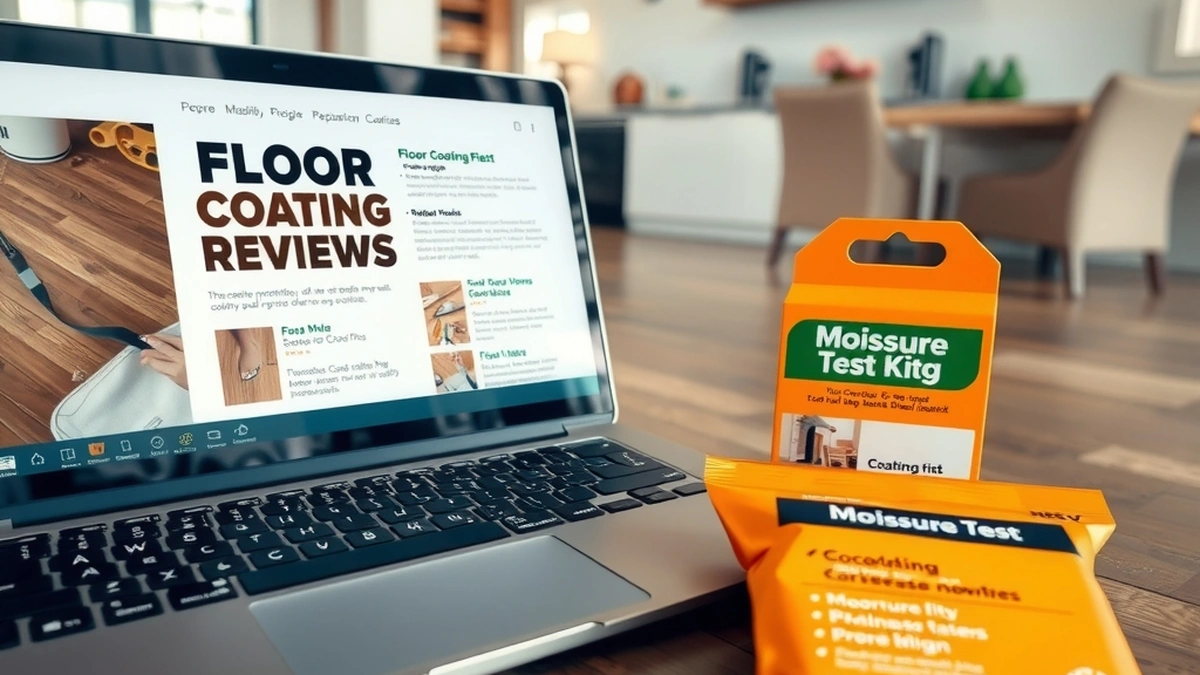
Polyurethane reviews are useful once you know which product the reviewer bought. Aromatic urethane yellows, moisture-cured versions smell strongly and foam over damp slabs, and most peeling complaints trace to the epoxy base rather than the urethane topcoat.
- Topcoat upgrade, est.
- $1-3 / sq ft
- Full system, est.
- $6-15 / sq ft
- Epoxy base coat
- $5-12 / sq ft
- Moisture mitigation
- $2-5 / sq ft
Some links on this page are affiliate links.If you buy through them we may earn a commission at no extra cost to you. We do not accept payment for rankings. Read the full disclosure.
Polyurethane reviews are difficult to read because the word covers four different products and reviewers rarely say which one they bought. A complaint about yellowing describes an aromatic topcoat. A complaint about a solvent smell describes a moisture-cured one. A complaint about peeling describes the epoxy underneath. Once you sort the reviews by chemistry, the patterns become useful and the verdicts become less so.
Why the reviews are hard to sort
A polyurethane coating is a resin system built on urethane linkages, applied as a thin topcoat over a base coat at roughly 3 to 5 wet mils.
Within that description sit aromatic and aliphatic formulations, moisture-cured and two-component products, and clear and pigmented versions. They share a name and little else. A homeowner who writes “the polyurethane was terrible” may be describing a $1 per square foot hardware-store product applied over a damp slab, or a professionally installed aliphatic system that did its job for a decade.
The reviews that help name the product, the slab and the timeline. The ones that do not are satisfaction notes.
The yellowing complaint
Yellowing is the most common substantive complaint and the easiest to explain. Aromatic polyurethane ambers under ultraviolet light, and it does so progressively. A light floor in a sunlit garage shifts visibly over a couple of summers.
Aliphatic polyurethane is formulated for UV stability and holds color far better. It costs more, which is why cheap kits and some commercial products use aromatic resin.
The practical lesson from the reviews is not that urethane yellows. It is that the quote has to name the chemistry. A topcoat upgrade estimated at $1 to $3 per square foot can be either one, and the difference in appearance after three years is large.
The smell complaint
Moisture-cured urethane cures by reacting with humidity, and most of these products carry a high solvent load. The odor while it flashes off is strong, and reviewers describe it accurately.
The smell is temporary and it is a property of the application, not a defect. Ventilation, a closed door to the house and a day or two of cure time resolve it. Two-component urethanes are milder, and a residential garage topcoat is usually specified as one for exactly that reason.
What the smell complaint does reveal is product type. If a review mentions an overpowering solvent smell, the reviewer had a moisture-cured product, and the failure patterns that follow will be moisture-cured patterns too.
The durability claims that need a second winter
| Review claim | What it actually tells you |
|---|---|
| Looks great, no problems | The floor is new; nothing about durability yet |
| Held up through one winter | Some evidence, mostly about salt and grit |
| Still glossy after two years | Meaningful, especially in the wheel tracks |
| Easy to clean | Worth checking against what the garage is used for |
| Peeling in sheets | A bond failure at the base coat interface |
| Yellowed near the door | Almost certainly aromatic resin |
The reviews worth bookmarking are written after two winters of road salt and show a photo of the traffic lanes. Everything else is a first impression.
Where the money goes, and what that says about a review
A full polyurethane system is estimated at $6 to $15 per square foot, against $5 to $12 for a professional epoxy floor. Most of either number is not the topcoat.
| Line item | Rate | 400 sq ft |
|---|---|---|
| Diamond grinding | $1-3 / sq ft | $400-1,200 |
| Moisture mitigation | $2-5 / sq ft | $800-2,000 |
| Epoxy base coat | $5-12 / sq ft | $2,000-4,800 |
| Urethane topcoat | $1-3 / sq ft | $400-1,200 |
On 400 sq ft the topcoat is 400 × $1 = $400 to 400 × $3 = $1,200 of a project that runs several thousand dollars. That ratio explains most reviews: the layer people complain about is the smallest line in the budget, and the layer that failed is the one underneath.
A review that says the urethane peeled is usually a review of a grinding decision, a moisture reading or a recoat window. Read it that way and the information becomes actionable.
Five questions that outrank the reviews
- Which chemistry is the topcoat? Aliphatic for a sunlit garage. Ask for the product name and the data sheet.
- Was the slab ground? Diamond grinding at $1 to $3 per square foot, not an acid etch and not a “bonding primer.”
- Is there a moisture test record? A documented reading before the quote, with mitigation at $2 to $5 per square foot if it failed.
- How was the epoxy prepped before the topcoat? Abraded, or coated inside its recoat window. Never neither.
- Can I see a floor from two winters ago? Durability is the claim a new floor cannot make.
Where the evidence is strongest
Reviews are strongest on service: whether the crew showed up, protected the walls, cleaned up and returned when something went wrong. They are weakest on causation, because the reviewer was not present for the decisions that mattered.
Use them for the first, verify the second yourself. Polyurethane problems maps the symptoms in these reviews to their causes, and polyurethane installation shows the sequence a careful crew follows. If you are still choosing a topcoat, polyaspartic reviews covers the alternative, and polyurethane cost itemizes the estimate so a quote can be checked line by line rather than by star rating.
Frequently asked questions
Are polyurethane garage floor reviews trustworthy?
They are trustworthy about what happened and unreliable about why. A reviewer can report a floor that yellowed or peeled; they usually cannot say whether the product was aromatic, whether the slab was ground, or whether the base coat had cured past its recoat window.
Why do so many reviews complain about yellowing?
Because a lot of cheap urethane is aromatic, and aromatic polyurethane ambers under UV. Aliphatic urethane is formulated for color stability and costs more. Reviews rarely name which chemistry was installed, which is exactly the information that would make the complaint useful.
What do reviews say about the smell?
Moisture-cured urethane has a strong solvent odor while it flashes off, and reviewers notice. Two-component products are milder. Ventilation and cure time are the usual fixes, and the smell is a temporary property of the application rather than a defect.
Why did a reviewed floor peel within a year?
Almost always because the bond to the base coat failed. The usual causes are a fully cured epoxy that was never abraded, amine blush left on the surface, sanding dust, or coating outside the recoat window. The urethane inherited a weak interface.
Do reviews cover durability honestly?
The useful ones do, because they are written after at least one winter of salt and grit. Reviews posted within a month of install describe appearance and service, not durability, and should be read as such.
Should I choose a urethane floor based on reviews alone?
No. Use reviews to identify recurring failure patterns, then verify the technical side yourself: the moisture test record, the grinding method, the product data sheet and whether the topcoat is aliphatic. Those four checks outrank any star rating.
Sources
Some links are affiliate links.If you buy through them we may earn a commission at no extra cost to you. We do not accept payment for rankings. Read the full disclosure.