Polyaspartic problems: what fails and why
Most polyaspartic problems are prep and timing failures: blushing, bubbles, lap lines and hot tire pickup. Diagnose the cause before you blame the resin.
Most polyaspartic problems come from the slab or the schedule, not the resin: moisture drives bubbles and blushing, a 10-20 minute pot life drives lap lines, and skipped grinding at $1-3 per sq ft drives delamination. Each symptom points to a different fix.
- System cost
- $8-15 / sq ft
- Grinding, if skipped
- $1-3 / sq ft
- Moisture mitigation
- $2-5 / sq ft
- Typical pot life
- 10-20 min
Some links on this page are affiliate links.If you buy through them we may earn a commission at no extra cost to you. We do not accept payment for rankings. Read the full disclosure.
Polyaspartic problems are rarely the fault of the polyaspartic. The chemistry is well understood and most failures trace back to a slab that was wet, dusty or unground, or to a crew that lost the race against a 10 to 20 minute pot life. Because the product cures fast, it also fails fast, and the symptom usually names the cause if you read it correctly.
What the coating needs in order to work
Polyaspartic is an aliphatic polyurea topcoat applied over a profiled, dry concrete slab and, in most residential systems, over an epoxy base coat.
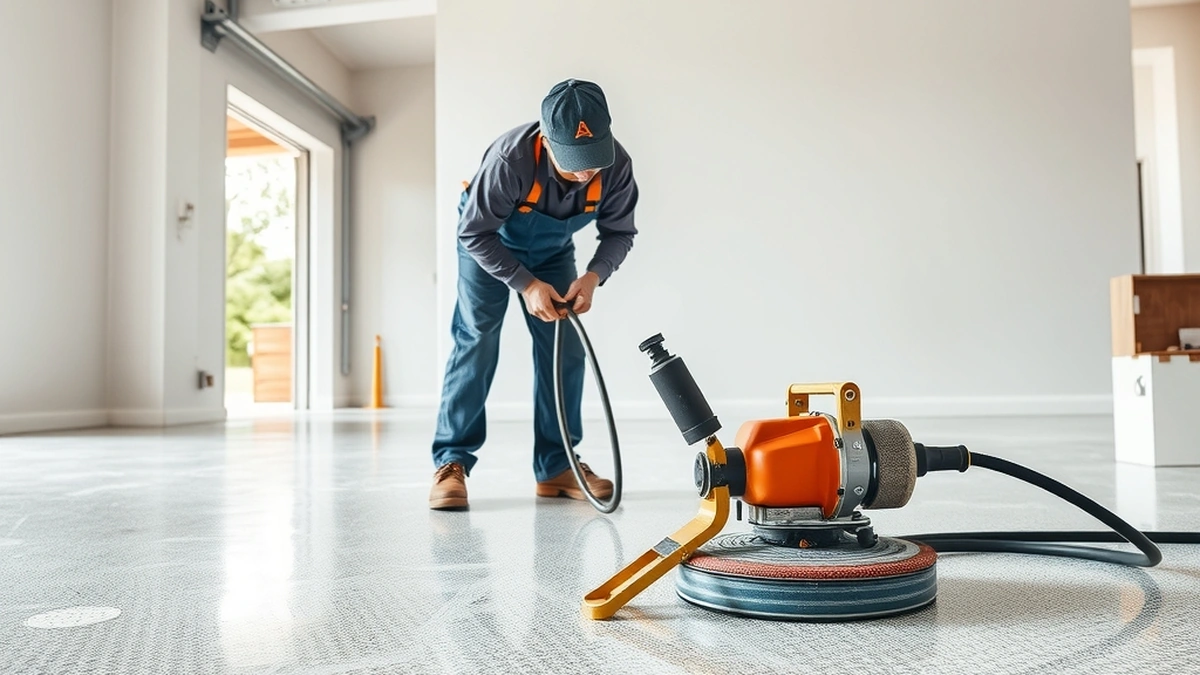
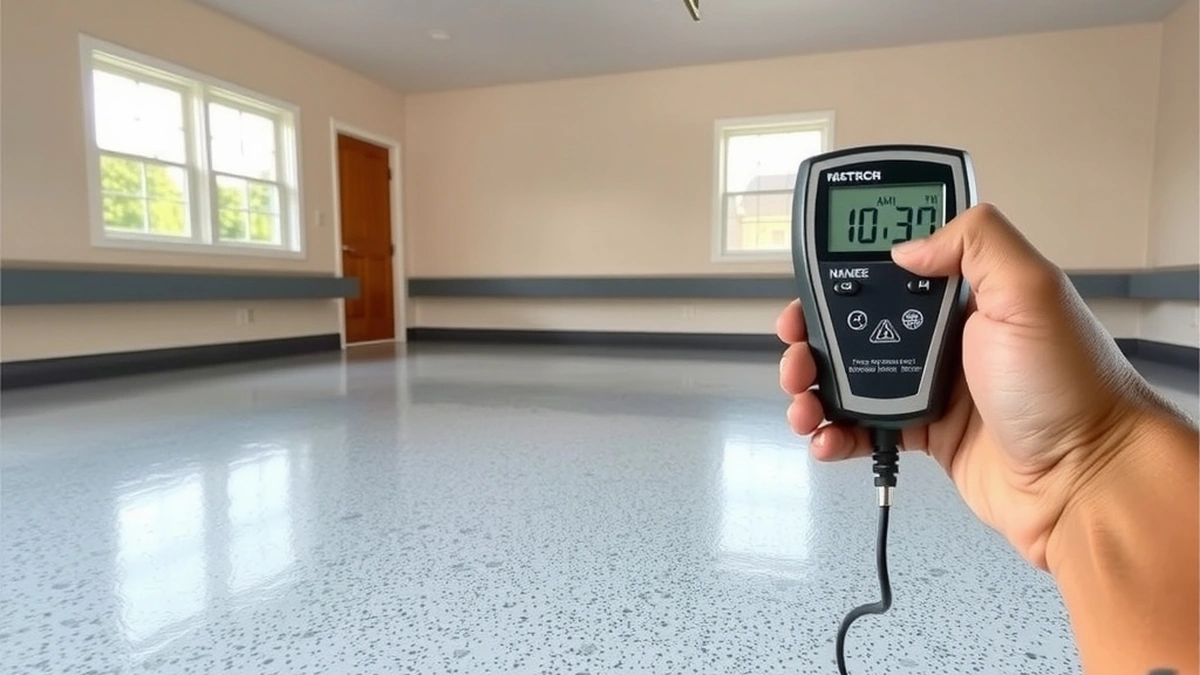
Three conditions have to be true for that film to stay put: the slab must be dry enough to pass a moisture test, the surface must be mechanically opened by grinding, and each coat must go on inside the previous coat’s recoat window. When one fails, the floor reports it within a week.
Symptom, cause and fix
| Symptom | Most likely cause | Fix |
|---|---|---|
| Fine bubbles across the field | Moisture or outgassing under a fast film | Test the slab, add mitigation at $2-5 per sq ft, recoat |
| White haze or dull patches | Blushing from humidity or condensation | Abrade, dry the space, recoat |
| Visible lines and ridges | Lap lines from a gelled batch | Sand flat and recoat the affected area |
| Pebbled, uneven gloss | Orange peel from roll technique or viscosity | Abrade and apply a flow coat |
| Coating lifting in sheets | Dust, sealer or oil under the film | Grind back to concrete and rebuild |
| Black tire marks that will not clean | Hot tire pickup from a weak bond | Usually a full recoat after grinding |
Read the symptom column first: five of the six rows are surface and schedule problems.
Blushing, lap lines and orange peel
Blushing is a whitish, dull film that appears during cure when moisture reacts at the surface. On an epoxy base coat the mechanism is well known: amine hardeners react with carbon dioxide and water to form a waxy carbamate layer that blocks adhesion. On polyaspartic the haze is thinner but the consequence is similar, because the next coat bonds to the blush rather than to the resin.
The conditions that produce it are predictable. High relative humidity, a slab temperature at or below the dew point, and a cold garage that warms slowly after the coat goes down all do it. So does applying late in the day when the floor cools overnight before the film is hard.
The fix is prevention: measure slab temperature and dew point, keep the space ventilated, and coat when the slab is warming rather than cooling. Once blush has formed, abrade it off and recoat. Washing it with solvent does not restore the bond.
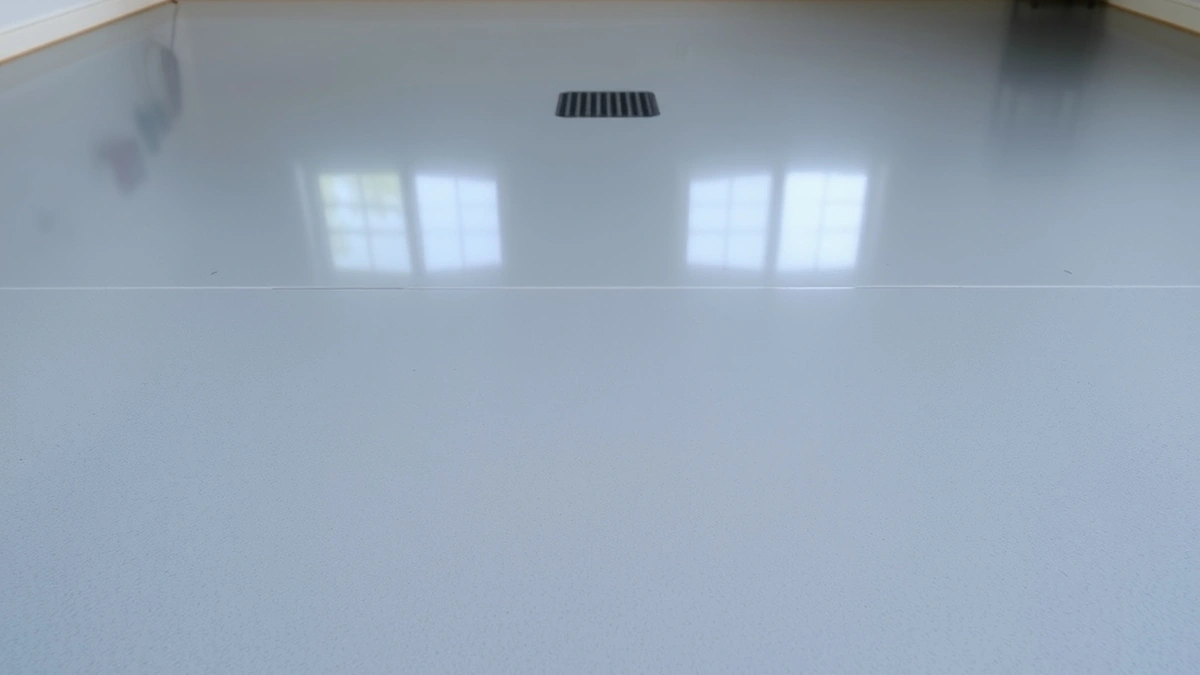
Lap lines are the same story told faster. A batch that gels in the bucket and gets poured anyway, or a roller that stops moving mid-pass, leaves a ridge that cures harder than the surrounding film. They are the most common complaint on a polyaspartic floor because a gloss topcoat reflects light at every change in film thickness.
Orange peel shares those causes: a roller cover too thick for the product, material applied too thin, or a slab warm enough that the film flashed before it levelled.
Lap lines and orange peel are technique problems that two people working in sequence prevent; blushing is a dew point problem.
Bubbles, pinholes and outgassing
Bubbles in a polyaspartic floor come from gas trying to leave a film that is already too stiff to let it through. There are two sources.
The first is the slab. Concrete holds moisture, and a slab with a high emission rate pushes vapor up into the coating. The second is the coating itself: residual isocyanate reacts with water and releases carbon dioxide, and a fast-setting film traps it as it forms.
Both are worse in heat, because the surface skins faster while the gas production continues. Both are worse on a slab that was never tested. Moisture mitigation at $2 to $5 per square foot, or $800 to $2,000 on a 400 sq ft floor, is the proper fix when a test fails. Rolling a second coat over the bubbles does not seal them; it locks them in.
Hot tire pickup and chemical staining
Hot tire pickup is black tire marks that transfer into the coating and will not scrub out. It is usually described as a product failure and is usually an adhesion failure. A fully cured coating bonded to a properly ground slab resists tire plasticizers. A coating over dust, sealer or a blushed primer does not, and the tire lifts the film rather than marking it.
Chemical staining is different. Road salt, battery acid, brake fluid and transmission fluid all sit on a garage floor, and a thin topcoat gives them a shorter path to the base coat. Two polyaspartic passes resist more than one.
Color shift and yellowing
Polyaspartic holds color far better than standard epoxy, which is the main reason it is specified as a topcoat on sun-facing floors. That does not make every polyaspartic color-stable. UV performance depends on the isocyanate chemistry, and products differ. A light grey or white floor in direct sun is the hardest case, and it is worth asking for the UV claim in writing.
Five checks before you blame the product
- Pull the moisture test record. If there is no documented test, the slab is the first suspect.
- Look at where the failure starts. Bubbles across the whole field point to moisture; failures at the perimeter and in patches point to prep.
- Check the weather log for the install day. Humidity and dew point explain blush and slow cure better than any product defect.
- Confirm the recoat windows. A topcoat applied after the base cured hard will delaminate at the interface, and the failure looks like a product problem.
- Read the batch numbers. Two batches mixed at different temperatures behave differently, and a single bad pail usually shows up as one bad section.
Repairing a failed coat
Small defects are patchable. Abrade the area, feather the edge, clean, and recoat inside the window with the same product. Blush, orange peel and light lap lines all fall into this category.
Failed bond is not patchable in any practical sense. Once a film is lifting in sheets or hot tire has transferred into the base, the repair spreads outward from the patch and the honest answer is a full grind and rebuild. That is a $8 to $15 per square foot do-over on a system that already cost that much once.
Which is the argument for spending the prep money first. Polyaspartic installation walks the sequence in order, bubbles repair covers the moisture case in detail, and epoxy garage floor repair applies the same diagnosis to a base coat. If the floor is older and the problem is wear rather than failure, polyaspartic maintenance is the right next read.
Frequently asked questions
Why does my polyaspartic floor have tiny bubbles?
Usually moisture. Residual isocyanate reacts with water in the slab or the air and releases carbon dioxide, which pushes through a film that is already setting. A failed moisture test, high humidity, or a slab near the dew point all produce the same result.
What causes white or hazy patches on polyaspartic?
Blushing, which is a reaction with moisture in the air or on the surface during cure. It looks like a dull white haze and it can soften the film's bond to the next coat. Cool, damp conditions and a slab below the dew point make it worse.
Why are there visible lines across my floor?
Lap lines from a fast-setting product. Polyaspartic can gel in 10 to 20 minutes, so a roller that stops moving or a batch poured over a cured edge leaves a ridge that the gloss highlights. They are cosmetic but hard to remove without sanding and recoating.
Can polyaspartic peel off in sheets?
Yes, and the cause is almost always below the coating: grinding dust left on the slab, an old sealer, oil, or a primer that was past its recoat window. A coating bonds to what it is applied over, not to the concrete underneath.
Does polyaspartic yellow like epoxy?
Far less, but it is not immune. UV resistance depends on the isocyanate used, and not every polyaspartic product is equally aliphatic. Ask for the UV performance in writing rather than assuming the word polyaspartic guarantees a color-stable floor.
Can I fix a bad polyaspartic coat without grinding it all off?
Sometimes. Blushing and light orange peel can be abraded and recoated. Bubbles that broke the film, delamination and hot tire pickup mean the bond has failed, and a patch repair usually spreads. In those cases a full grind and recoat is the cheaper route.
Sources
Some links are affiliate links.If you buy through them we may earn a commission at no extra cost to you. We do not accept payment for rankings. Read the full disclosure.